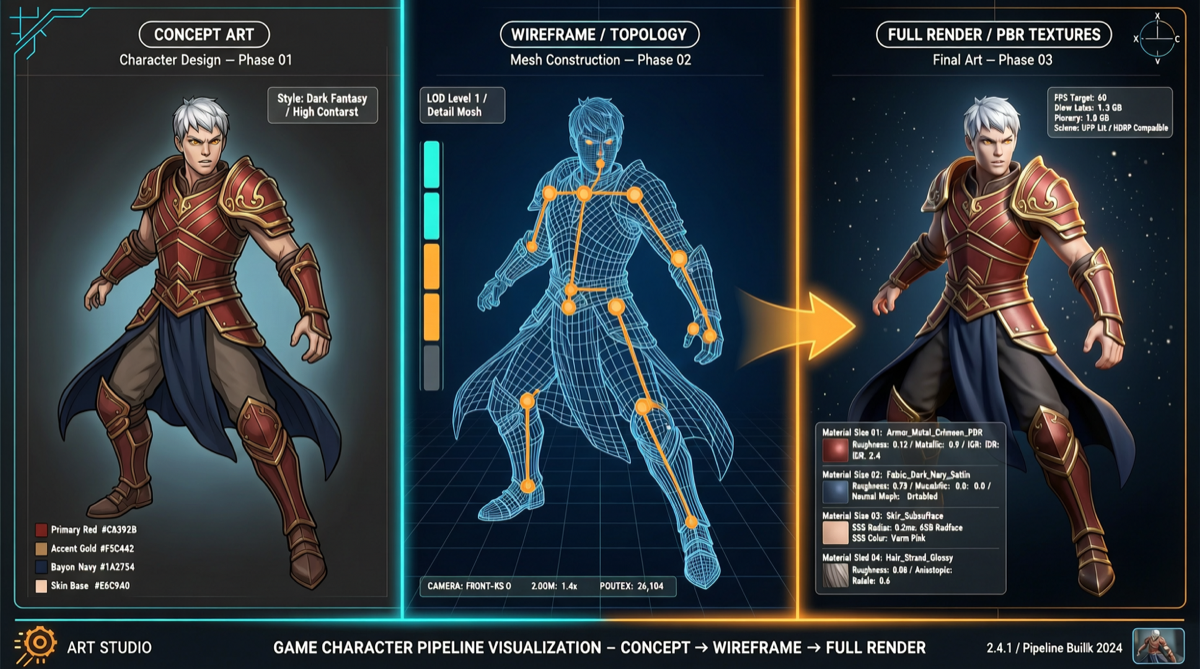
From concept to game character, what used to take a team weeks can now be done by one person in one afternoon.
A complete AI to 3D generation pipeline has taken shape in 2026. A developer shared the full workflow on X, receiving 2,508 likes, 190K views, and 3,247 bookmarks — this engagement data shows community interest in this pipeline far exceeded expectations.
Complete Pipeline Breakdown
┌─────────────┐    ┌──────────────┐    ┌──────────────┐    ┌──────────┐
│ Concept Art  │ →  │ 3D Mesh      │ →  │ Cleanup +    │ →  │ Auto      │
│ GPT Image 2  │    │ Conversion   │    │ Rigging      │    │ Animation │
│ Nano Banana  │    │ Hunyuan3D    │    │ MeshyAI      │    │ Mixamo    │
│              │    │ Tripo        │    │ Blender      │    │           │
│              │    │ Meshy        │    │              │    │           │
└─────────────┘    └──────────────┘    └──────────────┘    └──────────┘
Step 1: Concept Art Generation
- GPT Image 2: High-quality character concept art generation
- Nano Banana: Popular community alternative
The key here is generating multi-angle, consistent character reference images. Prompt engineering is critical — specifying viewpoints, style, and detail level.
Step 2: Image to 3D Mesh
- Hunyuan3D (Tencent Hunyuan): China team’s open-source 3D generation model, leading in quality
- Tripo: Fast 3D model generation, supports multiple input formats
- Meshy: AI-driven 3D asset generation platform
This step has seen the most significant technical breakthrough. In 2025, AI-generated 3D models often had topology errors and surface flaws; by 2026, they can produce meshes ready for production use.
Step 3: Cleanup and Rigging
- MeshyAI: Automated mesh cleanup and UV unwrapping
- Blender: Open-source 3D creation suite for fine-tuning
AI-generated models typically require manual cleanup — fixing holes, optimizing topology, adjusting UVs. Rigging is the process of binding a skeletal system to the 3D model, preparing it for animation.
Step 4: Auto Animation
- Mixamo (Adobe): Auto-rigging + animation library, upload a model and apply hundreds of preset animations directly
Cost Analysis
| Stage | Tool | Cost |
|---|---|---|
| Concept art | GPT Image 2 / Nano Banana | ~$50 |
| 3D generation | Hunyuan3D (open source) / Tripo | ~$100-200 |
| Cleanup & rigging | MeshyAI / Blender (free) | ~$100-200 |
| Animation | Mixamo (free) | $0 |
| Total | ~$600 |
Compared to the traditional process: hiring a concept artist ($500-$2,000) + 3D modeler ($1,000-$5,000) + rigger ($500-$1,500) + animator ($500-$2,000), the total cost typically ranges from $2,500-$10,500.
Landscape Assessment
This pipeline reflects several key trends in the 2026 AI 3D ecosystem:
- Chinese models rising: Hunyuan3D (Tencent) leads in open-source 3D generation
- Toolchain maturing: Each step from concept to animation has specialized AI tools
- Cost plummeting: From tens of thousands to hundreds of dollars, indie developers and small teams are the main beneficiaries
- Quality bar rising: When AI can quickly produce “good enough” 3D assets, differentiation shifts to creativity and design
Action Recommendations
- Indie game developers: This pipeline lets one person do work that previously required a team, drastically reducing prototype costs
- 3D artists: AI won’t replace you, but 3D artists using AI will replace those who don’t — learn to integrate AI tools into your workflow
- Game studios: Evaluate the feasibility of incorporating AI pipelines into production, especially for prototyping and low-cost asset creation
Limitations and Outlook
Current pipeline limitations:
- Character facial expressions and micro-animations still require manual adjustment
- Complex scenes (multi-character interactions, environment interactions) have limited automation
- Copyright and commercial licensing of generated models still needs attention
Looking ahead, as Blender and other tools integrate more AI capabilities (projects already exist enabling AI dialogue-based 3D world building in Blender), this pipeline’s friction will further decrease.