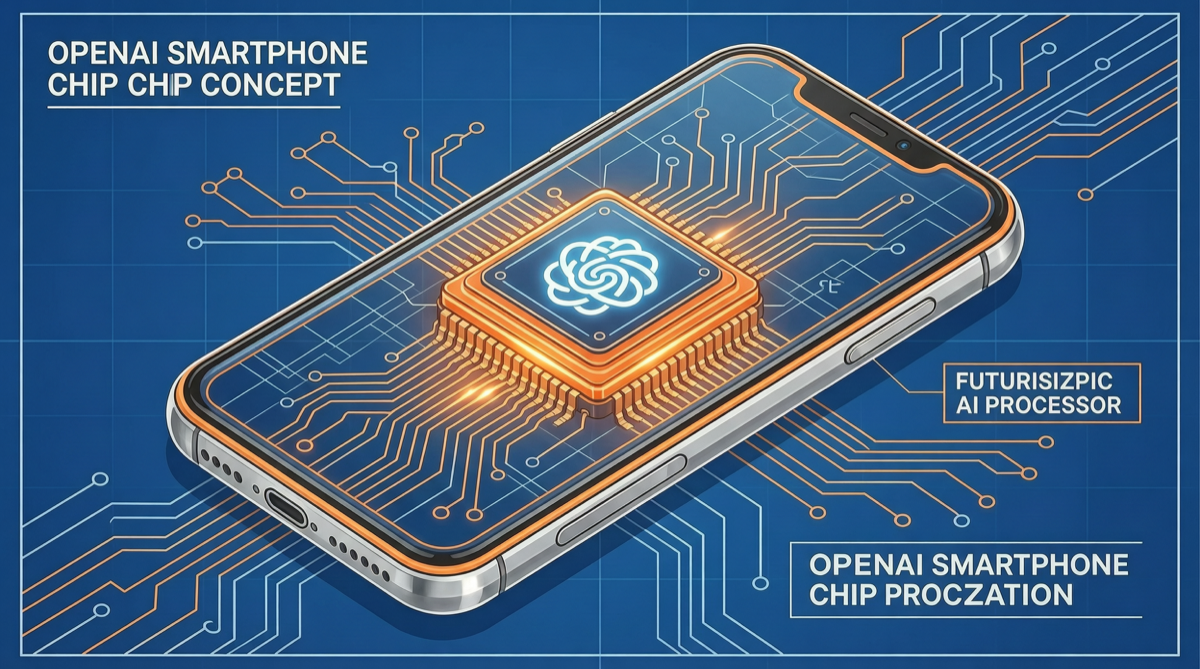
The Deal
Ming-Chi Kuo revealed OpenAI’s hardware ambition on April 27:
| Element | Detail |
|---|---|
| Chip Partners | MediaTek, Qualcomm |
| Manufacturer | Luxshare |
| Target Mass Production | 2028 |
| Annual Shipment Target | 300-400M units |
| Core Concept | Replace app grids with AI Agent task flows |
Why OpenAI Wants to Build Phones
The logic chain is clear: ChatGPT is already system-level integrated on iPhone → But Apple won’t let OpenAI fully control UX → To become a platform company, you need your own hardware entry → Apple’s path validates this direction
Sam Altman spent $6.5B on Jony Ive’s design company not to make phone cases — but to design an interaction paradigm without App Grids. “No apps. Just AI agents.”
Traditional Phone: Open App → Manual Operation → Close App
AI Phone: Tell Agent → Agent Calls Services → Done
Chip Architecture Speculation
The MediaTek + Qualcomm combo is interesting:
- MediaTek: Baseband and mid-range SoC design capability, strong cost control
- Qualcomm: Flagship GPU/NPU design experience and global patent licensing
Annual shipment of 300-400M? Apple sells ~220M iPhones/year. OpenAI’s target exceeds Apple.
Industry Impact
For Phone Makers
- Apple: Biggest potential threat
- Android: Samsung, Xiaomi need deeper AI Agent integration
- Luxshare: Revenue diversification beyond Apple
For AI Companies
- Anthropic: Claude needs its own hardware entry
- Google: Gemini + Pixel may accelerate
- Chinese players: Baidu, Alibaba, ByteDance must evaluate AI phone as next battleground
Timeline & Feasibility
2028 mass production means:
- 2026: Chip architecture definition and tape-out prep (current stage)
- 2027: Chip tape-out, testing, phone prototype
- 2028: Mass production launch
The real challenges: OS ecosystem, Agent capability maturity, and distribution channels.