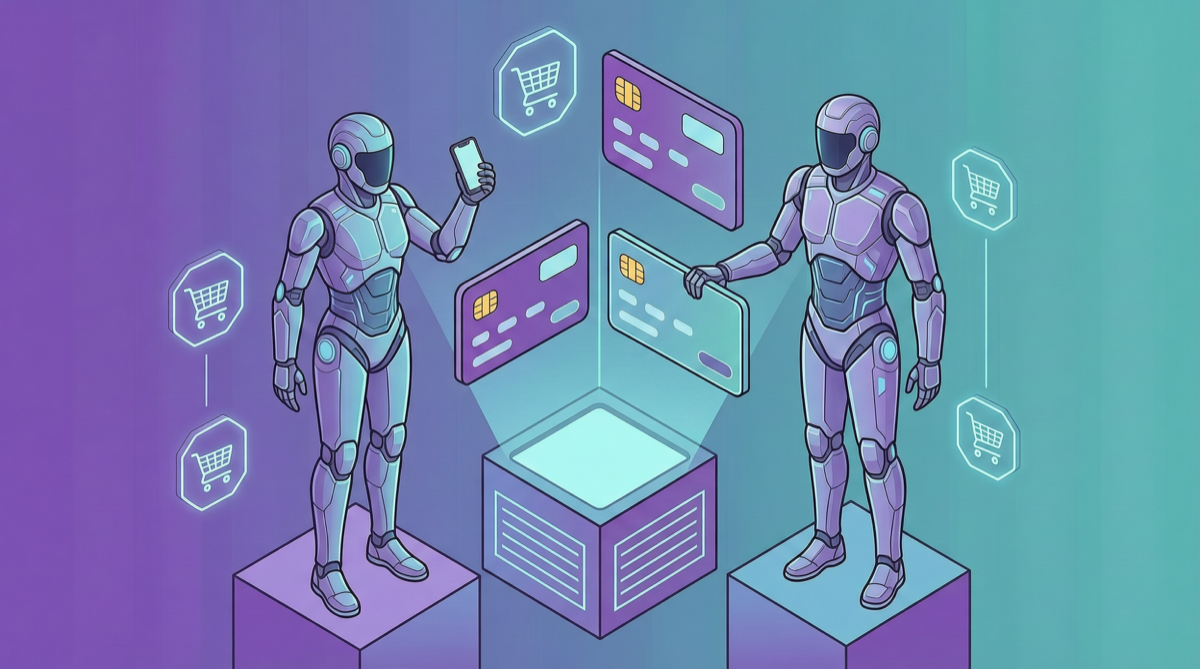
When AI Agents start spending money on their own, who collects the payment?
TabiVibe recently announced a full transition, focusing on AI Agent real-time execution, payments, consumption, and autonomous trading. The company’s positioning is clear: be the infrastructure for AI consumption — payment rails + execution layer.
What Happened
TabiVibe’s transition background is the rapid expansion of the AI consumption market:
- Global consumer spending on generative AI is expected to exceed $1 billion in 2026
- AI Agents evolving from “helping you do things” to “autonomous consumption” — shopping, subscriptions, investments, service bookings
- TabiVibe positions itself as the infrastructure provider for this trend
Core capabilities include:
- Real-time execution: Agents can instantly trigger transactions, not queue and wait
- Payment processing: Supporting Agent-initiated payments
- Autonomous trading: Agents can complete transaction decisions autonomously within preset rules
Why It Matters
This forms an interesting parallel with Oobit’s AI Agent Visa card (Tether-backed) — two different routes solving the same problem: how to enable AI Agent autonomous consumption.
| Solution | Technical Route | Coverage | Compliance |
|---|---|---|---|
| Oobit | Cryptocurrency (USDT + Visa card) | Global | Medium (depends on regional crypto regulation) |
| TabiVibe | Consumer engine (payment rails + execution) | TBD | High (within traditional payment framework) |
| Stripe Agent Payments | Web2 payment infrastructure | Existing Stripe merchants | High |
| Qwen + 0G Labs | On-chain model calls + Token payments | On-chain ecosystem | Low |
TabiVibe’s route is closer to innovation within the traditional payment framework, which may give it an advantage in compliance and merchant acceptance.
Landscape Assessment
AI Agent consumption infrastructure is rapidly taking shape, behind which is the logic:
- Agent numbers exploding: OpenClaw already has 13,700+ skills, Hermes Agent ecosystem is also expanding rapidly
- Clear consumption scenarios: From API call payments to daily consumption (shopping, subscriptions, travel)
- Infrastructure gap: Current payment systems are designed for humans, not Agents
TabiVibe’s entry point is the “execution layer” — not just payments, but actual transaction execution. This means it handles not just fund flows, but the complete closed loop of transaction logic, service calls, and result feedback.
China Perspective
TabiVibe’s transition reflects a trend among Chinese AI startups: from “building models” to “building ecosystem infrastructure.” In China, the large model layer is already extremely crowded (Qwen, Kimi, DeepSeek, GLM, MiniMax, Zhipu, etc.), and startups are seeking differentiated positioning — Agent economy infrastructure is an imaginative direction.
Action Recommendations
- Agent framework developers: Watch consumer infrastructure APIs like TabiVibe, integrate consumption capabilities for your Agents
- E-commerce platforms: Consider how to accept AI Agents as consumers — the future shopping force may not be human
- Investors: AI Agent consumption infrastructure is one of the core tracks for Agent economization
- Regular users: If you plan to let your Agent spend money for you, first understand budget control and approval mechanisms
Risk Alerts
- Security mechanisms for AI Agent autonomous consumption (budget caps, anomaly detection, human approval) are not yet standardized
- Regulatory frameworks for the legal status and liability attribution of Agent consumption are not yet clear
- If Agent consumption experiences large-scale misoperations or fraud, it could trigger a trust crisis