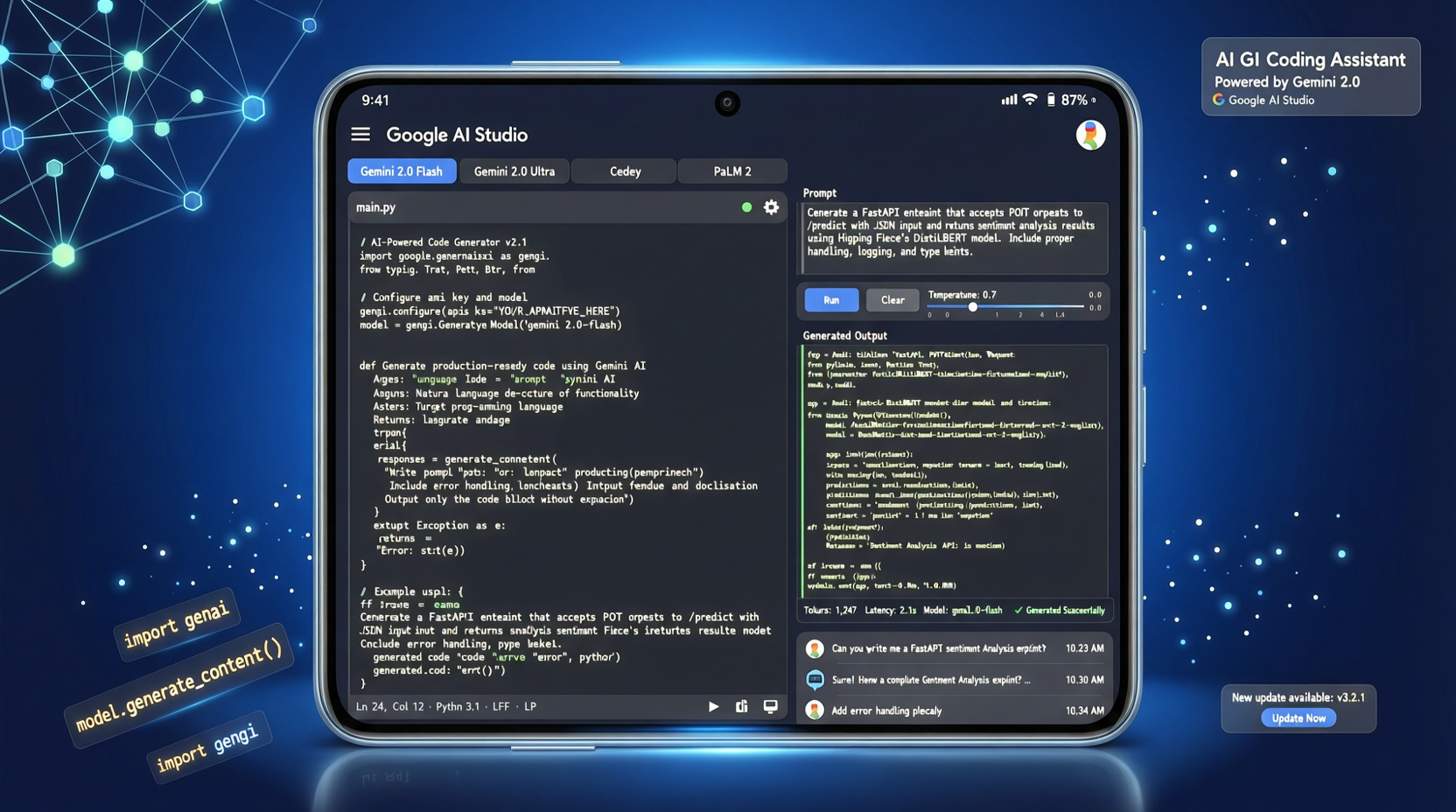
Google’s AI Studio is coming to mobile.
This isn’t just a “mobile-optimized” web experience—it’s a brand-new Android app, letting you build applications directly on your phone using AI prompts. Pre-registration is already live on Google Play; launch is only a matter of time.
What Does “Vibe Coding on Mobile” Actually Mean?
The Verge put it succinctly: “The app will let you use AI and prompts to start building other apps.”
That sentence sounds simple—but unpack it, and its implications are profound.
Vibe coding—describing what you want in plain language, and having AI write the code, debug it, and even deploy it—has exploded over the past year on desktops. Tools like Cursor, Windsurf, and GitHub Copilot have matured this workflow significantly. But they all share one prerequisite: you’re sitting at a computer.
Google AI Studio for Android aims to break that assumption.
Imagine this: You’re at a café and suddenly get an idea for a utility app. You pull out your phone, open AI Studio, and describe your concept in Chinese (or any language): “Build a personal finance app that supports receipt scanning via camera and auto-categorizes expenses.” Then AI begins building—no code required, not even a laptop.
This isn’t science fiction. Google is making it real.
Google’s Strategic Moves
Google AI Studio has existed as a web-based tool for developers for some time—used for testing and prototyping AI-driven applications. Bringing it to Android signals Google’s effort to shift the entry point for development tools from browsers to smartphones.
There are several strategic motivations behind this:
First, capturing the mobile AI programming gateway. No truly polished, production-ready AI coding tool exists yet for mobile. If Google delivers a robust vibe coding experience first, it stands to attract a new cohort of users: developers in emerging markets, students, and entrepreneurs who don’t own laptops but want to build.
Second, deep integration with the Google ecosystem. The Android version of AI Studio will almost certainly integrate Firebase, Google Cloud, and Play Store publishing capabilities. Apps built on your phone can be deployed to Google’s infrastructure with one tap. That end-to-end “idea-to-launch” loop is Google’s competitive moat.
Third, lowering the barrier to programming. At its core, vibe coding embodies the idea that “if you can speak, you can program.” When that idea migrates from desktop to mobile, programming truly becomes something anyone can do.
But Vibe Coding on Mobile Still Faces Hurdles
Building a programming tool for mobile isn’t trivial.
Screen size is the biggest constraint. Even if AI writes the code, you still need to review outputs, refine prompts, and audit generated content. How smooth is that experience on a 6-inch display? Google will need to invest heavily in interaction design.
Computational resources are another concern. While vibe coding relies primarily on cloud-based models, previewing and testing generated apps still demands local processing power. Can budget-tier Android devices run it smoothly?
Then there’s trust. How secure are apps built via AI on your phone? If AI introduces vulnerable dependencies or logic flaws, who’s accountable?
Google clearly recognizes these challenges. The Android version of AI Studio remains in pre-registration mode—meaning multiple rounds of optimization are likely before official launch.
This Isn’t Just a Google Move
Bringing AI-powered programming to mobile isn’t exclusive to Google. OpenAI’s ChatGPT app already offers basic code-generation capabilities. Anthropic’s Claude app supports conversational programming too. Yet, to date, no company has delivered a fully realized, dedicated mobile vibe coding product.
Can Google AI Studio for Android become the first? It’s worth watching closely.
One thing is certain: the next major wave of AI programming won’t erupt on desktops—it’ll happen right in your pocket.