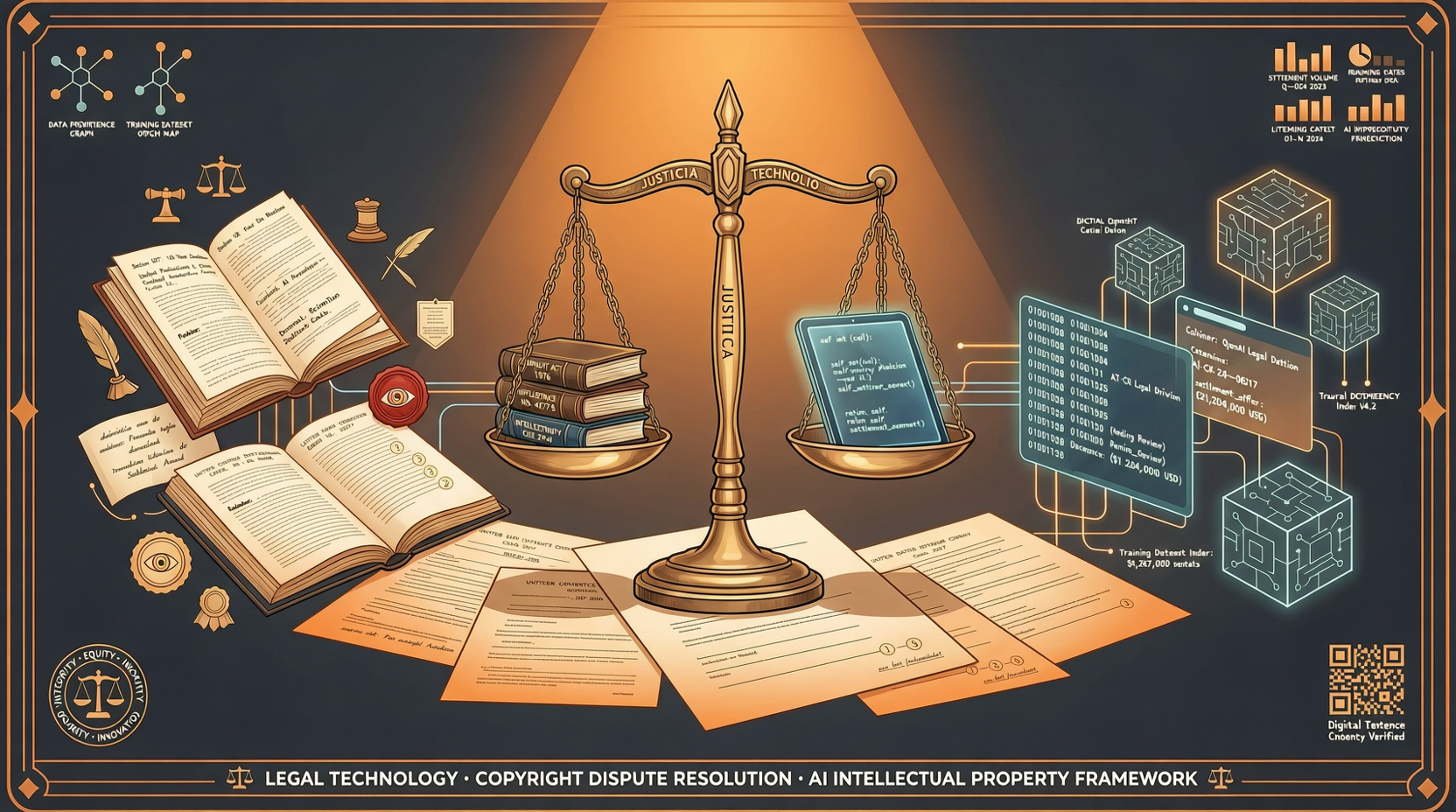
$1.5 billion.
That's the amount Anthropic agreed to pay authors last year to settle a copyright lawsuit. At the time, it was the largest copyright settlement in AI industry history.
Now it's stuck. A judge delayed approval, and authors say the payout is too low.
What's Going On
Short version:
Anthropic trained Claude on a large corpus of copyrighted text. Authors sued, alleging unauthorized use of their works. Both sides reached a settlement: Anthropic pays $1.5 billion.
Sounds like a happy ending? Not quite.
When authors got the details of the settlement, the per-person amount was far below expectations. Per Ars Technica, some authors' shares could be as low as a few thousand dollars — for works used to train a model from a company valued at tens of billions, that number is unacceptable to many.
Why $1.5B Sounds Like a Lot But Comes Up Short
The key is the distribution mechanism.
$1.5 billion isn't split evenly among authors. It's allocated based on "usage volume" — the more a work was referenced in the training data, the bigger the share.
But here's the problem: most authors have no idea how many times their work was used. They can't verify the data. Anthropic hasn't published a detailed list of training data.
That creates a structural contradiction: the total settlement is $1.5 billion, but the allocation process is opaque. Authors have to trust Anthropic's own numbers.
The Judge's Hesitation
The judge delayed approval not because the total is too low, but because the fairness of the distribution mechanism is in question.
This is a precedent-setting case. It's the AI industry's first large-scale copyright settlement. The judge's ruling will directly shape how subsequent similar cases are handled.
Approving an opaque distribution scheme would give every AI company a green light: pay a fixed amount, and however it's distributed is legal.
Requiring a more transparent mechanism could force AI companies to disclose training data usage — which touches their core trade secrets.
Anthropic's Position
Anthropic is in an awkward spot.
On one hand, it already agreed to pay and doesn't want to renegotiate — because renegotiation likely means a higher number.
On the other hand, if the settlement is rejected, Anthropic could face more severe legal consequences, including higher damages and stricter training data restrictions.
Ars Technica's headline gets it right: "getting messy."
Industry Impact
However this Anthropic case ends up, it's drawing a line for the entire AI industry:
Training models on copyrighted material isn't free, and the cost might be higher than you think.
Google, Meta, and OpenAI all train on similar data. The outcome of this Anthropic case becomes the reference for all subsequent copyright litigation.
$1.5 billion might be the maximum Anthropic is willing to pay. But if the judge decides it's not enough, that price gets rewritten.
My Take
The core of this issue isn't money. It's transparency.
Authors aren't just unhappy about the amount — they're more concerned that Anthropic won't disclose what's actually in the training data. Without transparency, any distribution scheme is like dividing a cake in a black box.
If Anthropic really wants to settle, the best move isn't to add money. It's to publish the training data list. Even just a list of book titles is better than hiding everything.
Hiding only makes trust erode faster.
Primary sources: