Behind the Numbers
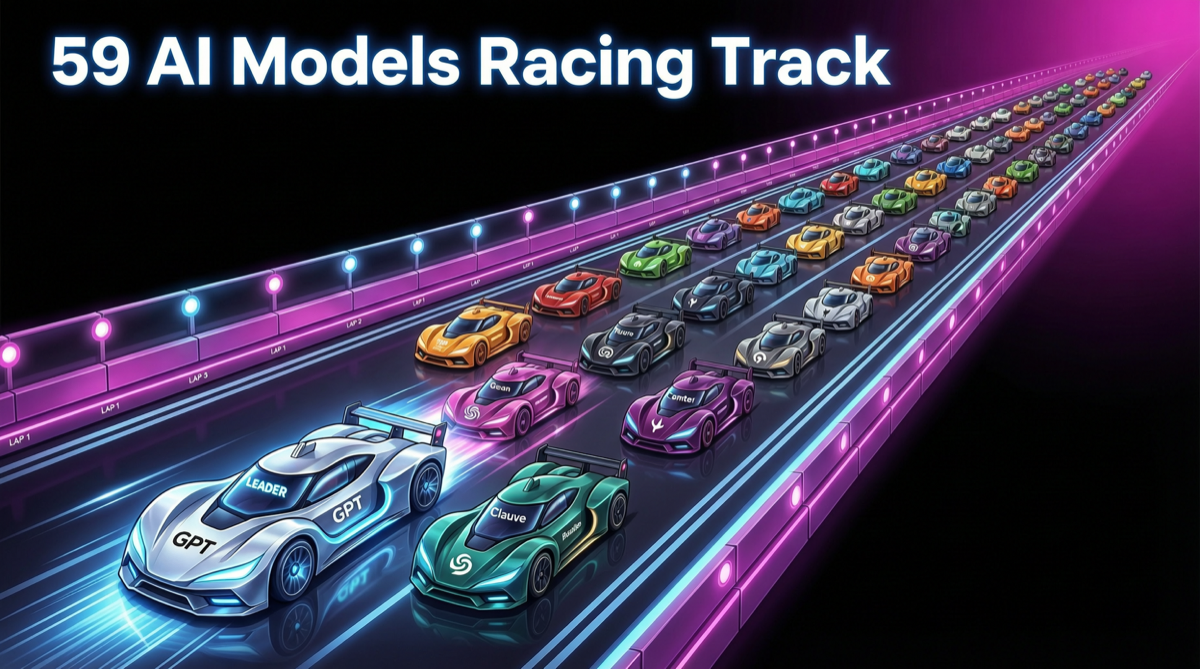
59.
That's the number of major AI models released in 2026 through May. On average, a new model or major version update every 2.5 days.
For comparison: approximately 15 major models were released in all of 2024. The number in the first five months of 2026 is already nearly 4 times the full-year total of 2024.
May: AI's "Black May"
In May alone, multiple flagship models are densely arriving:
| Model | Release/Expected | Core Upgrade | Positioning |
|---|---|---|---|
| GPT-5.5 | 4.23 (released) | Improved reasoning, tool call optimization | General flagship |
| Claude Opus 4.7 | Late Apr (released) | Coding and long-text reasoning | Deep reasoning |
| Gemini 3.1 Ultra | April (released) | 2M context, multimodal | Multimodal flagship |
| DeepSeek V4 | May (released) | Cost-performance SOTA | High cost-performance |
| GPT-5.6 | Mid-May (rumored) | Quick iteration of 5.5 | General enhancement |
| Sonnet 4.8 | May (leaking) | +12 coding points, new X-high mode | Cost-performance flagship |
| Gemini 3.5 | 5.19 I/O (rumored) | Omni multimodal | Multimodal enhancement |
| MiniMax M3 | May (confirmed) | Third-generation architecture | Domestic new force |
The model you picked 6 weeks ago is probably outdated.
This is not exaggeration — model capability iteration speed has exceeded the integration cycle of most enterprises.
The Real Competitiveness: Can Your System "Swap Models Anytime"
In this era, the core question is no longer "which model is smartest" but:
Can your system switch from Claude to GPT to DeepSeek in 10 minutes?
This requires not just technical capability, but a fundamental shift in architectural philosophy.
Four Levels of Model-Agnostic Architecture
Level 1: API Abstraction Layer
- Unified interface to call different models
- Tools: LiteLLM, OpenRouter, LangChain
- Maturity: ✅ Mature
Level 2: Capability Routing Layer
- Automatically selects the most suitable model based on task type
- Coding → Claude, Math → GPT, Long text → Gemini
- Tools: Hermes Agent routing, OpenClaw model switching
- Maturity: 🟡 In development
Level 3: Dynamic Degradation Layer
- Automatically degrades to backup models when primary is unavailable
- Auto-switches to cheaper models when budget exceeded
- Tools: Some enterprise-built solutions
- Maturity: 🔴 Early stage
Level 4: Real-Time Race Layer
- Sends same task to multiple models simultaneously, selects best output
- Requires additional voting/evaluation mechanism
- Tools: Experimental stage
- Maturity: 🔴 Experimental
Implementation Cost Estimates
| Approach | Development Time | Monthly Cost Increase | Suitable For |
|---|---|---|---|
| Single model | 0 | 0 | Individual users, validation phase |
| API abstraction | 1-2 weeks | +10-15% | Small-medium teams |
| Capability routing | 3-4 weeks | +20-30% | Medium products |
| Dynamic degradation | 4-6 weeks | +15-25% | Enterprise applications |
| Real-time race | 6-8 weeks | +50-100% | High-value scenarios |
Recommendations for Different User Types
Independent developers:
- Use OpenRouter or LiteLLM for API abstraction
- Select 2-3 most cost-effective models as backups
- Prioritize "ability to switch" over complex auto-routing
Medium teams:
- Establish capability routing: different tasks use different models
- Set cost thresholds for automatic degradation
- Evaluate model performance monthly, adjust strategies timely
Large enterprises:
- Must implement dynamic degradation layer for service availability
- Consider model race strategy for critical scenarios
- Build internal model evaluation system, not relying on public leaderboards
Forward-Looking Judgment
The 2026 AI competitive landscape is forming a new stratification:
- Model layer: White-hot competition, but differentiation is narrowing
- Application layer: Real differentiation comes from "how to combine and use models"
- Infrastructure layer: Model-agnostic architecture is becoming the new competitive moat
Models are commodities, architecture is the moat.
If your system is still tied to a single model, you're not only bearing vendor lock-in risk, but also missing a more important opportunity: leveraging the comparative advantages of different models to build a system more powerful than any single model alone.