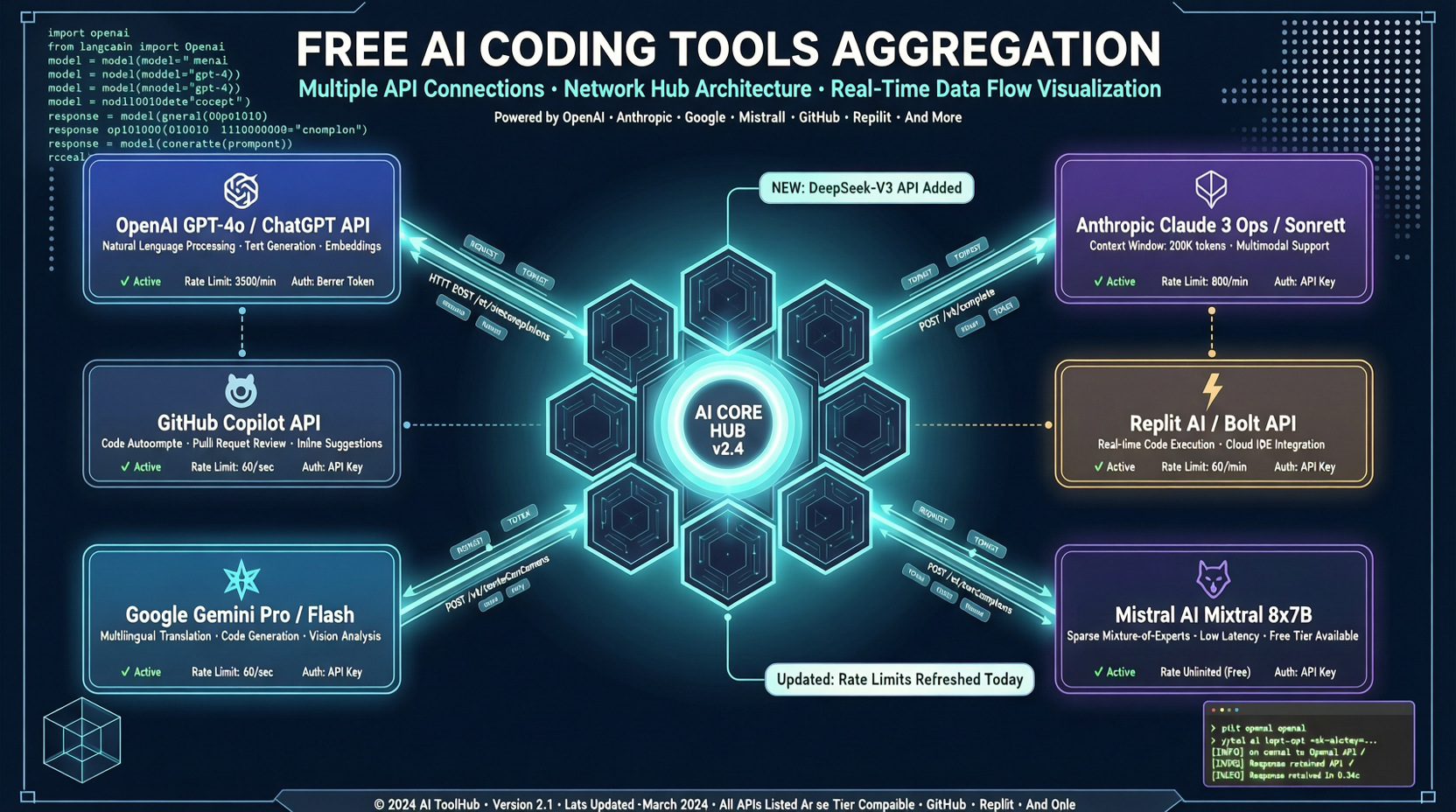
9router is on fire this week on GitHub: 5,204 new stars, totaling 9,359.
Its selling point is simple: connect your Claude Code, Codex, Cursor, Cline, Copilot to 40+ AI providers, auto fallback, RTK saves 40% tokens, never hit limits.
In plain terms: use a middleware layer to string together free or cheap AI APIs from various providers, giving you "unlimited free" coding.
573 commits, most recent 11 hours ago. 315 open issues, 131 open PRs. High activity.
But I don't want to talk about whether it works well. I want to talk about — how long can this model survive?
The Physics of Free Lunches
AI isn't water or electricity. Behind every prompt is real GPU compute consumption.
The 40+ providers in 9router — most aren't doing charity. They offer "free" tiers to acquire customers. When大量 users薅羊毛 through 9router, there are only two outcomes:
Either providers tighten free tiers, or outright ban this kind of aggregation.
This has happened before. Last year, similar API aggregation projects ran for a while before multiple providers simultaneously modified their ToS, explicitly prohibiting "using services through third-party relays."
9router's README doesn't mention any compliance risk. That's a blind spot worth noting.
Technically, This Can Work — But It's Not Elegant
Auto fallback sounds great. But different models have different API formats, context windows, and tool calling methods. 9router needs a translation layer in between.
This translation layer means:
- Added latency: requests have an extra hop
- Compatibility risk: a provider changes their API, 9router has to follow
- Debugging difficulty: when something breaks, you don't know if it's 9router's bug or the underlying provider's issue
573 commits means maintainers are desperately chasing API changes across providers. But this cat-and-mouse game has no winner.
My Take
For personal learning or small-scale trial, 9router is fine.
But if you plan to use it in production — don't.
Not because the technology is bad, but because the business logic isn't sustainable. When your code build pipeline depends on a "free" aggregation layer that could cut off at any time, your business risk is real.
The real solution isn't finding free alternatives. It's calculating your AI coding costs, picking a stable provider, and budgeting for it.
Free things are often the most expensive — because what you pay isn't money, it's stability.
Main sources:
- GitHub: decolua/9router (9.4k stars, 573 commits)
- GitHub Trending weekly data
- ToS terms from multiple AI providers