Core Judgment
“Everyone is building AI Agents, almost no one is building the infrastructure to run them in production.”
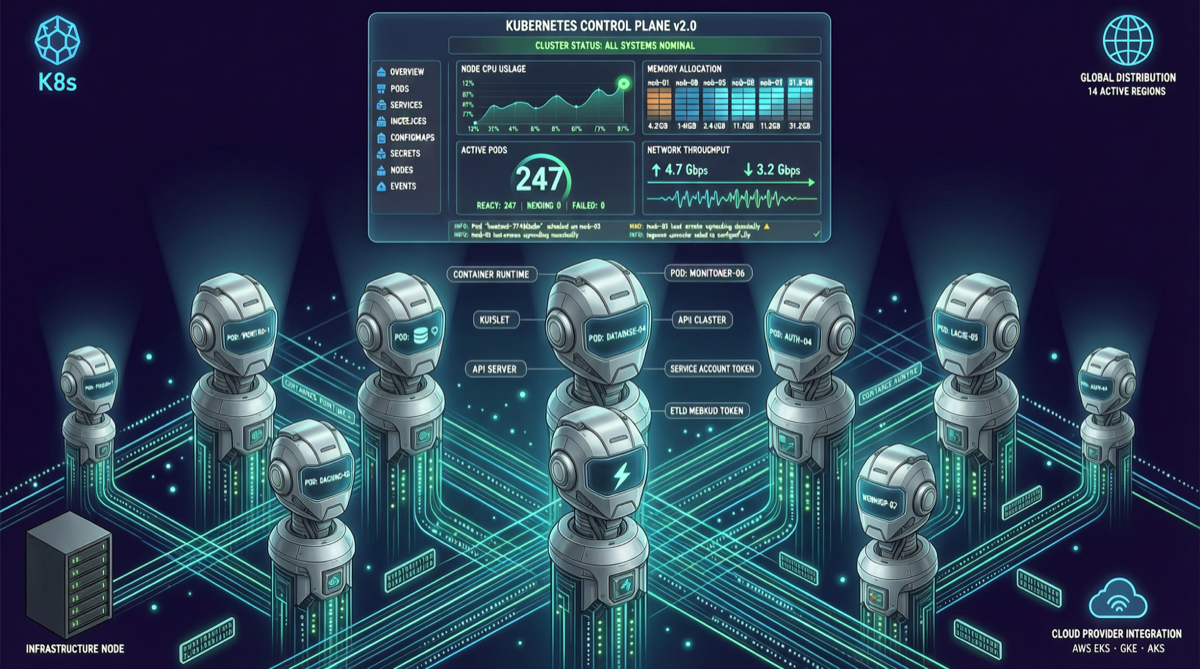
A project called AgentField (Agent-Field/agentfield) has quietly appeared on GitHub, and the community has given it a precise label: “Kubernetes for AI Agents”. It is not yet another Agent framework, but a complete control plane — unifying Agent lifecycle management, scheduling, monitoring, and governance into a single system.
Pain Points: The “Last Mile” of Agent Production
The state of Agent development in 2026:
- Easy to develop: Using frameworks like LangChain, CrewAI, Hermes, you can write a usable Agent in hours
- Hard to deploy: Putting this Agent into production requires solving scheduling, scaling, fault tolerance, monitoring, permissions yourself…
- Missing governance: What if an Agent goes rogue? Where are the audit logs? How do you rollback to a “good” state?
This is the problem AgentField attempts to solve. Its core argument: Agents should be managed like Pods in Kubernetes — declarative configuration, automatic scheduling, health checks, elastic scaling.
Architecture Overview
AgentField provides a complete control plane, including these core components:
1. Agent Scheduler
Similar to K8s Scheduler, responsible for:
- Assigning Agent tasks to suitable compute nodes
- Considering resource constraints (GPU memory, API quotas, network bandwidth)
- Supporting priority queues and preemptive scheduling
2. Lifecycle Manager
Pending → Running → Waiting → Succeeded/Failed
              ↓
Restarting (auto-recovery)- Automatic health checks and restarts
- Graceful shutdown and state saving
- Auto-recovery after Agent crashes
3. Policy Engine
This is what distinguishes AgentField from simple schedulers:
- Security policies: Which resources Agents can access, which APIs they can call
- Cost policies: Budget caps and cost tracking for each Agent
- Compliance policies: Data出境 restrictions, PII handling rules
4. Observability
- Agent execution trace tracking
- Resource usage dashboards
- Anomaly detection and alerting
- Audit logs (who made the Agent do what)
Comparison with Existing Solutions
| Dimension | LangChain/CrewAI | OpenClaw/Hermes | AgentField |
|---|---|---|---|
| Positioning | Agent development framework | Agent runtime | Agent control plane |
| Scheduling | None | None | Built-in scheduler |
| Scaling | Manual | Manual | Automatic |
| Policy governance | Self-implemented | Basic | Built-in policy engine |
| Observability | Basic logging | Basic | Full-stack tracing |
| Analogy | Application code | Container runtime | Kubernetes |
Key认知: AgentField is not a replacement for LangChain. They exist at different levels of the tech stack:
AgentField (Control Plane)
    ↓
OpenClaw / Hermes / LangChain (Runtime/Framework)
    ↓
Claude / GPT / Qwen (Model Layer)
Applicable Scenarios
AgentField provides the most value in these scenarios:
- Multi-Agent orchestration: Running dozens or hundreds of Agents simultaneously, needing unified scheduling and monitoring
- Enterprise deployment: Needing strict permission control, audit compliance, and cost management
- Hybrid cloud environments: Agents needing to run across multiple cloud and on-prem nodes
- High availability requirements: Needing auto-recovery after Agent crashes, cannot rely on manual intervention
Getting Started Path
If you decide to try AgentField:
- Start small: Validate scheduling policies with 3-5 Agents before scaling
- Define clear policies: Set security, cost, and compliance policies before deployment, not after the fact
- Establish baseline metrics: Record resource consumption and response times during normal operation for anomaly detection reference
- Progressive migration: Don’t migrate all Agents at once, start with non-critical tasks to validate
Risk Warning
AgentField is still in early stages:
- Community size and documentation maturity need attention
- Integration with specific Agent frameworks may require custom adaptation
- The control plane itself adds system complexity — for scenarios with only a few Agents, it may be “overkill”
Industry Signal
The emergence of AgentField confirms a trend: AI infrastructure is evolving from the “model layer” to the “Agent layer”. When model capabilities become commoditized, the next competitive barrier is how to reliably, efficiently, and safely run large numbers of Agents.
Gartner predicts that by the end of 2026, 40% of enterprise applications will embed AI Agents. Infrastructure projects like AgentField are paving the way for this trend.