If you’ve used Claude Code or Codex, you’ve likely experienced this scenario:
Yesterday, you spent an entire session discussing architectural decisions, technology choices, and coding conventions with your agent. Today, when you open a new session, it’s a blank slate—you have to explain everything all over again.
agentmemory was built specifically to address this pain point. In just one week, it gained 6,865 stars—reaching a total of 9,822 stars—and has already accumulated 320 commits, reflecting intense ongoing activity.
It Doesn’t Solve “Memory”—It Solves “Forgetting”
The memory challenge for AI programming agents has two layers:
The first layer is intra-session memory. This is already handled well by tools like Claude Code and Codex—their large context windows retain conversation history within a single session.
The second layer is cross-session memory. This is the real pain point. Whether you switch terminal windows, restart your IDE, or simply return to the project the next day, your agent forgets all previously learned project context.
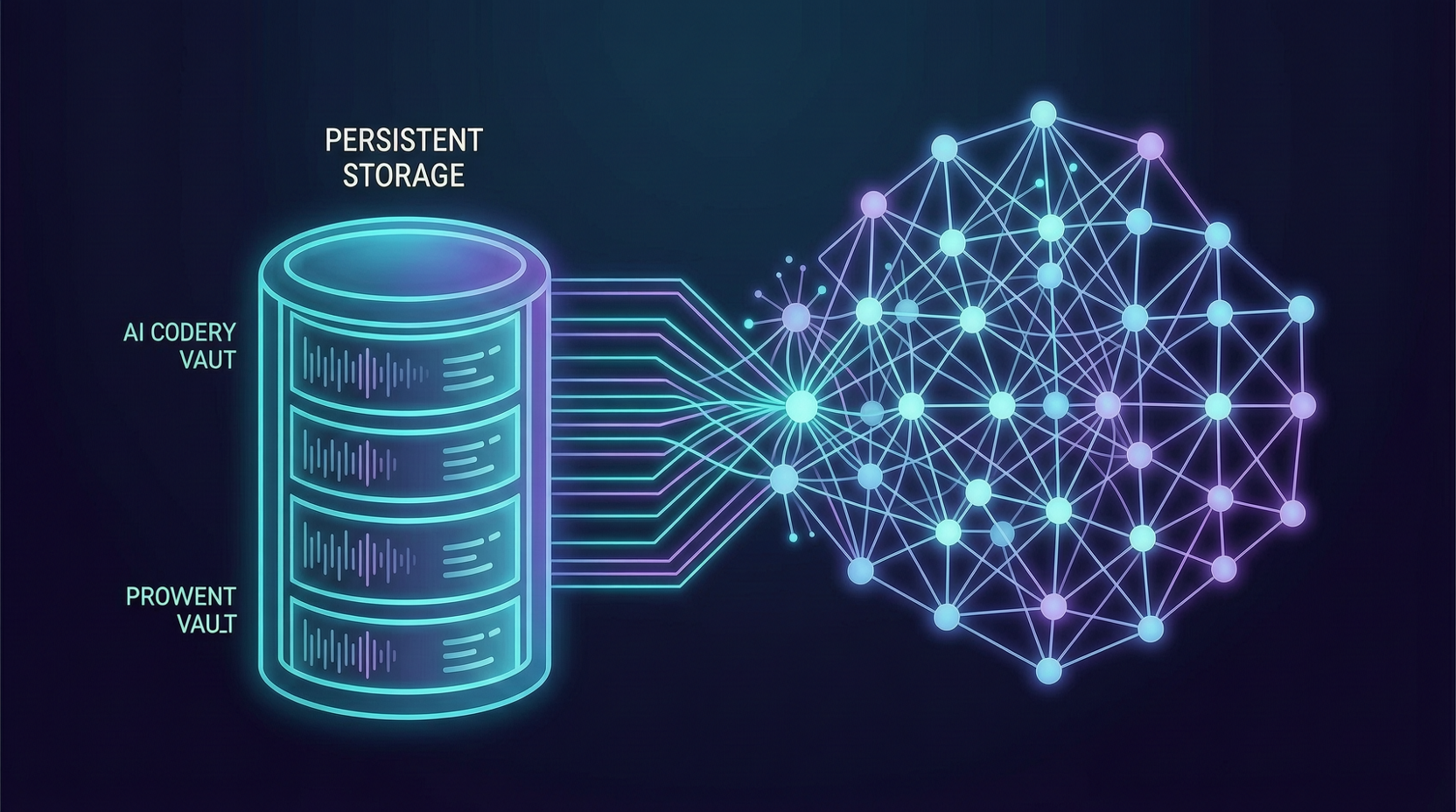
agentmemory targets precisely this second layer. It runs as an independent background service, persistently storing key information generated during agent sessions—such as architectural decisions, technical agreements, and hard-won lessons from debugging. When a new session starts, the agent first retrieves relevant project memory from agentmemory before continuing its work.
Not Just for Claude Code—Codex Is Supported Too
The latest v0.9.16 release supports both .claude-plugin and .codex-plugin plugin formats. That means whether you’re using Claude Code or OpenAI Codex, you can plug into the same unified memory layer.
The project also includes Python examples (examples/python/), underscoring that it’s not tied to any specific agent framework—it functions as a generic, persistent memory service.
Deployment Is Simpler Than You’d Expect
Only two steps are required to get it running:
# Deploy in one command to Fly.io / Railway / Render
# The project provides one-click templates for all three platforms (in the deploy/ directory)

# Then install the plugin in Claude Code
claude plugin install agentmemory
A benchmarking tool named load-100k.ts resides in the benchmark/ directory, capable of stress-testing p50/p90/p99 latency. This demonstrates that the author didn’t build a mere demo—they rigorously validated performance.
What It Is Not
agentmemory is not a RAG system, not a vector database, and not a knowledge base. Its scope is narrower and more pragmatic: it records key decisions and contextual insights generated by the agent itself during development work—and enables fast retrieval of those memories when needed later.
This differs fundamentally from RAG: With RAG, you manually ingest documents into a repository and then query them. With agentmemory, the agent autonomously generates and stores memories during normal operation—no manual knowledge-base curation required.
A Real-World Scenario
Imagine you’re maintaining a microservices project comprising 12 services, 3 shared libraries, and a custom CI/CD pipeline.
Without agentmemory, each new session requires you to re-instruct the agent:
- “This project uses Go—but service-gateway is written in TypeScript.”
- “Our CI relies on a custom build step; do not modify
.github/workflows.” - “During last week’s refactor, the auth module was moved from service-a to shared/auth.”
With agentmemory, such project-specific knowledge—learned and internalized by the agent during prior development—is automatically persisted. The next time you open a new session, the agent already remembers these details.
Is It Worth Adopting?
Let’s be honest: competition in this space will intensify rapidly. Anthropic will almost certainly integrate cross-session memory directly into Claude Code, and OpenAI will likely do the same for Codex.
But agentmemory’s advantage lies in its immediate usability and cross-agent compatibility. If your workflow involves both Claude Code and Codex—or if your team members use different agents—a unified memory layer delivers tangible, practical value.
Recommendation: Start with a non-critical project for two weeks. Observe whether the stored memories are accurate and whether retrieved context meaningfully improves productivity. If it works well, scale it up to your core projects.
Sources
- rohitg00/agentmemory
- The
load-100k.tsload-testing tool in the project’sbenchmark/directory