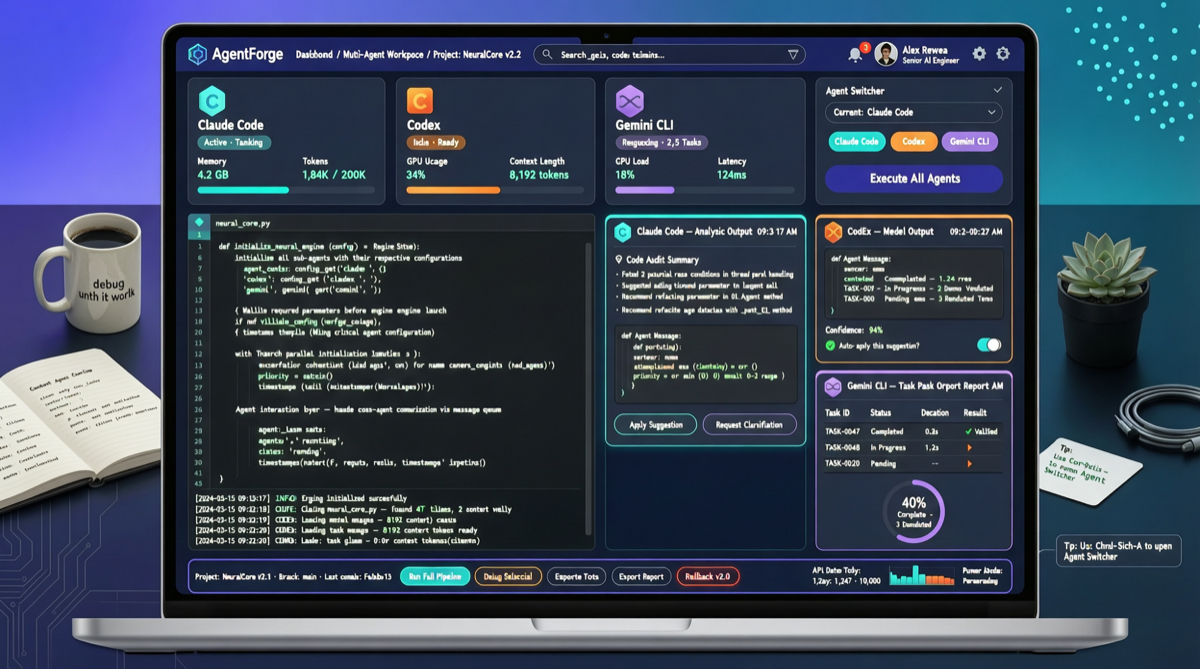
Writing code in 2026, you probably use multiple agents: Claude Code as the main driver, Codex for quick tasks, Gemini CLI as the free option, OpenCode as the open-source alternative. Switching between terminals, swapping profiles, configuring API keys — the daily time cost adds up.
cc-switch solves this problem.
64.8K GitHub stars, 4.2K forks, 1658 commits. Built with Rust + Tauri, cross-platform desktop app. Gained 264 stars last week, 633 issues and 149 PRs — activity levels that are high even for a project this size.
What It Does
One sentence: All-in-one coding agent switcher.
Supported agents:
- Claude Code
- OpenAI Codex CLI
- OpenCode
- openclaw
- Gemini CLI
- Plus new providers like BytePlus (added in the most recent commit)
The core function: select an agent in the GUI, and it automatically configures the corresponding working environment. No manual .env switching, config editing, or CLI reinstallation.
Real Value
The value here is not in technical sophistication, but in solving a genuine pain point in developer workflows.
The 2026 coding agent ecosystem is already highly fragmented. Each agent has its own configuration method, API key management, and context handling logic. For developers who want to compare different agents within a project, or choose the most suitable one based on task type, every switch is a minor hassle.
cc-switch productizes this process.
The architecture is solid: Rust backend (src-tauri), Tauri web frontend. Cross-platform support for macOS, Windows, Linux, with Flatpak packaging available.
Worth Installing?
If you use multiple coding agents simultaneously, the cost of trying it is low. It doesn't invade your project files or modify code — it just handles environment switching.
If you only use one agent, skip it for now.
One detail worth noting: BytePlus appears in the project's sponsor list, suggesting a commercialization path may already be in development. It's still open-source, but the long-term direction is worth watching.
Also, 633 issues indicate both strong community demand and plenty of problems. For a tool project, many issues aren't necessarily bad — at least people are using it.
Primary sources:
- GitHub - farion1231/cc-switch
- Repository commit history and README (accessed May 9, 2026)