Building consumer-facing AI products in China, someone recently concluded, is basically hopeless.
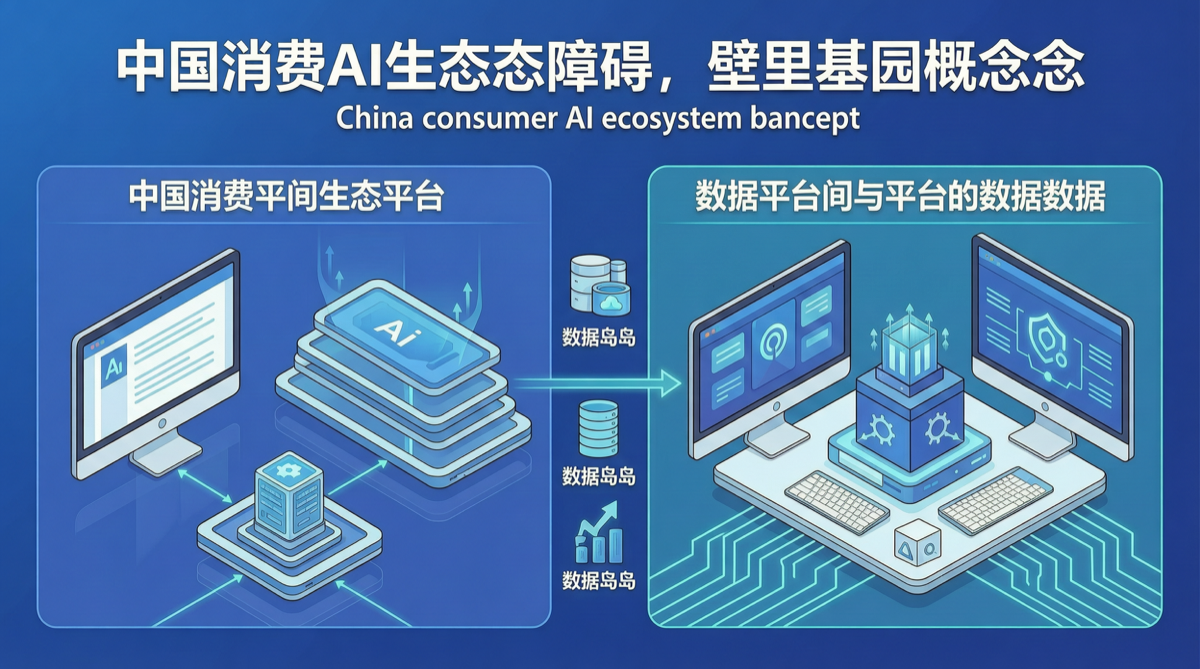
Not because the models are bad. Qwen, Kimi, and DeepSeek APIs are good enough. The problem is the ecosystem — WeChat, Alipay, and Douyin each build walled gardens. Data does not flow between them, APIs are not open.
Want to build an agent that connects across these platforms? Impossible.
Even a Telegram Notification Requires Detours
This is not exaggeration. An AI app developer shared their experience on social media:
Wanting to add Telegram notifications to a product in China requires navigating a maze. ICP registration alone takes weeks, overseas services face network restrictions, and even if connected, stability is not guaranteed.
Compare this to overseas: Twilio or Telegram Bot API gets the same feature done in a few lines of code. Developers spend time on product logic, not infrastructure adaptation.
Data Silos Are an Agent's Enemy
The core value of AI agents lies in "connection" — linking different data sources, tools, and services to help users complete cross-platform tasks.
But in China's internet ecosystem, each platform is an island:
- WeChat data sits with Tencent
- Alipay data sits with Alibaba
- Douyin data sits with ByteDance
There are no open APIs for interoperability between them. Want an agent that "automatically organizes WeChat chat records + Alipay bills + Douyin bookmarks"? Technically impossible, because the data is simply not accessible.
This is not a technical capability issue. It is a business strategy issue. Each platform builds its own "walled garden" — the more users stay within its ecosystem, the more commercial value it creates. Opening APIs means handing user data to competitors.
Comparing to Overseas Ecosystems
In the US, OpenAI's ChatGPT can connect to Gmail, Google Calendar, Slack, Notion — because these platforms all provide standardized APIs. Gmail has Google Workspace API, Slack has a public Web API, Notion's API documentation is crystal clear.
China's platforms do have APIs, but their openness level is different. WeChat's open platform only allows integration in specific scenarios (official accounts, mini programs). Alipay's open APIs mainly target merchants. Douyin's open platform data interfaces are heavily restricted.
This means the same AI agent product can do 3 to 5 times more overseas than in China.
ICP Registration: Not Technical, But Time Cost
Another overlooked barrier is ICP registration.
Building an AI product for Chinese users means your domain must have ICP registration. This process typically takes weeks, during which the service cannot go live. For overseas teams, this is almost incomprehensible — in the US, buy a domain, deploy to Vercel, go live, the whole process can be done in 10 minutes.
For independent developers and small startup teams, these weeks of time cost can mean missing a time window.
Not All Pessimistic
The other side of the coin: China's AI has advantages in specific scenarios:
- Deep vertical integration: Since general platforms are blocked, Chinese teams tend toward deep vertical integration — AI customer service in e-commerce, AI assistants in finance.
- Policy-driven market: Some local governments and enterprises have clear AI demands and budgets. The B2B market space is larger than B2C.
- Open-source models catching up: Qwen, GLM and other open-source models have caught up to international frontier levels, lowering the technical barrier.
The problem is not "whether AI products can be built," but "what types of AI products." The ceiling for general consumer agents in China is low, but vertical AI applications still have room.
It is just that if your dream is a "universal personal assistant" — reading emails, managing calendars, controlling smart homes, cross-platform task management — that dream currently lacks the infrastructure in China.
Sources
- X/Twitter community discussion (May 9, 2026)
- Comparison of domestic open platform API documentation (WeChat, Alipay, Douyin)