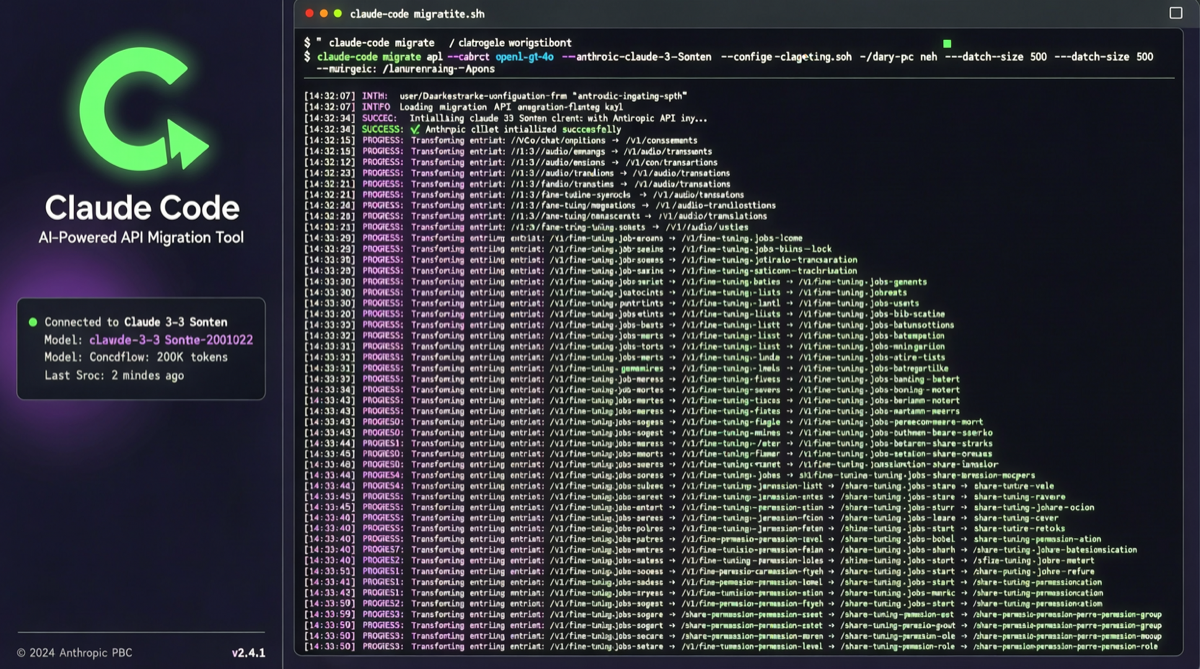
Anthropic quietly launched a built-in Skill for Claude Code in late April — the Claude Platform Skill. This tweet garnered 3,572 Likes and 1,789 Bookmarks, making it Anthropic’s highest-engagement developer tool announcement that month.
Its core capability is simple: Run /claude-api migrate in Claude Code, and it automatically completes migration from old Claude API versions to new ones.
But behind the simplicity lies Anthropic’s ambition to build developer infrastructure.
What Happened
Claude Platform Skill is Claude Code’s first official built-in Skill, offering three core capabilities:
1. Automated Model Migration
Running /claude-api migrate, Claude will:
- Scan all Claude API calls across the entire codebase
- Identify model names needing updates (e.g.,
claude-3-opus→claude-opus-4-7) - Automatically adjust prompt formats and effort settings
- Show before/after migration diffs
This solves developers’ most painful problem during model iteration: manually updating API calls file by file.
2. Prompt Caching Best Practices
Tell Claude “Add prompt caching,” and it automatically optimizes your prompt structure for caching — marking long context parts as cacheable and changing parts as non-cacheable. This means API costs could drop 50-90% (cached portions charged at only 10%).
3. Claude Managed Agents Integration
Built-in support for the Claude Managed Agents API — developers can launch and manage autonomous agents directly from within Claude Code, no tool switching needed.
Why Anthropic Built This
This seems like just a “convenient tool,” but the strategic intent is clear:
First, reducing migration friction = locking in users
When a model upgrades from Opus 4.6 to 4.7, if developers need to manually modify dozens of code locations, many will choose to “stick with the old version.” Built-in migration eliminates this friction — upgrading becomes zero-cost, users naturally follow.
Second, Claude Code isn’t just an editor — it’s an API gateway
Anthropic’s intention is clear: Claude Code shouldn’t just be “an AI assistant that helps you write code.” It should be the unified entry point for developers to interact with the entire Claude Platform — from writing code → managing APIs → deploying agents → monitoring usage, all in one tool.
Third, direct competition with OpenAI Codex
OpenAI recently also pushed Codex’s Claude Code user migration feature (one-click import of settings, plugins, agent configs). Anthropic’s response: I not only make you migrate in, I make you never want to leave. The built-in Platform Skill is part of this “stickiness” strategy.
Anthropic vs OpenAI Developer Tool Strategy
| Dimension | Anthropic (Claude Code) | OpenAI (Codex) |
|---|---|---|
| Migration Tool | /claude-api migrate built-in Skill | One-click import from Claude Code |
| Multi-Model | Claude ecosystem only | GPT-5.5 + future models |
| Open SDK | 7 language SDKs | Mainly Python/Node |
| Integration | CodeRabbit, JetBrains | GitHub, VSCode plugins |
| Strategy | Deep integration, high switching cost | Lower entry barrier, attract migration |
Action Items
- If you use Claude API: Run
/claude-api migrateto check if your codebase needs updates - If you care about API costs: Try “Add prompt caching” — in long conversation scenarios, cache optimization can save significant costs
- If you’re doing tech evaluation: Anthropic’s “deep integration” strategy means the Claude ecosystem’s stickiness will grow — now is the best time to use it while migration costs are still low
Anthropic isn’t “releasing a feature” — it’s redefining Claude Code’s positioning from coding assistant to developer infrastructure.