An AI agent runs a long task—three hours of research, report writing, data lookup—and something goes wrong halfway. Start over from scratch?
That's the problem cocoindex wants to solve.
Its positioning is clear: incremental engine for long horizon agents. In plain terms: let AI agents' long-running tasks resume from breakpoints and update incrementally, rather than restarting every time.
Why long-horizon tasks are a problem
Anyone who's used Claude Code, Codex, or any coding agent knows this pain point: the agent runs for a while and then breaks. Network timeout, context overflow, model return anomaly, intermediate step error—any of these can ruin a half-hour task.
Existing solutions mostly retry the entire task. But retry cost is linear. First run took 30 minutes, retry takes another 30. Three runs means 90 minutes.
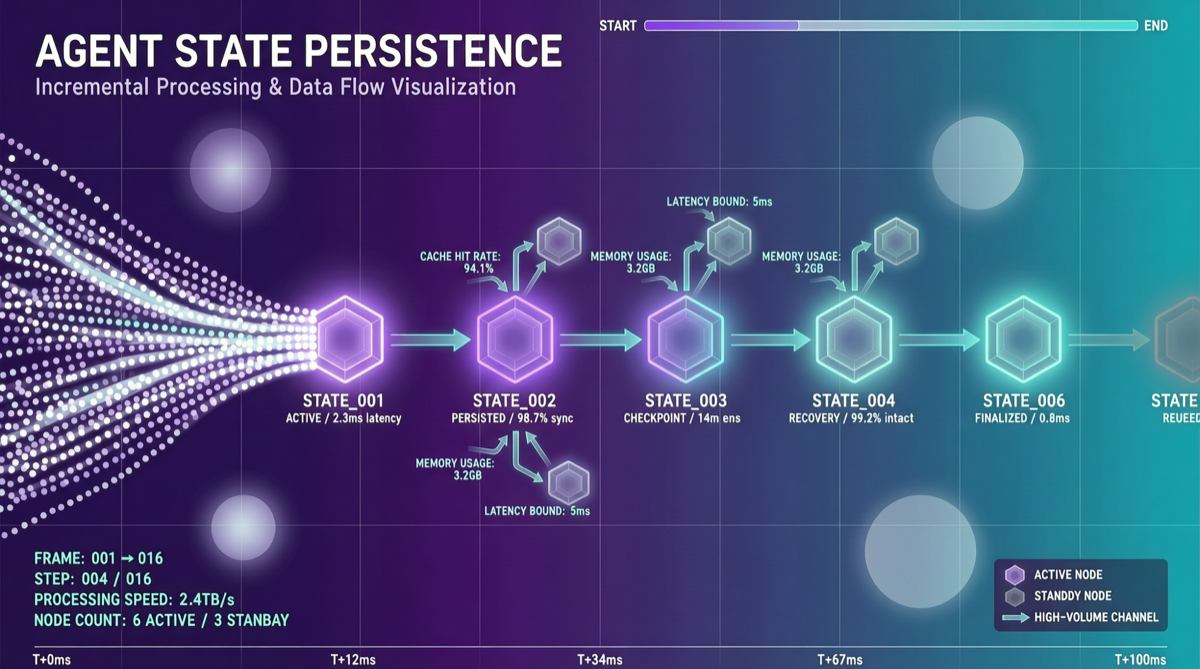
cocoindex's approach: split the agent's workflow into dependency-linked steps, persist each step's intermediate results. When a task is interrupted and restarted, only the failed step and its downstream are rerun, not the whole thing.
Architecture highlights
From the repo structure, cocoindex is written in Rust. Core directories:
packages/mcp: MCP integration, supporting connections to various AI modelsexamples/pdf_embedding: PDF processing example, recently switched from marker to doclingdocs: documentation updated frequently
1,745 commits, 200 tags, a memo cache cross-script sharing fix merged an hour ago. This iteration frequency shows a full-time team, not a weekend project.
The memo cache detail
A recent commit: "share memo cache across script and CLI invocations." This means cocoindex's cache persists not just within a single session, but across different script calls and CLI executions.
Important detail. If your agent runs a data sync every morning, cross-session memo cache means the next day's run can directly reuse yesterday's intermediate results.
Compared to existing solutions
LangGraph, CrewAI, AutoGen support state persistence and breakpoint recovery too. cocoindex's difference:
It's not an agent framework, but an engine layer. You don't use it to define agents, but as infrastructure plugged into your existing agent workflow.
Analogy: LangGraph is like Spring Boot, cocoindex is like Redis.
Is it worth looking at
If you're building long-horizon agent tasks (research agents, data analysis agents, document processing agents), cocoindex's incremental engine approach is worth reference.
But if you just use AI coding agents to write and fix code, you probably don't need this. Your tasks are minute-scale, not hour-scale.
Currently at 9.6k stars, 39 open issues, 17 open PRs. Community activity is decent but not yet at mass adoption stage. Check the docs and examples first to see if it fits your scenario.
Main sources: