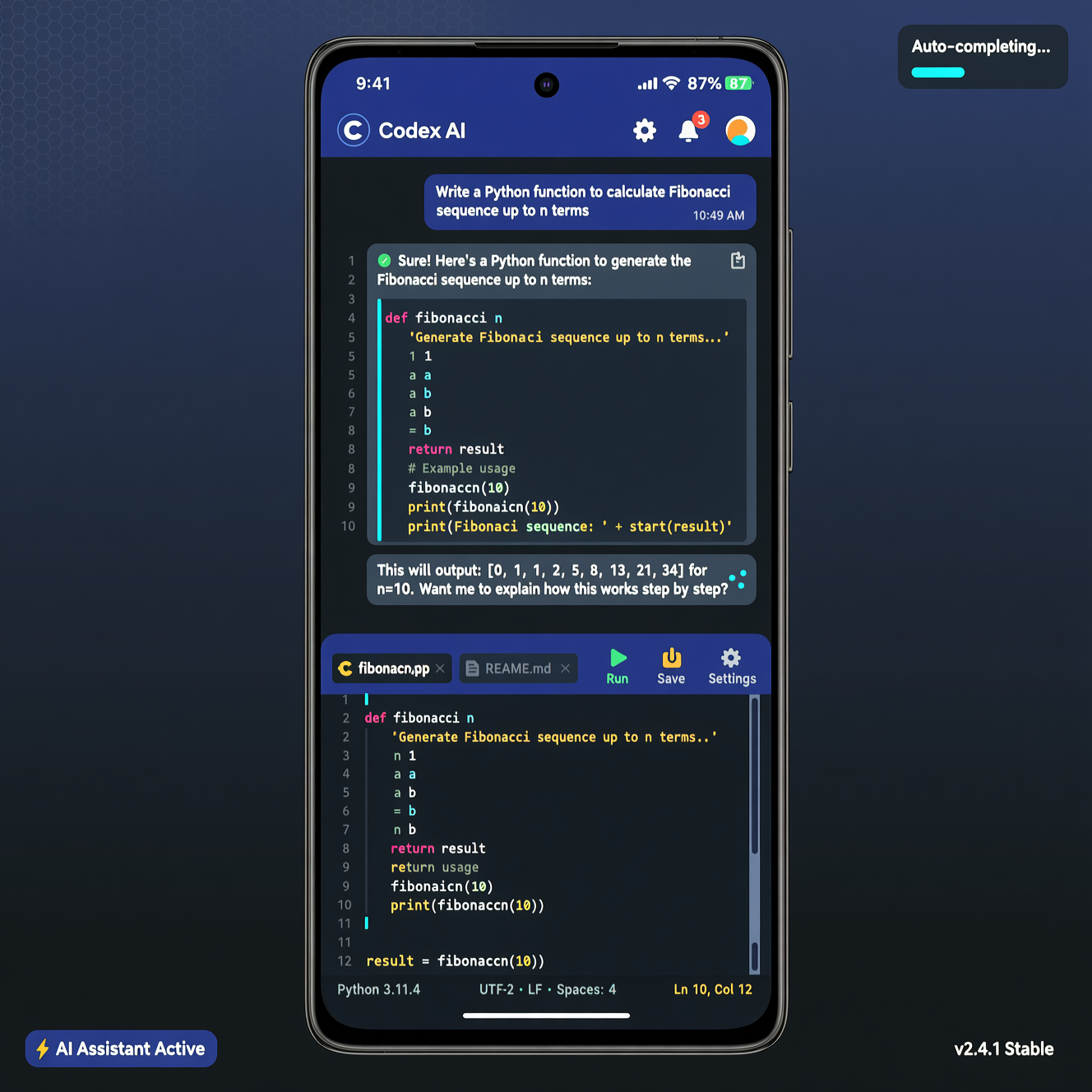
OpenAI is making a move that seems minor but is actually highly significant: packing Codex into the ChatGPT mobile app.
The news scored 469 points and 244 comments on Hacker News. Not exactly explosive viral heat, but the quality of the discussion is high—there's really only one core question: Is it actually useful to write code with AI on a phone screen?
What is Codex
For those unfamiliar, Codex is OpenAI's code generation model, previously primarily used in the desktop version of ChatGPT and the ChatGPT web interface. It can understand natural language prompts to generate, modify, and debug code across multiple programming languages.
Integrating it into the mobile app means you can sit on the subway or wait for your coffee and simply tell your phone, "Help me write a Python script to organize this CSV file," and Codex will generate the code for you.
Sounds great. But there are several key issues worth unpacking.
The Core Contradictions of Mobile Programming
The screen is too small. This is the most obvious barrier. Reading code and writing code are two different things—viewing 20 lines of code on a phone screen may require constant scrolling and zooming, and precise editing operations (selecting a specific line, renaming a variable) are highly inefficient on a touchscreen.
Inefficient input. Phone keyboards are great for typing but terrible for coding. Indentation, bracket matching, symbol entry—these taken-for-granted actions on a desktop keyboard create friction at every step on mobile.
Mismatched workflow. Most programming isn't about "writing a chunk of code when inspiration strikes"; it's about iterating within an existing codebase. You need context, you need to run tests, you need Git operations. Can a phone handle all this?
But OpenAI's Intent Might Not Be "Mobile Programming"
Look at it from another angle, and OpenAI probably isn't trying to encourage you to write production-level code on your phone. The real value of Codex in the mobile app might lie in:
Quick prototypes and scripts. "Help me write a regex to match this pattern"—requests like this don't require opening an IDE and can be handled right on your phone.
Code review and learning. Viewing Codex-generated code on your phone to pick up new programming techniques or review someone else's work. It's more about "reading" than "writing."
An entry point for voice programming. If the core interaction with Codex on mobile is voice input—"Write a function that takes a list and returns a sorted result"—then the phone becomes a unique programming interface. It's not about replacing the keyboard, but about carving out a new path.
The HN Community's Reaction
The discussion on Hacker News split into two camps.
Optimists argue it's an inevitable step—AI coding tools should eventually be ubiquitous, and since mobile is the largest computing platform, integration is only natural.
Skeptics, meanwhile, pointed out all the issues mentioned above, viewing this more as a "show of strength" feature rather than a product decision that genuinely solves user needs.
As one highly upvoted comment put it: "Just because I can use Codex to write code on my phone doesn't mean I should."
My Take
In the short term, bringing Codex to the mobile app is a "nice to have" feature. Not many people will actually write large amounts of code on their phones, but for specific scenarios (quick scripts, code learning, voice programming), it does hold real value.
In the long run, this reflects a strategic mindset from OpenAI: Make AI coding capabilities ubiquitous. Desktop, mobile, API—Codex shouldn't be confined to any single interface.
But the key lies in the experience. If OpenAI merely shrinks the desktop version of Codex and crams it into a phone screen, the feature will likely be forgotten by users. But if they deeply optimize it for mobile contexts—like better code browsing modes, voice-first code generation, or automation scripts integrated with the phone's OS—then that's true innovation.
For now, this is just the first step. Whether it's actually good or bad remains to be seen once real users get their hands on it.
Primary sources: Official OpenAI release, Hacker News discussion