Core Conclusion: API Fragmentation Drives Middleware Demand
ds2api is a DeepSeek-compatible middleware interface project written in Go, focused on high-concurrency protocol adaptation. Its core value: converting diverse web protocols into standardized DeepSeek API format, serving as a reference implementation to help developers unify their integration with multiple model sources.
Trending on GitHub this week with 3,066 total stars, gaining 1,726 new stars.
What Happened
Project Positioning
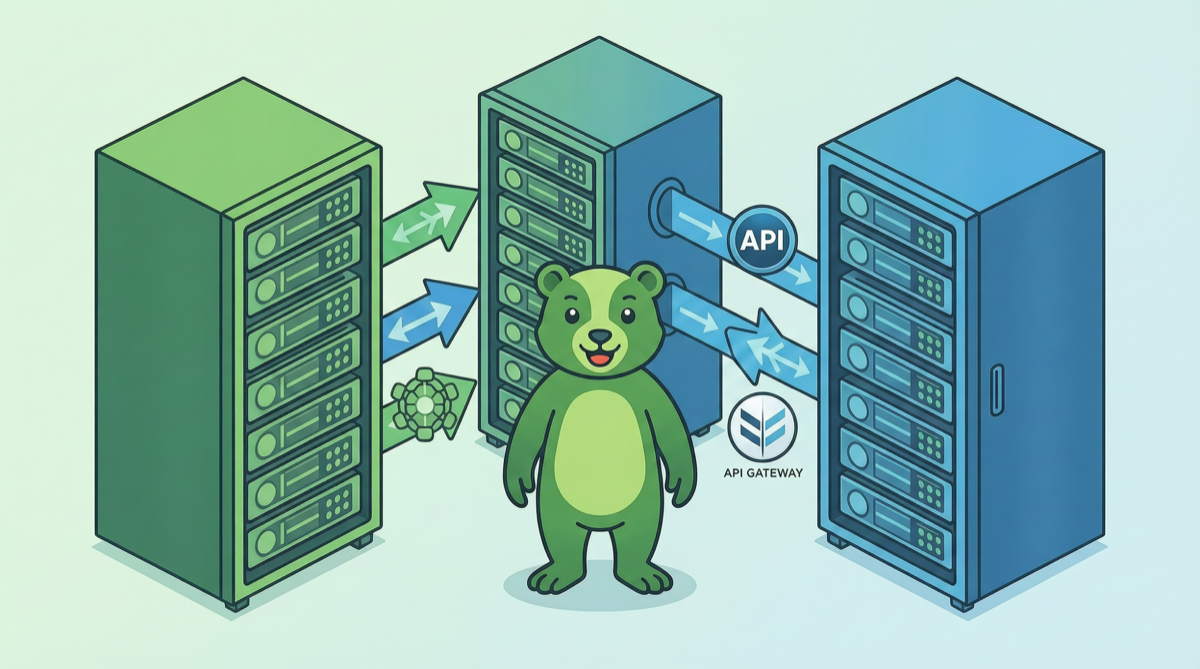
ds2api is not a large model — it’s a protocol adaptation layer. Its function can be understood as:
Multiple input protocols → ds2api (Go high-concurrency middleware) → Standard DeepSeek API format → Downstream AI servicesThis addresses a real pain point: enterprises often need to integrate with multiple AI model sources (OpenAI, Claude, Qwen, DeepSeek, etc.), each with different API formats and authentication methods. ds2api provides a unified interface layer compatible with the DeepSeek API format.
Technical Characteristics
| Feature | Description |
|---|---|
| Language | Go (naturally suited for high-concurrency scenarios) |
| Core Capability | High-concurrency protocol adaptation |
| Output Format | DeepSeek standard API compatible |
| Positioning | Reference implementation |
| Collaboration | Multi-contributor project (CJackHwang, shern-point, sisyphus-dev-ai, etc.) |
Why This Project Matters
API Fragmentation Is a Real Pain Point in 2026
As the number of AI models surges, enterprises face not “which model is best” but “how to manage multiple models uniformly”:
- OpenAI API has its own format
- Anthropic’s API is different
- Qwen uses DashScope with its own calling method
- DeepSeek is yet another format
ds2api’s approach: unify the upstream with one standard format (DeepSeek API compatible), so downstream model switching only requires changing middleware configuration, not business code.
The Go Language Choice
Choosing Go over Python/Node.js as the implementation language indicates the project focuses on production-grade high-concurrency needs, not prototyping. Go’s advantages in API gateway and middleware scenarios:
- Native goroutine concurrency model
- Low memory footprint
- Compiled to a single binary, simple deployment
Comparison with Similar Solutions
| Solution | Positioning | Advantage | Disadvantage |
|---|---|---|---|
| ds2api | DeepSeek-compatible middleware | Go high-concurrency, lightweight | Currently mainly adapts DeepSeek format |
| LiteLLM | Multi-model unified SDK | Supports many models | Python, performance inferior to Go |
| One API | Unified API gateway | Comprehensive features | Heavier deployment |
Actionable Advice
- Enterprise AI architects: Evaluate ds2api as a unified API gateway, especially for teams already on Go tech stack
- Multi-model users: If you call multiple model sources, consider introducing a middleware layer to decouple business logic from API formats
- Go developers: This is a good reference project for learning high-concurrency API middleware design