Conclusion: Google’s Model Release Strategy Is Changing the Game
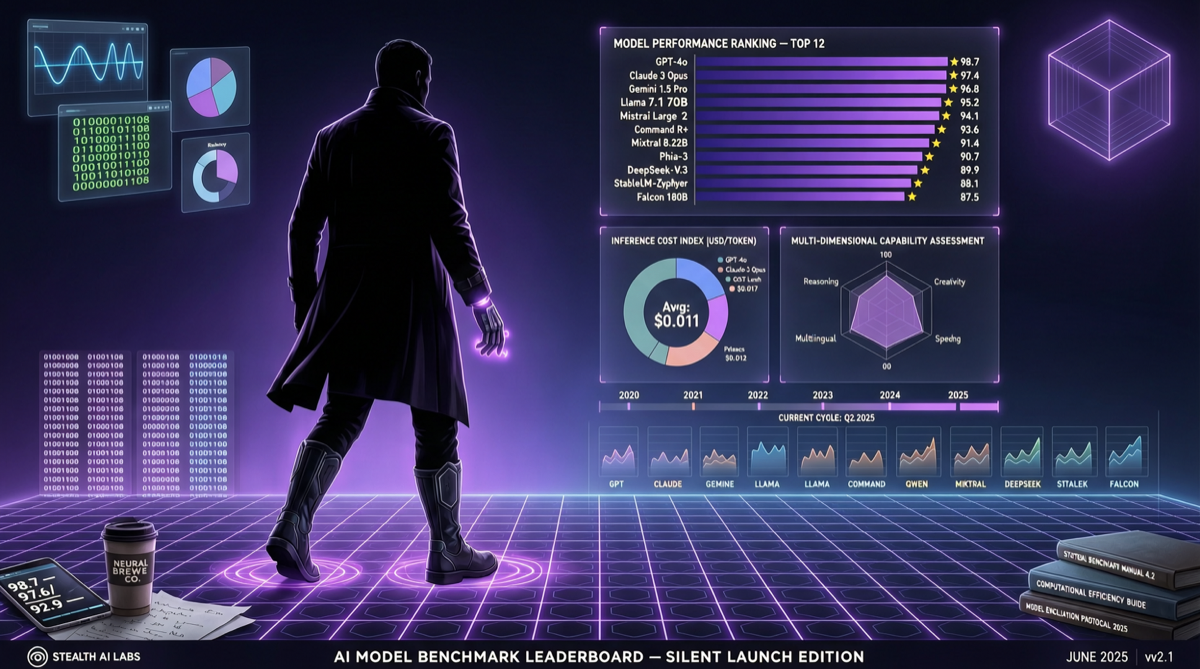
In early May 2026, the community noticed a new entrant on the LMSYS Chatbot Arena leaderboard: Gemini 3 Flash.
No press event. No blog post. No official tweet. It simply appeared—silently—on the world’s most authoritative AI model ranking.
Community reaction: “Google is cooking without saying a word.”
What Happened
LMSYS Chatbot Arena is currently the most closely watched blind-evaluation leaderboard for AI models, relying on real-user voting and Elo scoring. A new model’s appearance typically signals:
- Deployment into production (at least in limited scope)
- Active calibration using real-world user interaction data
- A “soft launch” strategy ahead of formal release
Early Signals
Although full Elo scores are not yet available (new models require sufficient head-to-head match data), early observers report:
- Output quality is “noticeably sharper”
- A perceptible improvement over the previous Gemini 2.5 Flash
- Response speed and cost efficiency remain core strengths of the Flash series
Google’s “Trojan Horse” Strategy
This isn’t Google’s first use of such a launch approach. Reviewing recent patterns:
| Model | First Appearance | Official Release | Interval |
|---|---|---|---|
| Gemini 2.5 Pro | Arena debut first | Press event later | ~2 weeks |
| Gemini 3 Flash | Arena debut first | Not yet announced | TBD |
| Gemini 3.5 Pro | Announced in advance | Released after announcement | — |
Advantages of this strategy:
- Real feedback first: Arena users’ actual head-to-head data validates model quality more reliably than internal testing
- Lower expectation-management risk: No press event means no pressure to over-promise
- Competitive intelligence opacity: Rivals cannot prepare targeted benchmarking or counter-strategies in advance
Comparison with Other Vendors
| Vendor | Launch Style | Typical Example |
|---|---|---|
| Silent leaderboard entry → Gradual confirmation | Gemini 3 Flash | |
| OpenAI | High-profile press event | GPT-5.5 launch event |
| Anthropic | Technical blog + research paper | Claude Opus 4.7 release |
| Alibaba | API launch + social media rollout | Qwen 3.6 series |
| DeepSeek | Open-source release + paper-first | DeepSeek V4 series |
Google’s approach is the most “pragmatic”—letting data speak, not marketing.
Strategic Implications
Gemini 3 Flash’s silent emergence carries significance across three dimensions:
1. Technical Level
The Flash series represents Google’s “speed-and-cost optimization” product line. If Gemini 3 Flash performs strongly on Arena, it signals a new breakthrough in model compression and efficiency optimization—critical for large-scale deployment.
2. Commercial Level
Google is deploying a dual-pronged strategy: the Gemini Enterprise Agent Platform (featuring 200+ models) paired with Gemini 3 Flash, a high-value, cost-efficient base model—simultaneously targeting both premium and mass-market segments.
3. Industry Level
“Debut on Arena before holding a press event” may become the new industry norm. As model release cycles accelerate, the traditional sequence—“press event → media coverage → user trials”—is too slow. Real-time leaderboards are effectively becoming the de facto “launch channel.”
How to Use This Insight
- Monitor LMSYS Arena closely: Treat it as a “real-time news feed” for model launches—often revealing new models before official announcements
- Consider Flash-series use cases: If your application prioritizes low latency and cost efficiency, Gemini 3 Flash warrants A/B testing in your specific context
- Adopt a multi-model strategy: Google’s silent-launch approach reminds us—not to focus solely on models unveiled at press events. A sudden newcomer on the leaderboard may represent the truest threat—or opportunity.