Challenge Framework
Google's Gemma 4 Good Challenge is not a typical hackathon—its goal is clear: prove that open-source small models can compete with closed-source large models in real-world scenarios.
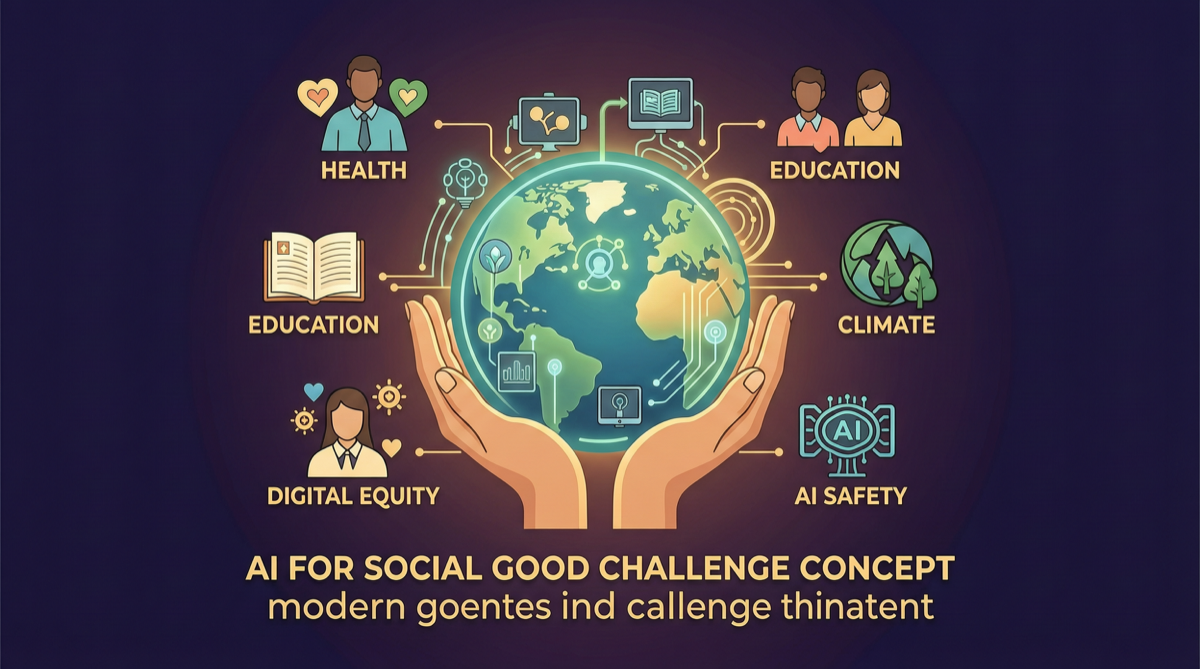
Five Tracks and Prize Allocation
| Track | Focus Area | Typical Scenarios | Prize Weight |
|---|---|---|---|
| Health | Medical diagnosis, drug discovery | Primary care diagnostic assistance, health data analysis | High |
| Education | Personalized learning, educational resources | Adaptive learning systems, multilingual educational content generation | High |
| Global Resilience | Climate change, disaster response | Extreme weather early warning, post-disaster resource allocation optimization | Medium |
| Digital Equity | Accessibility, multilingual | Low-resource language translation, assistive tools for the visually impaired | Medium |
| AI Safety | Model safety, content moderation | Harmful content detection, model behavior interpretability | Medium |
The $200K prize pool is distributed across multiple tracks and technical routes, encouraging innovation in different directions.
Gemma 4 Technical Foundation
Google released the Gemma 4 family on April 2, offering four sizes:
| Model | Parameters | Architecture | Use Cases |
|---|---|---|---|
| Gemma 4 2B | 2 billion | Dense | Edge devices, mobile deployment |
| Gemma 4 4B | 4 billion | Dense | Lightweight APIs, low-latency scenarios |
| Gemma 4 26B | 26 billion | MoE | Text generation, coding, reasoning |
| Gemma 4 31B | 31 billion | Dense | High-quality generation, complex tasks |
The strategic intent of this product line is clear: cover the full spectrum from edge devices to cloud with different sizes, and counter closed-source model ecosystem barriers with an open-source strategy.
Why This Challenge Matters
1. Open-Source Model Capability Validation
The Gemma 4 Good Challenge is essentially an "open vs. closed" capability proof. If participants can build solutions with Gemma 4 (2B-31B range) that rival GPT-5.5 or Claude Opus 4.7, it will be strong support for the open-source route.
2. Real-World Problem Orientation
Unlike most AI competitions focused on technical metrics, all five tracks of Gemma 4 Good anchor to UN Sustainable Development Goals. This is not just a technical competition, but also a showcase of AI's social value.
3. Google I/O Preview
The Gemma 4 Good Challenge launched before Google I/O, likely serving as an important narrative Google is preparing for the conference. More Gemma ecosystem announcements are expected at I/O.
Recommended Technical Stack for Participants
Based on existing participants' practices, recommended tech combinations:
- Model: Gemma 4 26B MoE (coding/reasoning) or 31B Dense (high-quality generation)
- Framework: Haystack (existing participants have built multimodal agents, RAG, tool discovery demos)
- Tool Integration: MCP servers (GitHub MCP for code search, dynamic tool discovery)
- Deployment: Local inference or Google Cloud Vertex AI
Judgment and Recommendations
For Developers: If your project hits one of the five tracks, the cost of entry is low (just submit a proposal) and the reward is high ($200K prize + exposure + Google ecosystem resources). The deadline has been extended to May 8—there's still time to prepare.
For Researchers: Gemma 4's four sizes provide an excellent experimental platform. Comparing performance across different sizes on the same task can produce valuable research papers.
For Enterprises: If Gemma 4 performs close to closed-source models in your scenarios, considering the cost advantages and controllability of open source, it's worth seriously evaluating as a production solution.
The biggest challenge for open-source models has never been "can it be done," but "will anyone use it." The Gemma 4 Good Challenge addresses the "will anyone use it" problem with prize incentives and track design—a smart strategy in Google's open-source ecosystem building.