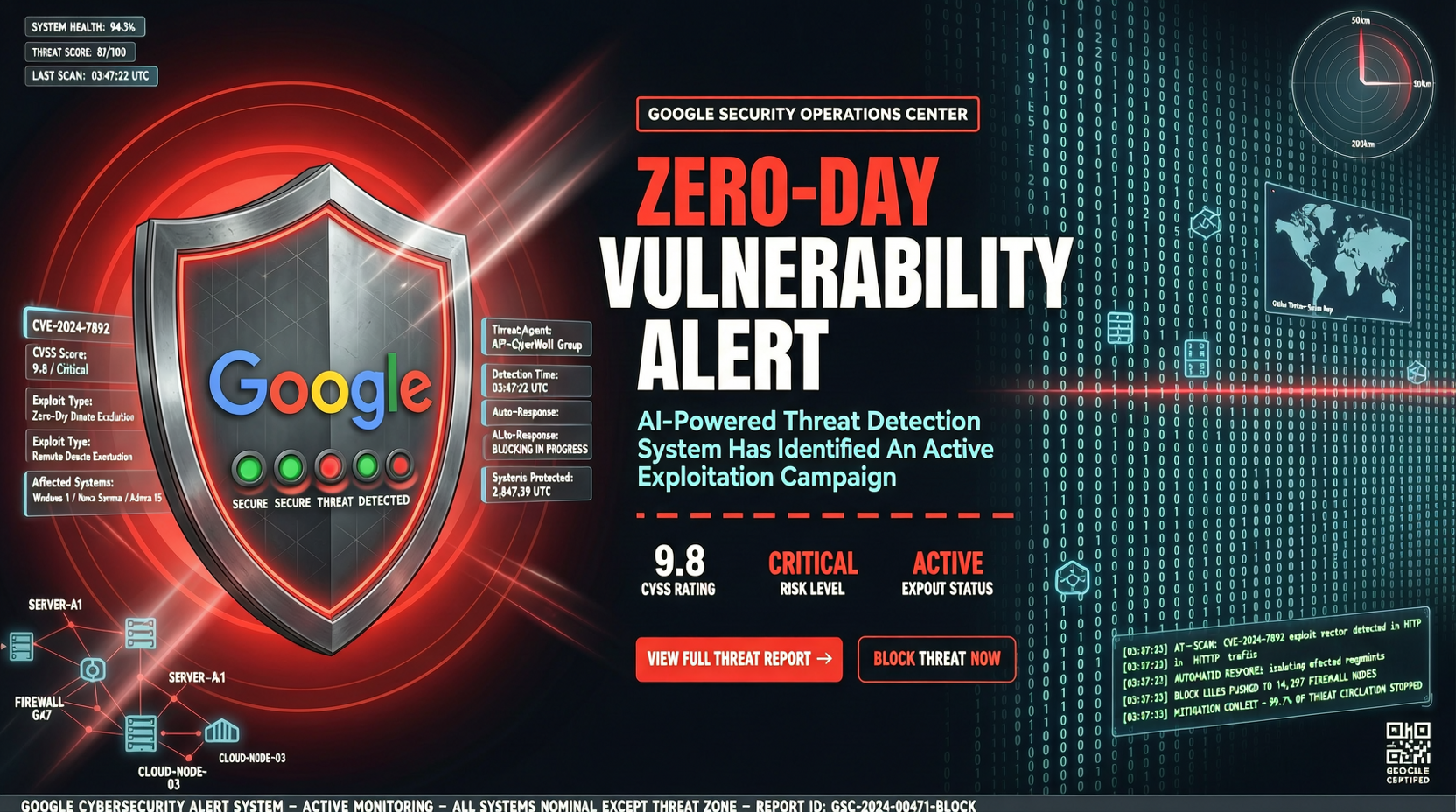
This isn't a "could happen in the future" scenario. It's already happened.
Google's latest warning contains a keyword everyone in security needs to remember: Zero-Day Vulnerability.
What's a Zero-Day?
Simply put, it's a vulnerability the software vendor doesn't even know about. Traditionally, finding a zero-day required top-tier security researchers spending significant time on reverse engineering and fuzzing tests—extremely high barrier, extremely long cycle.
AI has lowered that barrier.
What Has AI Changed?
AI's capabilities here are clear:
- Automated vulnerability scanning: Analyzing codebases at scale, orders of magnitude faster than humans
- Exploit code generation: Automatically generating exploitable code based on vulnerability signatures
- Attack chain orchestration: Combining multiple low-severity vulnerabilities into high-severity attack paths
This means things that previously only nation-state attackers could pull off can now be done by ordinary hackers with AI tools.
Why Is Google Speaking Up Now?
Usually, big tech companies digest this level of threat internally and only publish after they have a defense ready. Google choosing to warn publicly means two things:
- Attacks are already happening in the wild—this isn't theoretical risk
- Defense solutions aren't fully ready yet, requiring industry collaboration
This posture of public warning is itself a signal—the situation is more serious than the outside world imagines.
Impact on Everyday Developers
You might think "zero-day vulnerabilities" have nothing to do with you. But if your company uses open-source components, cloud services, or any internet-connected software, this risk passes directly down to you.
A few things to focus on:
- Update dependencies promptly—don't let them pile up
- Monitor for anomalous traffic patterns—AI-generated attacks behave differently from traditional ones
- Watch Google TAG (Threat Analysis Group) follow-up reports—they'll continue disclosing details
Bottom Line
Security攻防 has always been a cat-and-mouse game. AI made the mice smarter; the cats need to evolve too. This isn't a reason to panic, but it's absolutely a signal to increase security investment.
It used to be "security is a cost." Now it might need to be rephrased: security is a condition of survival.