Key Takeaway
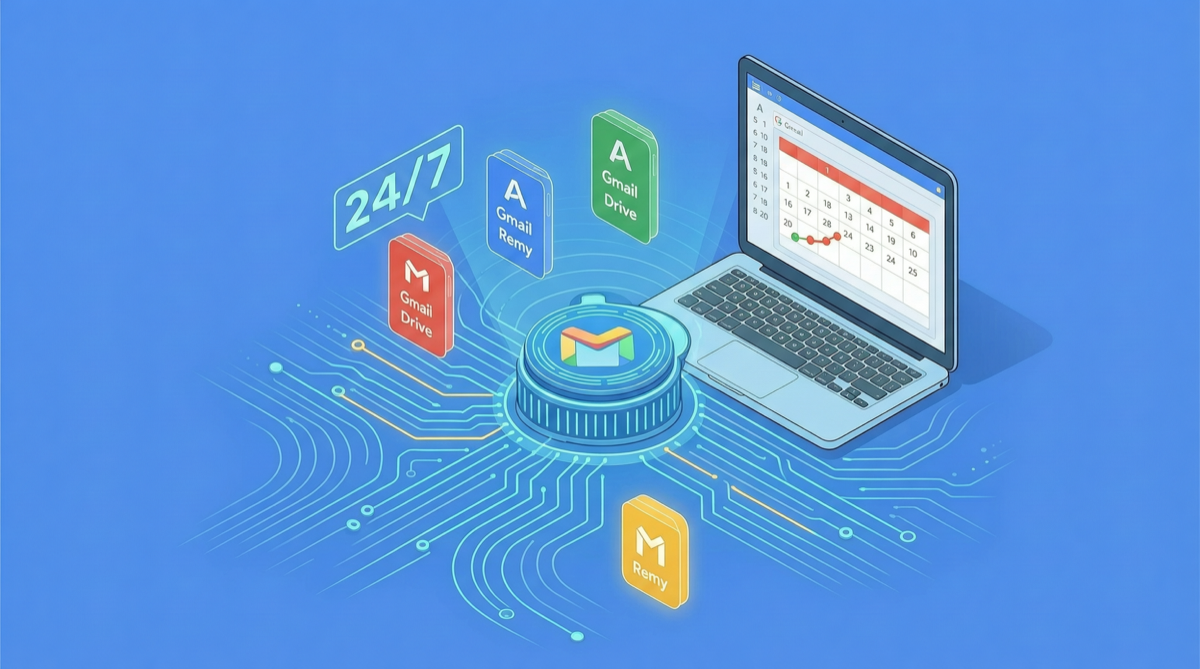
Google is secretly developing an AI personal assistant called "Remy" that operates 24/7, deeply integrated into the Google services ecosystem. This is not a chatbot—it is an Agent capable of proactively executing operations across Gmail, Calendar, Drive, Docs, and other Google services. Employees are already using it in their daily workflow (dogfooding), and a public version may be coming soon.
What Happened
Remy Core Positioning:
- 24/7 Personal Assistant: Not an on-demand chat tool, but a continuously running, always-ready personal AI proxy
- Cross-Service Execution: Can coordinate operations across multiple services within Google ecosystem—for example, automatically scheduling calendar events based on email content, extracting files from Drive to generate Docs reports
- Internal Dogfooding: Google employees are already using Remy in their daily workflows, collecting feedback and optimizing
Source: Business Insider first reported this internal project, subsequently cross-verified by multiple tech media outlets.
Remy Position in Google AI Strategy
Google AI Agent layout currently has three main directions:
| Direction | Product | Positioning | Target Users |
|---|---|---|---|
| Developer Agent | Gemini CLI | Terminal programming assistant | Developers |
| Enterprise Agent | Google Cloud 50+ MCP Servers | Enterprise-grade workflows | Enterprise clients |
| Personal Agent | Remy | 24/7 cross-service assistant | General consumers |
Remy fills the gap in Google personal consumer AI assistant domain. Previously, Google Assistant primarily targeted voice interaction and simple task execution, while Remy is a large-model-based intelligent Agent capable of understanding complex intentions and executing cross-service operations.
Competitive Landscape Assessment
Remy emergence means Google has officially joined the "personal AI Agent" race. Current competitors include:
- Apple Siri + Apple Intelligence: Deeply integrated into iOS/macOS, but capabilities are relatively limited
- Microsoft Copilot + Windows Agent: Deeply integrated with Windows/Office, evolving toward Agent direction
- OpenAI ChatGPT: Conversation-centric, expanding Action capabilities
- Anthropic Claude: Known for deep analysis, weaker personal assistant attributes
Remy unique advantage lies in deep integration with Google services ecosystem—access to data and operational permissions across Gmail, Calendar, Drive, Docs, Maps, YouTube, which competitors find difficult to replicate.
Risks and Challenges
Privacy concerns: A 24/7 cross-service Agent requires access to users sensitive data across Gmail, Calendar, Drive, and more. How Google balances functionality with privacy will be a key question. The earlier incident of Chrome auto-downloading the 4GB Gemini Nano model already raised user privacy concerns.
Accuracy risk: Cross-service execution means that if understanding goes wrong, it could cause cascading consequences (e.g., sending wrong emails, deleting wrong files). Agent fault tolerance mechanisms and rollback strategies are critical.
Action Recommendations
For Google ecosystem users:
- After Remy public testing begins, try in small-scope scenarios first (e.g., calendar management, email summaries), gradually expanding to more complex cross-service operations
- Pay attention to Google privacy control options, confirming which data Remy will access
For developers:
- Google may open Remy extension APIs, allowing third-party services to integrate
- If your service targets Google users, understanding Remy integration mechanisms early may bring first-mover advantage
For competitive analysts:
- Remy direction validates the heat of the "personal Agent" track
- If you building similar products, focus on how Google solves cross-service authorization and privacy control