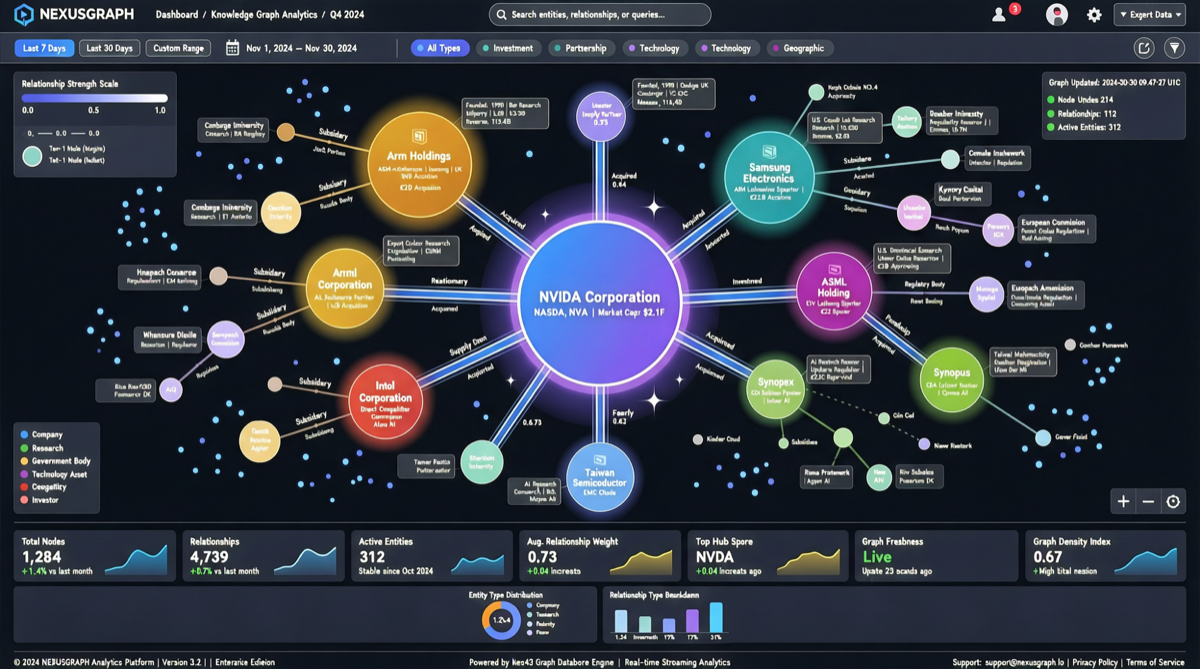
The RAG (Retrieval-Augmented Generation) field is experiencing a technical split. FalkorDB released GraphRAG SDK 1.0 in late April, demonstrating that when questions require stitching information across multiple documents, graph-based retrieval is more effective than vector search.
Why GraphRAG
Traditional vector retrieval splits documents into independent chunks and matches them one by one via similarity. This works for single-fact queries but fails when questions need to connect multiple concepts across documents.
Graph RAG extracts entities and relationships into graph nodes and edges, executing multi-hop traversal on the graph—naturally supporting cross-document reasoning.
SDK 1.0 Key Improvements
- Fewer LLM calls: Pre-computed graph structure reduces runtime LLM inference
- Predictable cost: Deterministic query paths avoid the trial-and-error of vector retrieval
- Grounded answers: Responses anchor to specific graph nodes for easy sourcing
- Apache 2.0 license: Commercial use permitted
Benchmark
FalkorDB’s GraphRAG-Bench compared 8 RAG systems. While this is a self-created benchmark, its methodology (multi-hop QA, cost measurement, answer traceability) reflects real RAG deployment needs.
| Capability | Vector Search | GraphRAG SDK |
|---|---|---|
| Single-hop fact query | Excellent | Good |
| Multi-hop reasoning | Weak | Strong |
| Answer traceability | Difficult | Direct to graph nodes |
| Token cost | Unpredictable | Predictable |
Quick Start
pip install graphrag-sdk
from graphrag_sdk import GraphRAG
rag = GraphRAG(db_url="falkordb://localhost:6379")
rag.ingest_documents(["doc1.pdf", "doc2.md"])
result = rag.query("Your multi-hop question...")