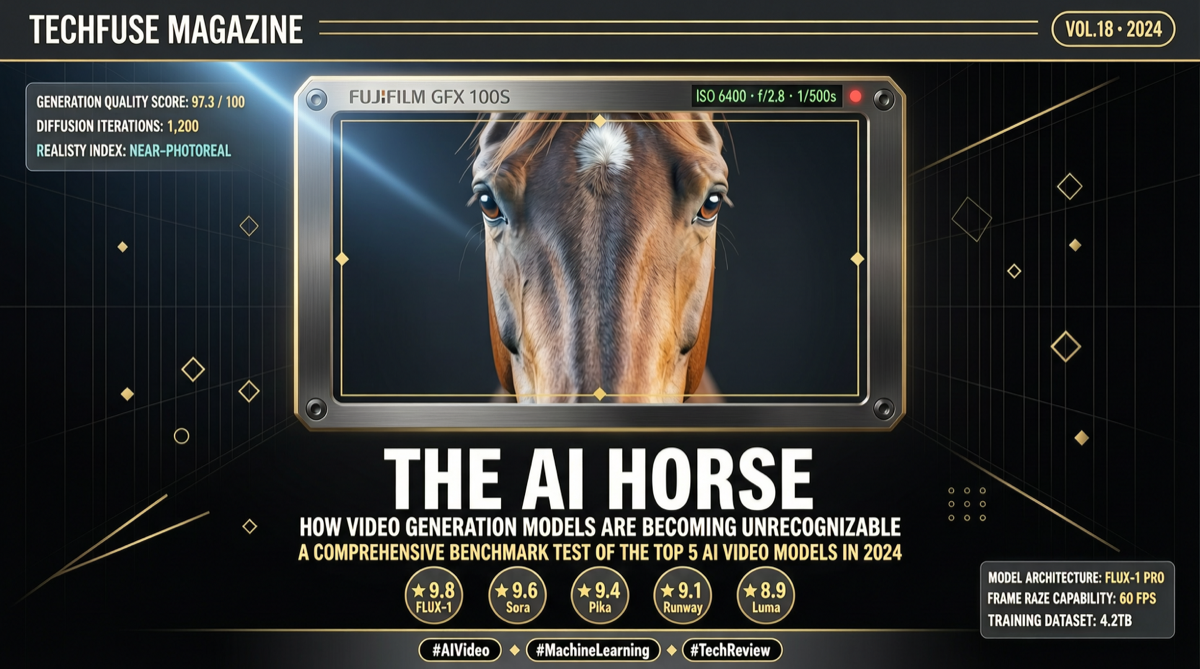
Since Alibaba’s HappyHorse 1.0 entered gray-scale testing in late April, it has quickly topped the Artificial Analysis Video Arena leaderboard. We put the model through multi-scenario testing. Here’s our detailed experience.
Testing Environment
Tests were conducted across multiple third-party platforms that have integrated HappyHorse 1.0, covering both text-to-video and image-to-video modes. Prompts ranged from brief descriptions to complex narratives up to 800 words.
Portrait Performance: The Standout Feature
In portrait generation at 35mm to 85mm focal lengths, HappyHorse 1.0 demonstrates a clear advantage. Background bokeh effects are natural, and the preservation of skin texture and facial expression details is notably high. Multiple testers noted that the model’s generated faces have moved past the “obviously fake” look — micro-expressions and eye movement changes appear relatively authentic.
This makes the model particularly well-suited for:
- Character MV production
- Emotional short-form videos
- Portrait close-up shots
- Youth idol drama-style content
Audio-Video Joint Generation: Accurate Lip Sync
HappyHorse 1.0’s audio-video synchronization performed reliably in testing. In Chinese-English mixed dialogue scenarios, lip-to-speech matching was accurate, and ambient sound generation was natural. This feature significantly reduces the workload for post-production dubbing and lip alignment, making it especially friendly for short drama productions requiring heavy dialogue content.
Complex Prompt Parsing: Powerful But Demanding
The model supports prompts up to 800 words and can parse detailed instructions for camera movement, stylistic atmosphere, and scene transitions. However, multiple users reported that prompt quality has a greater impact on output than with previous models. When descriptions lack precision, the model tends to overfit or deviate from expectations.
HappyHorse 1.0 can be understood as a “brilliant specialist” — excellent in specific scenarios, but with higher demands on input quality.
Weaknesses
Large-scene character composition is the model’s clear weakness. When characters are placed against expansive backgrounds, there are occasional unnatural merges between character and environment, with some test cases showing overfitting. For projects requiring grand narrative scenes, it’s advisable to pair this model with alternatives.
Comparison with Seedance 2.0
Based on third-party comparison testing, HappyHorse 1.0 outperforms Seedance 2.0 in:
- Character facial naturalness
- Texture detail and temporal consistency
- Lip sync accuracy
- Sharpness in short-duration (3-5 second) clips
Seedance 2.0 retains some advantages in large-scene composition and complex camera movement.
Pricing and Value
During the gray-scale testing period, some platforms offer free credits or limited-time discounts. At APIMart’s pricing standard, each generation consumes approximately 90 credits. Considering output quality and duration, the cost-performance ratio sits at an above-average level among current video generation models.
Verdict
HappyHorse 1.0 is an excellent choice for character-driven narrative video generation, particularly suited for short dramas, MVs, and emotional content production. If you need large-scale scenes with complex camera movement, consider waiting for future version optimizations or pairing with alternative models.
For teams producing overseas short dramas or export-oriented content, the model’s facial generation quality and lip sync capabilities offer significant commercial value.