AI compute infrastructure discussions usually revolve around two extremes: CoreWeave and AWS hyper-scale data centers on one end, and Ollama running on developers' desktops on the other.
NVIDIA's XFRA project is trying to carve out a third path between them.
What Happened
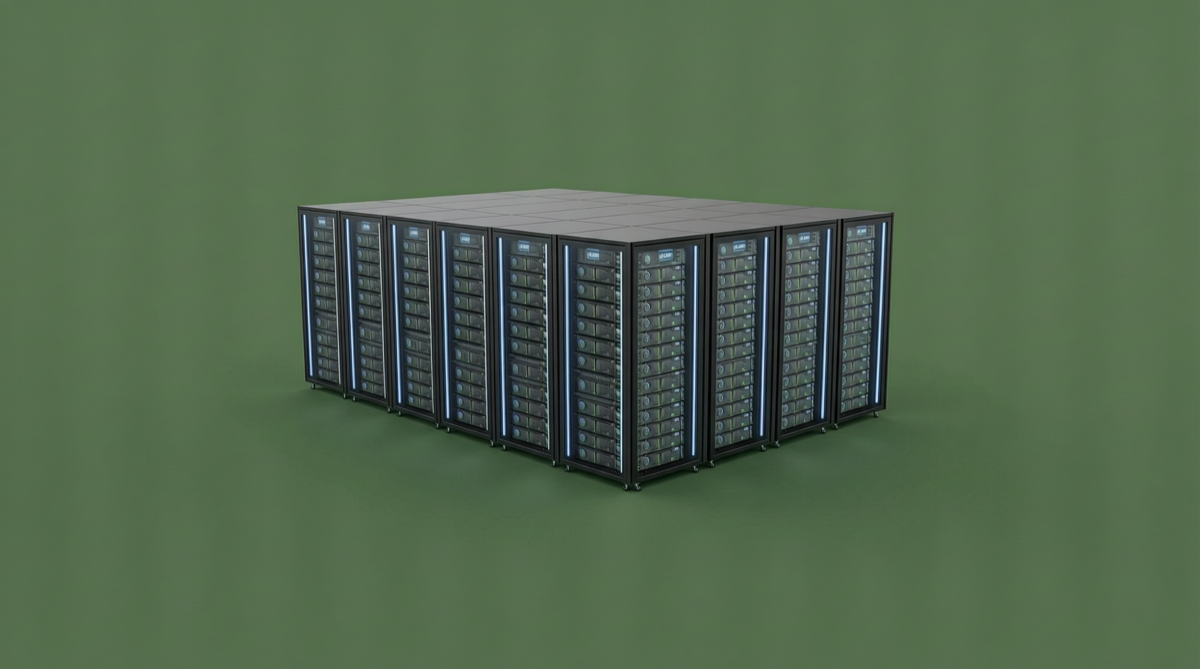
On May 5, NVIDIA announced the XFRA (eXtended Frontier Resource Architecture) project — partnering with home builder PulteGroup and smart electrical panel company SPAN to deploy mini data centers with 16 Blackwell GPUs in newly constructed residential buildings.
Each unit also includes 4 AMD EPYC CPUs and 3TB of RAM, utilizing unused electrical capacity in homes to run AI inference workloads.
This isn't a concept demonstration. SPAN officially announced XFRA as a distributed data center solution on April 13, positioning it to "close the speed-to-power gap for AI compute demand."
Why Residential
The core logic is about unused capacity in electrical infrastructure. Most homes have spare electrical capacity built into their design, and smart electrical panels (like the SPAN Panel) can precisely control power distribution at the circuit level. XFRA leverages this underutilized capacity to deploy edge compute without adding grid burden.
This solves a real problem: AI inference demand is shifting from centralized training/inference architectures to distributed, user-proximate inference nodes. Latency-sensitive applications (real-time voice, edge Agents) don't need to connect to a data center hundreds of kilometers away.
Connection to NVIDIA's Broader Strategy
A week later (May 6), NVIDIA announced another partnership with fiber optic giant Corning for large-scale AI infrastructure manufacturing in New York. These two moves together suggest NVIDIA isn't just selling GPUs — it's building a complete compute distribution network from core hyper-scale to residential edge.
What to Watch
Several questions need ongoing tracking:
- Cooling and noise: 16 GPUs in a residential wall — how is thermal management handled?
- Electricity costs: Using "idle capacity" sounds ideal, but what's the actual billing model?
- Maintenance and reliability: Hardware distributed across thousands of homes — what are maintenance costs and failure rates?
- Business model: How does PulteGroup, a home builder, benefit from this partnership?
No standard answers yet. But if this model works, it could redefine the physical form of "AI infrastructure."
Main sources:
- SPAN website
- NVIDIA official announcement (May 5, 2026)
- SPAN XFRA product announcement (April 13, 2026)