Conclusion: Codex Has Evolved from a “Model” to a “Platform”
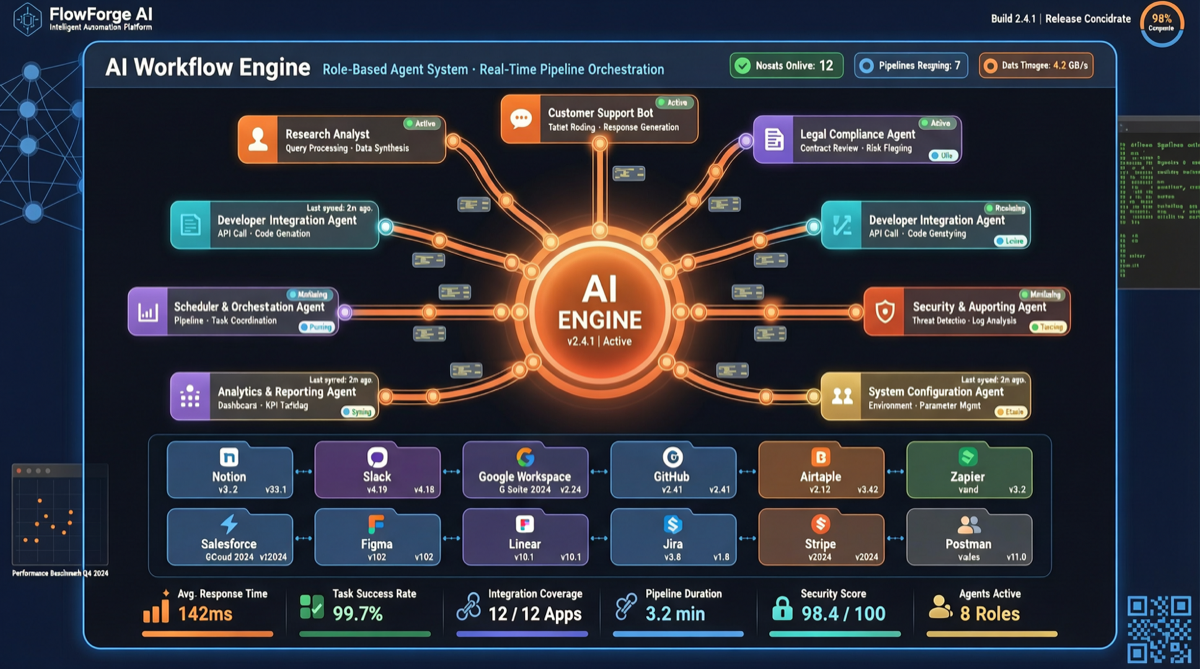
OpenAI Codex’s latest strategic direction is unmistakable: it is no longer an “AI model for writing code,” but rather a “platform for building and running AI Agent workflows.”
Core changes:
- Role-Based Entry Points: Users select predefined roles (e.g., developer, analyst, operations specialist), enabling the platform to deliver tailored prompt suggestions
- Tool Integration: Direct integration with everyday workplace tools (IDEs, databases, APIs, documentation systems)
- Proactive Prompt Suggestions: Instead of waiting for user input, Codex actively recommends next-step prompts based on role and tool context
- Workflow Orchestration: Evolution from single-step code generation → multi-step task orchestration → end-to-end automated execution
This marks a watershed moment in AI Agent product design: shifting from “asking questions in a chat window” to deploying “role-aware, tool-connected, proactively acting AI colleagues.”
What Has Changed
Traditional AI coding tools—including earlier versions of Codex—followed this interaction pattern:
User inputs prompt → AI generates code → User copies and pastes → Manual executionThe new Codex workflow engine operates as follows:
Select role → Connect tools → AI understands context → Proactively suggests prompts → One-click execution → Continuous feedbackThough the change appears simple on the surface, its implications run deep:
| Dimension | Legacy Model | New Model |
|---|---|---|
| Proactivity | Passive response | Proactive suggestion |
| Context | Single-turn conversation | Persistent tool connectivity |
| Role Identity | Generic assistant | Domain-specific professional role |
| Output | Code snippets | Workflow execution results |
| Usability Barrier | Requires prompt engineering skills | Select a role and begin |
Why This Matters
1. Lowers the Barrier to AI Agent Adoption
Most enterprise users don’t know how to write effective prompts for AI. A role-based interface transforms “writing prompts” into “selecting a role”—a critical leap from a developer-centric utility to a mass-market product.
2. Tool Integration = Persistent Memory + Real-Time Data
When Codex connects to your database, documentation system, or APIs, it ceases to be an isolated model—and becomes an intelligent agent embedded within your entire work environment. It knows which file you modified yesterday, recognizes the latest sales figures in your database, and understands your team’s coding standards.
3. From Code Model to Workflow Engine
This represents OpenAI’s fundamental repositioning of Codex. Codex no longer competes with Claude Code or Cursor in the narrow “AI-powered code editor” category. Instead, it ascends to the higher-order category of “AI Agent workflow platform.”
Strategic Implications
OpenAI’s pivot signals two key developments:
- Pure code generation is no longer a differentiating advantage—Claude Code, Codex CLI, Cursor, and jcode all deliver comparable capabilities
- Platformization is the ultimate endgame—the vendor offering the most capable AI Agent workflow engine will capture the largest enterprise user base
This aligns precisely with Google’s recent launch of the Gemini Enterprise Agent Platform: In 2026, the AI race is shifting—from “whose model is stronger?” to “whose Agent platform is more usable?”
Practical Use Cases
- Team-wide AI Transformation: Configure dedicated Codex roles for different functions (development, QA, operations, analytics), each connected to their respective toolchains
- Automated Workflows: Leverage Codex’s tool-integration capabilities to build cross-system automation pipelines—for example: code commit → automatic testing → auto-deployment → auto-generated changelog
- Democratizing AI Usage: For team members unfamiliar with prompt engineering, the role-based interface enables efficient, intuitive AI adoption