Don't Wait Until Deployment to Think About Security
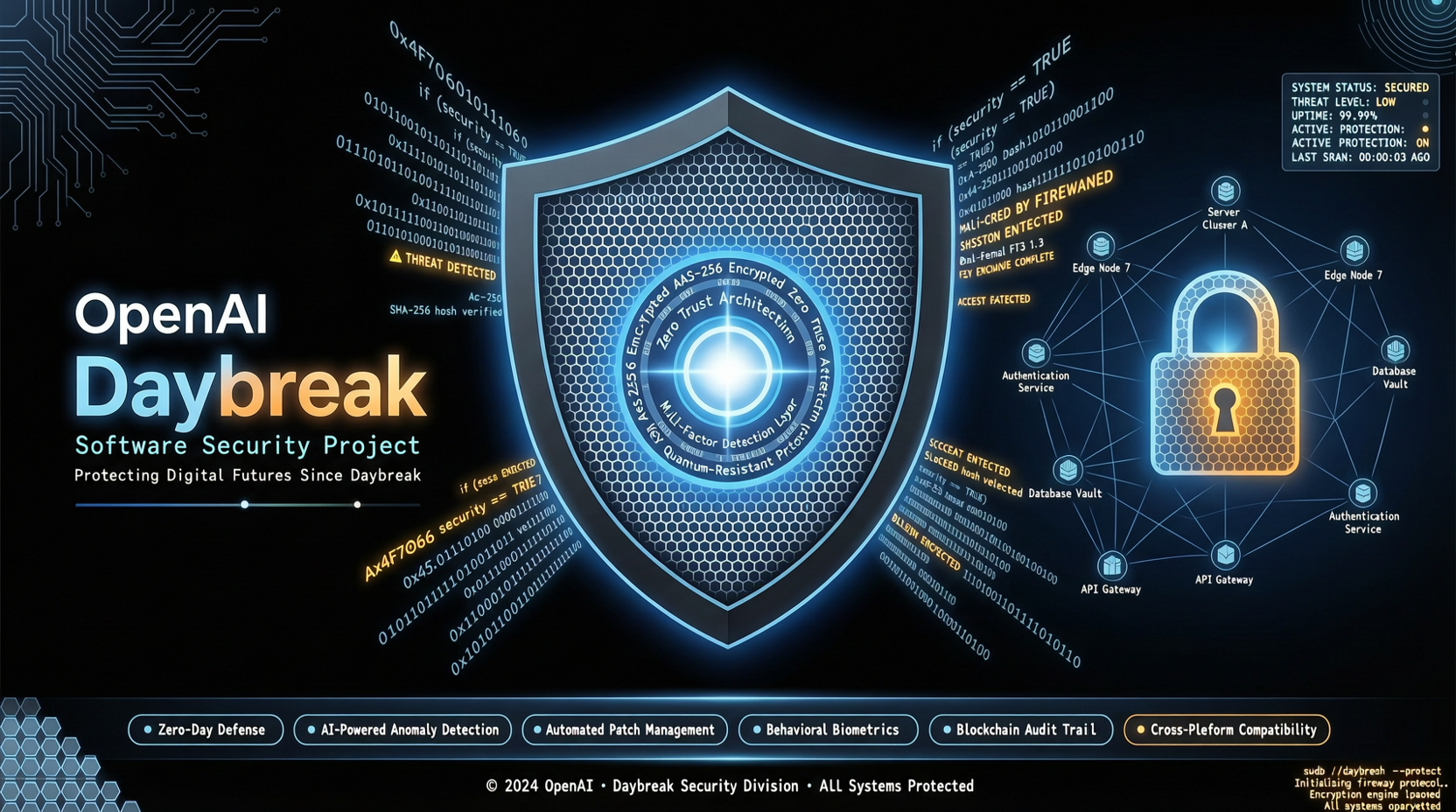
OpenAI dropped a new project on May 12 called Daybreak. The name says it all—"breaking dawn," suggesting a shift from "fix it after things go wrong" to "get it done before the sun comes up."
The core idea is straightforward: don't wait until code is deployed to fix bugs—make the AI know what it can and can't touch while it's writing code.
How Does It Work?
Daybreak embeds network defense mechanisms into the coding phase, identifying potential threats in real time. In plain terms: give the AI writing your code a built-in "security advisor," instead of waiting for an alert email after your code ships and gets hacked.
OpenAI isn't the first to propose this. Anthropic launched Glasswing with a similar philosophy—emphasizing process integration, baking risk management into daily development workflows. Both companies are fighting on the same battlefield, just with slightly different angles.
Why This Matters
There's a blind spot in the AI coding tool boom that most people overlook: code output speed has gone up, but security audit speed hasn't. Cursor, Copilot, and Claude Code let a single developer produce in a day what used to take a week. But code review and security testing processes are still the same old pipeline. That gap is going to cause problems sooner or later.
Daybreak's logic: if AI can write code for you, AI should also check for security vulnerabilities while writing it. Not a post-hoc scan—real-time defense during the coding process itself.
Industry Signal
OpenAI and Anthropic going head-to-head on security tools tells us two things:
- AI security tools are becoming a standalone product line, not just a feature bolted onto coding assistants
- Enterprise anxiety about AI coding security has reached the "must spend money on it" stage
This is a turning point for the AI dev tool ecosystem. Choosing a coding assistant in the future might not just be about how fast it writes code—it'll be about how solid its built-in security capabilities are.
My Take
Daybreak just launched, and we'll need real deployment data to judge its actual effectiveness. But the direction is right—when AI can write code, it must also be able to defend against code-related risks. This isn't a nice-to-have; it's infrastructure-grade necessity.
If your team already uses AI coding tools, keep an eye on Daybreak's progress. Once mature, it could become the default security baseline for enterprise AI dev tool procurement.