Key Takeaway
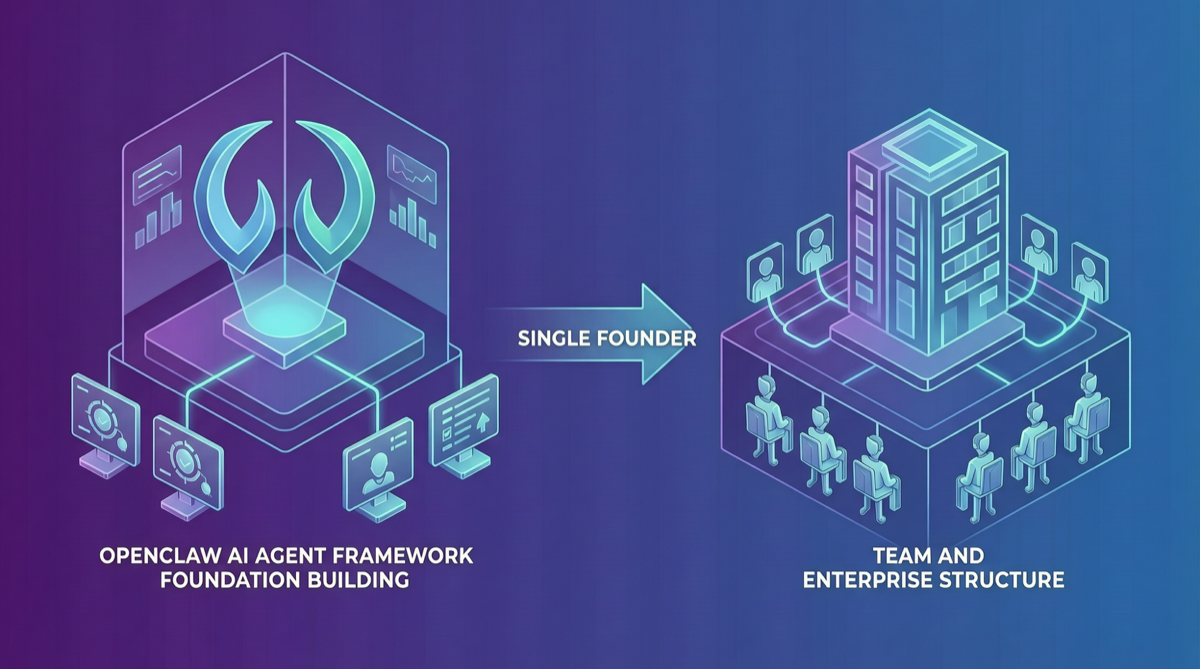
OpenClaw is undergoing its most important governance upgrade in history: transforming from a personal project into a foundation-driven enterprise-grade open-source project. Combined with OpenAI formal backing and the LTS roadmap announcement, OpenClaw positioning has shifted from "useful Agent tool" to "trustworthy enterprise infrastructure."
What Happened
Governance Structure Change: OpenClaw officially confirmed the project is transitioning from a founder-driven model to a dedicated team operation jointly supported by the OpenClaw Foundation and OpenAI.
Three core signals of this change:
| Change Dimension | Before | After |
|---|---|---|
| Decision Model | Founder individual decisions | Foundation + team consensus |
| Funding | Personal/community | OpenAI + Foundation |
| Release Rhythm | Frequent iterations | LTS + regular versions in parallel |
| Enterprise Confidence | Personal project risk | Institutional endorsement |
LTS Roadmap: The first Long-Term Support (LTS) version is confirmed for release by late May 2026. LTS means enterprise users can run on a stable version long-term, receiving security patches and critical bug fixes without needing to follow frequent feature updates.
Why This Transition Matters
OpenClaw is currently one of the most active AI Agent frameworks on GitHub. But for a long time, it faced a fundamental enterprise adoption barrier: enterprises hesitate to bet on a founder-driven project.
Core enterprise concerns:
- If the founder leaves, will the project survive?
- Will frequent breaking changes affect production environments?
- Is there SLA-level response for critical security issues?
The OpenClaw Foundation establishment + OpenAI support + LTS roadmap address these concerns one by one.
Impact of OpenAI Partnership
OpenAI support for OpenClaw (rather than building a competing framework) sends an important signal: the AI Agent ecosystem is moving toward open collaboration rather than closed competition.
This also means OpenClaw may receive priority support for GPT series integration depth and API access—a clear positive for enterprises already using GPT models.
Action Recommendations
If you already use OpenClaw:
- Watch for the late May LTS release notes and evaluate migration path
- After LTS release, production environments should switch to the LTS branch
- Community resources (documentation, tutorials, best practices) will become richer with the foundation
If you evaluating Agent frameworks:
- OpenClaw enterprise signals have significantly strengthened; it should be a candidate
- When comparing with Hermes Agent, LangChain, etc., focus on LTS support cycle
- Review the foundation governance charter to confirm contributor rights and decision transparency
Industry Significance
OpenClaw governance upgrade is not an isolated event—it reflects the entire AI Agent framework track moving from "fast iteration, individual heroism" to "stable, enterprise-trustworthy." This is the same trend as the MCP protocol transfer to the Linux Foundation, manifested differently: AI infrastructure is maturing.