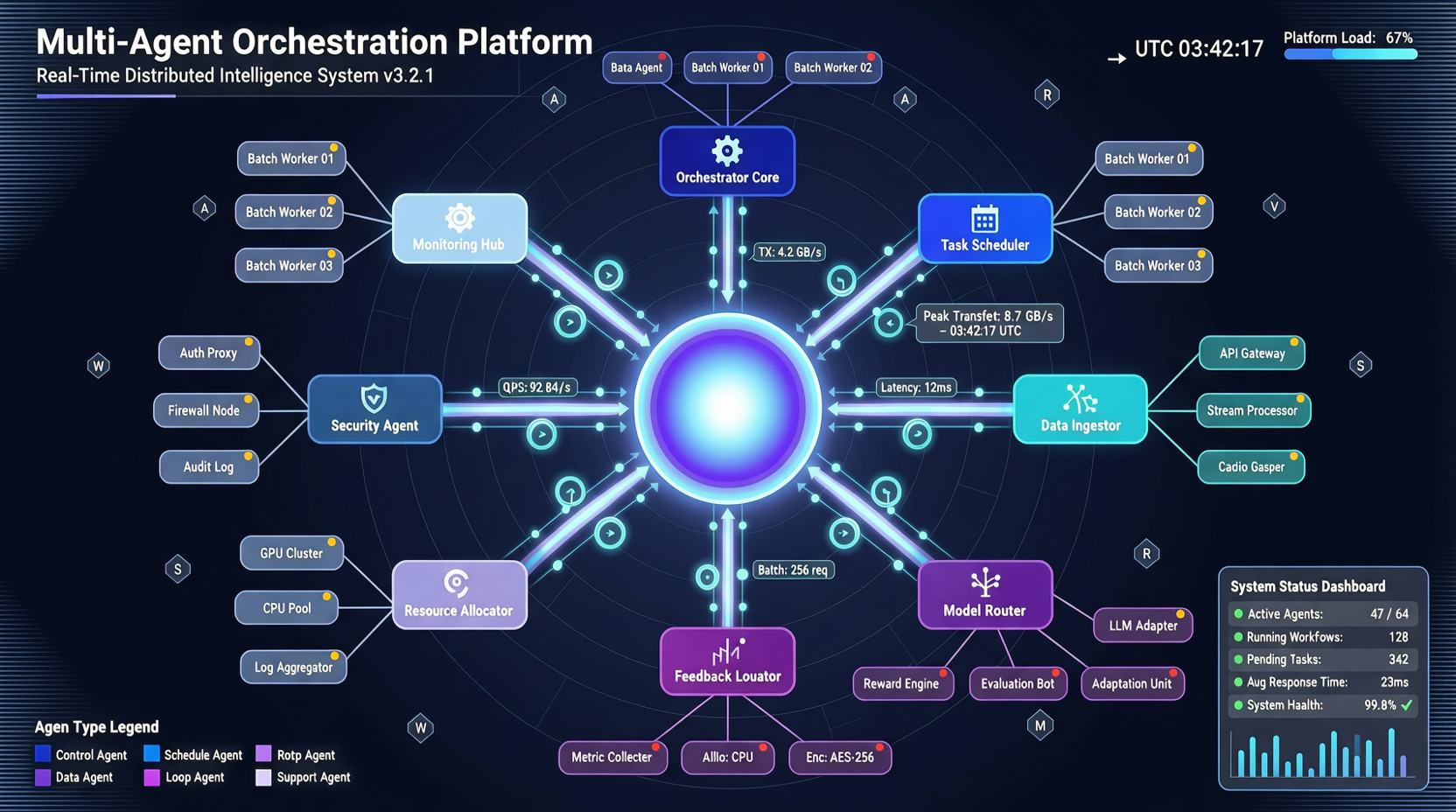
This week on GitHub Trending, one project stands out: ruvnet/ruflo, up 7,088 stars this week, totaling 49,759.
The official description is packed: "The leading agent orchestration platform for Claude. Deploy intelligent multi-agent swarms, coordinate autonomous workflows, and build conversational AI systems."
6,407 commits, 236 branches, 1,475 tags. 412 open issues, 132 open PRs.
The numbers are impressive. But my first reaction: hold on, this many branches and tags — is this really a serious product?
Look at the Data, Not the Hype
Let me break down the key numbers:
- 49.8k stars: First tier in AI projects. But the relationship between stars and real users is like Twitter followers vs. actual readership — looks热闹, not necessarily useful.
- 6,407 commits: Amazing volume. But looking at commit history, many are minor changes and doc updates. How many are real architectural changes?
- 1,475 tags: This number concerns me. A project with 1,475 version tags means almost every small change got a tag. That's not semantic versioning — that's version number inflation.
- 412 open issues: For a near-50k star project, this isn't much. But the key question is: what's the response speed? Are issues being resolved?
The Agent Orchestration Space Is Crowded
In 2026, I can count at least a dozen agent orchestration projects: LangGraph, AutoGen, CrewAI, Dify, Coze, Ruflo...
Each claims to be "the leading." But the ones actually running in production? Very few.
The difficulty in agent orchestration was never about orchestration itself. It's about:
- How to guarantee state consistency between agents
- How to roll back when one agent fails
- Debugging multi-agent systems is 10x harder than single-agent
- Cost control — multi-agent runs cost N times the tokens
Ruflo's README mentions "self-learning swarm intelligence" and "enterprise-grade architecture." These words sound impressive, but I couldn't find concrete benchmark data in the docs — like multi-agent collaboration success rate, latency, or token consumption.
"Enterprise-grade" without data means nothing.
My Take
Ruflo's direction is right. Multi-agent collaboration is indeed a major trend. But "right direction" doesn't equal "good implementation."
If you're evaluating tech stacks, I'd recommend:
Start with LangGraph and CrewAI. Their documentation quality, community activity, and real-world cases are more solid than Ruflo.
Fork Ruflo to look at it, but I wouldn't recommend putting it in production — at least not until it provides clear benchmark data and more规范 version management.
Stars can be gamed. Documentation quality can't.
Main sources:
- GitHub: ruvnet/ruflo (49.8k stars, 6,407 commits, 1,475 tags)
- GitHub Trending weekly data
- LangGraph / CrewAI comparison