The Ultimate Bottleneck for AI Might Not Be Chips—It's Electricity
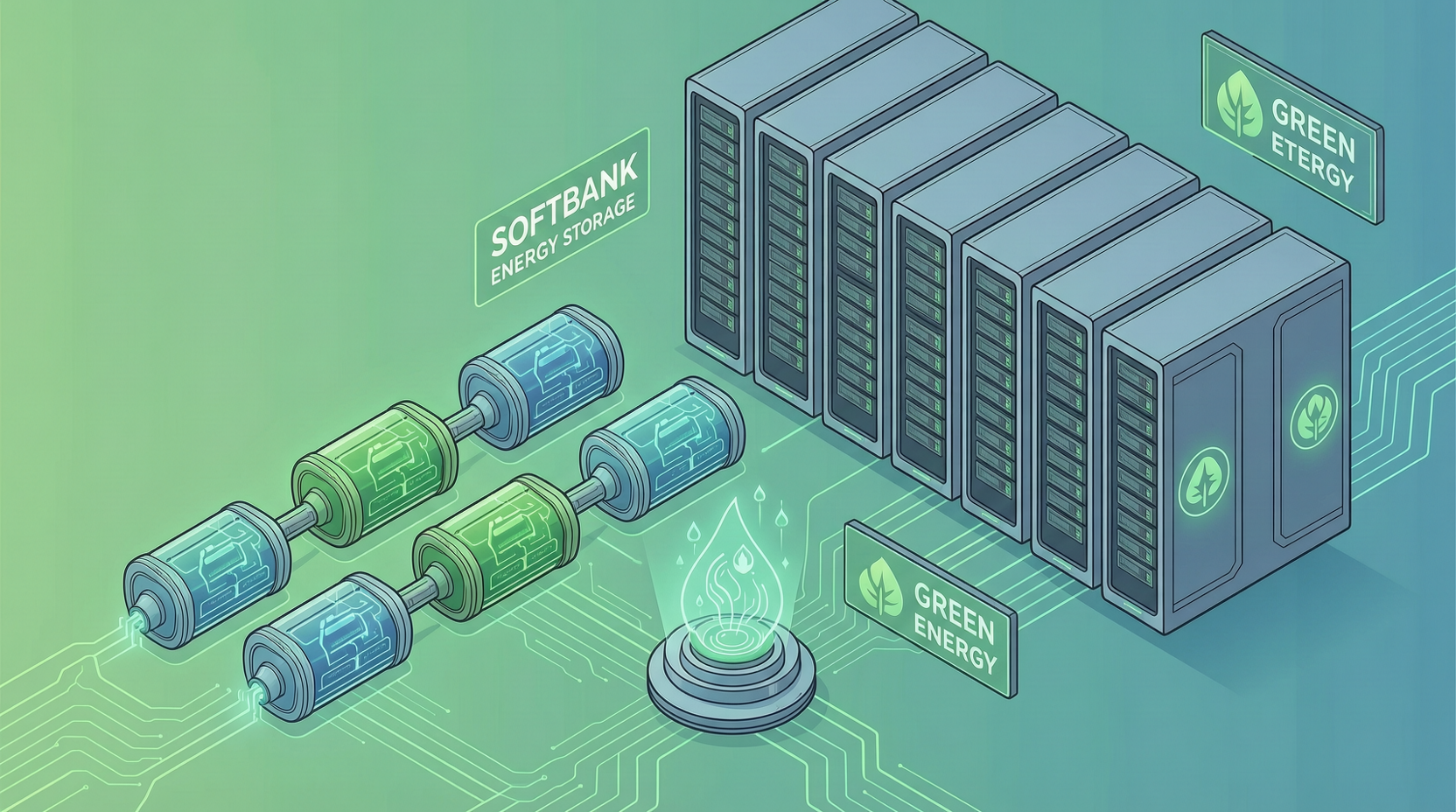
SoftBank has launched a new business in Japan: batteries. Not for phones, not for electric vehicles—for powering AI data centers.
Masayoshi Son has a characteristic—what he invests in is often half a step to a step ahead of industry consensus. This was true with Alibaba, with ARM, and now with batteries for data centers. It means he's seeing a problem others haven't fully recognized yet:
AI compute expansion is happening so fast that the power grid can't keep up.
Why Batteries?
Data center power has several pain points:
- Peak load fluctuations are large: inference requests need power when they come, waste it when they don't
- Grid stability requirements are extremely high: one minute of downtime could cost hundreds of thousands of dollars
- Green energy is unstable: solar and wind depend on weather, but data centers can't depend on weather
Batteries here serve as buffer + backup power: discharging during peak grid load, charging when green energy is abundant, and ensuring data centers don't go down during power outages.
This Isn't Just SoftBank's View
Look at recent moves in AI infrastructure:
- Microsoft is signing long-term power supply agreements with nuclear energy companies
- Amazon is globally procuring backup power generation equipment at scale
- Google is investing in small modular nuclear reactors (SMR)
- Now SoftBank enters the battery storage space
Everyone is solving the same problem: how to make AI run faster, longer, and more stably.
Japan's Special Position
Japan choosing battery storage has a natural advantage—it's one of the most mature battery technology countries in the world. Panasonic, Toshiba, Murata—the supply chain is already there. SoftBank isn't starting from zero; it's grafting existing technology capabilities onto this new AI demand.
And Japan's grid capacity is relatively tight, making data center site selection more dependent on power supply conditions. Storage solutions proven in Japan can theoretically be replicated in other power-constrained regions globally.
Industry Implications
When a company known for investment and technology布局 starts betting on "AI's power supply," it means the business logic in this direction is established.
Indirect impact on AI practitioners:
- Power costs will占 an increasingly larger share of compute costs
- Data center site selection will increasingly prioritize power conditions, not just land prices and talent
- Green compute might shift from a "bonus" to a "prerequisite"
My Take
SoftBank is playing a 3-5 year game here. AI data center power demand is growing 30%-50% annually, and grid expansion can't nearly keep up. Storage batteries are the most realistic short-term solution.
In this industry, the people selling shovels often earn more steadily than the people digging for gold. SoftBank wants to be the one selling "power shovels."