The SpaceX S-1 IPO filing is one of the most information-dense financial documents this week. Not because of rockets or Starlink, but because the AI-related sections are longer than the aerospace ones.
Here's what happened, simply put.
xAI formally merged into SpaceX
Earlier this year, SpaceX formally acquired Musk's xAI. The merged SpaceXAI division took over the Grok AI models and Grok chatbot. This S-1 filing is the first complete financial disclosure after the merger.
One line in the filing is particularly telling: SpaceX claims to have "the largest actionable total addressable market in human history"—with the AI portion estimated at $26.5 trillion. That number approaches US nominal GDP of roughly $32 trillion in Q1 2026.
For comparison, Gartner estimates global AI spending will reach $3.3 trillion by 2027, and Citigroup suggests the global AI market may surpass $4.2 trillion by 2030. SpaceX's number is an order of magnitude above any third-party estimate.
Grok's reality: not great
The filing doesn't shy away from Grok's awkward position. Some numbers on the table:
- In Q2 2026, just 0.174% of US AI users paid for Grok
- ChatGPT's paying user rate was over 6% in the same period
- Enterprise side: Claude usage jumped from 21% to 48%, Gemini from 27% to 40%, Grok from 4% to just 7%
Reuters was even more direct: Grok has been a "flop" with one of the world's largest customers—the US government. Out of 400+ publicly disclosed AI use cases by federal agencies, only 3 mentioned xAI or Grok.
Controversies and risks
The S-1 filing unusually and candidly lists risks. A January 2026 update allowed users to generate millions of sexualized images by uploading real photos—a vulnerability that lasted weeks before being fixed, ultimately leading to lawsuits and an EU ban.
The filing also flags Grok's "Spicy" and "Unhinged" modes as presenting "heightened risks including reputational harm, generation of potentially explicit content, misleading or deceptive outputs." From a business standpoint, these features expose the company to regulatory scrutiny and litigation risk.
These aren't small issues. For a company preparing for IPO, writing these in black and white in an S-1 means either regulatory requirement or legal team insistence.
The bigger bet: orbital data centers
Beyond Grok, SpaceX's real ambition lies elsewhere. The filing discloses two key projects:
- Macrohard: An agentic AI platform developed with Tesla, designed to "fully emulate digital workflows and augment human operation of computers"
- Terafab: A chip manufacturing venture with Tesla and Intel, aiming to "produce 1 terawatt per year of compute hardware"
But the filing is also candid that both projects are "in the very early stages" of development.
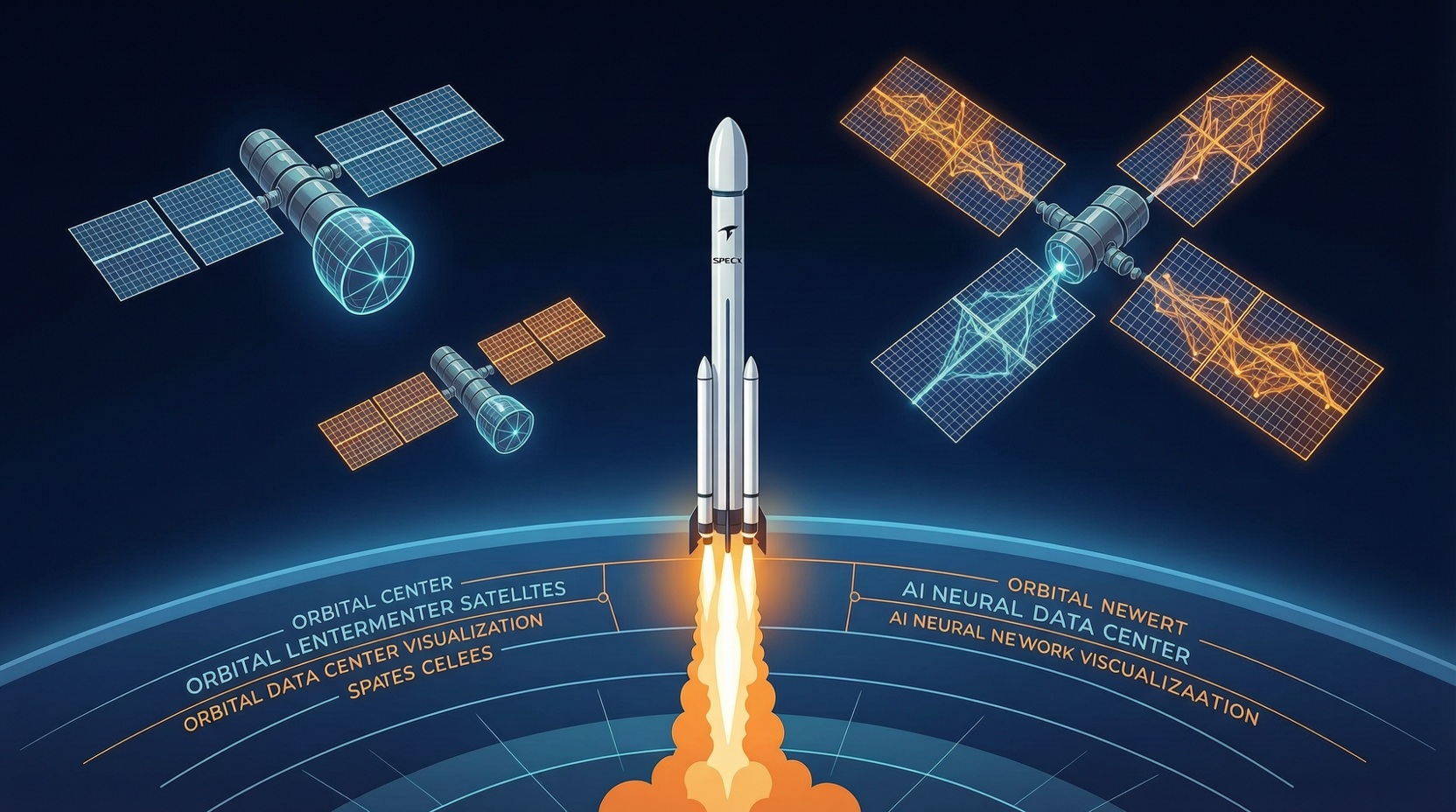
Even wilder is the orbital data center plan. SpaceX intends to use its launch capabilities to eventually deploy up to 1 million satellites as orbital data centers. The company claims it is "uniquely positioned" to do this.
That plan could cost over a trillion dollars.
Financial reality
As of the filing, SpaceX is currently unprofitable—Starlink is the only profitable business unit. Debt has reached $29 billion. Q1 2026 net loss was $4.3 billion, while spending on AI infrastructure, rockets, and satellite hardware exceeded $10 billion.
This is why the IPO is so critical. SpaceX needs that cash infusion to support all the ambitions above.
As for whether investors will buy into the vision—we'll see.
Main sources: