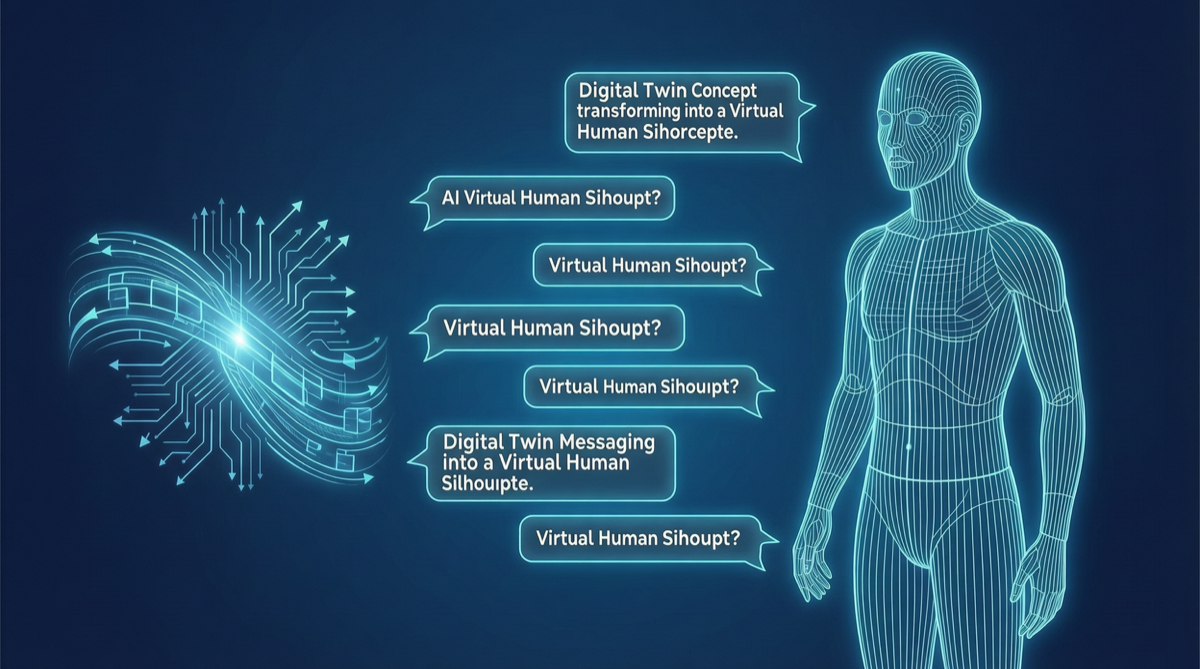
Feed your chat history into AI, train a digital twin that talks like you. This Black Mirror-sounding idea now has an open-source implementation.
WeClone hit GitHub Trending today. Its positioning is clear: a one-stop solution from chat history to AI digital twin.
How it works
WeClone's core pipeline has three steps:
- Import chat history: supports chat logs from WeChat and other messaging apps
- Fine-tune LLM: LoRA fine-tuning with your conversation data, teaching the model your speaking style, common expressions, and reply patterns
- Bind to chatbot: connect the fine-tuned model to a WeChat bot, and your digital twin can "live" in WeChat
What v0.2.0 changed
The latest version brought five updates, with a focus on training efficiency improvement. Specific numbers were not published, but "doubled efficiency" means training with the same data on the same hardware takes half the time — if true.
The project supports LoRA fine-tuning — the most mainstream lightweight approach, no need for full model weight updates, runs on consumer-grade hardware.
A question worth discussing
Where is the ethical boundary for digital twins?
Technically it is entirely feasible: your chat history contains your language habits, value tendencies, even emotional patterns. A fine-tuned model can largely replicate your reply style.
But there are unanswered questions:
- Does the other person know they are chatting with an AI?
- How is training data ownership and privacy protected?
- Who is responsible for the digital twin's behavior?
The project itself does not answer these questions. It only provides the tool — whether and how to use it is up to the user.
My take
The technology is not hard. The hard part is the boundary. WeChat chat history fine-tuned LLM bound to a WeChat bot — the whole chain works, but every step lands in a gray area.
Watch it, do not rush to use it. At least wait for the community to sort out the ethical framework.
Main sources: