この記事は日本語版です。言語ルートを完全にするため、本文は既存の標準原稿をベースにしています。
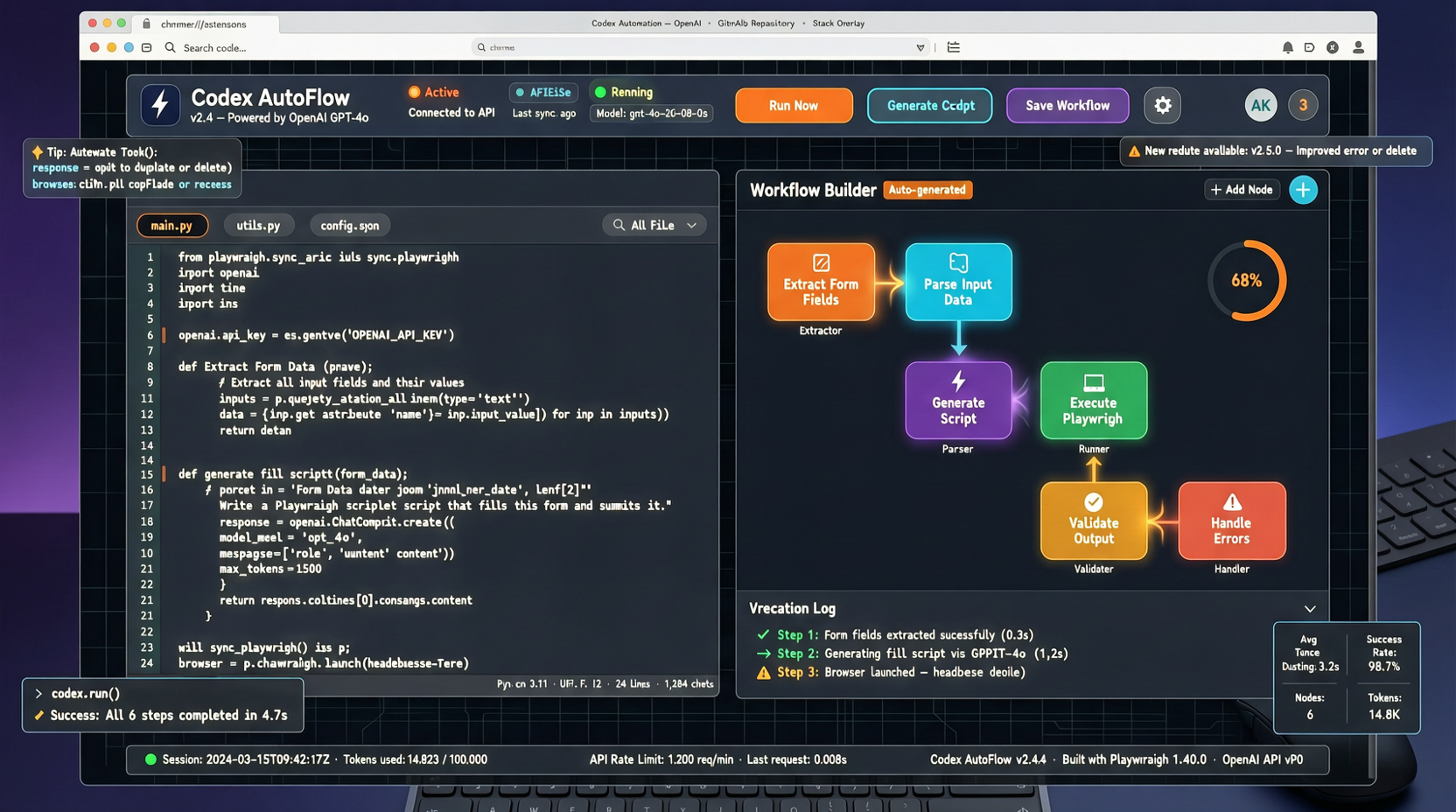
OpenAI has added a Chrome extension to Codex. This is not a shallow "summarize this webpage" plugin. It lets Codex write code, run code, and complete real browser tasks that depend on your logged-in session.
What Changed
Before this, Codex handled web tasks mostly through plugins. If a page had a matching API integration, great. But many real workflows do not have clean APIs. You need to log in, fill forms, move between pages, and handle messy UI states.
The new Chrome extension closes that gap:
- Write and run code inside the browser: Codex can generate JavaScript to operate on the page.
- Reuse your logged-in session: no separate API key is needed for sites where you are already signed in.
- Mix strategies: Codex can choose plugins when they fit, browser automation when they do not, and combine both.
Where It Fits
OpenAI describes the target use case as navigating structured pages and complex data-entry workflows. In normal language, that means:
- batch-editing data in internal admin systems
- syncing information across multiple SaaS tools
- automating repetitive tasks that have no API but still require dozens of clicks every day
Those tasks used to need RPA tools or custom Selenium scripts. Now Codex can handle them directly in the browser.
Practical Availability
The official demo looks promising. Codex can understand page structure, locate elements, and execute actions. The caveats are still real:
- Chrome only for now
- Codex subscription required
- Security boundary: browser-executed code can access your logged-in page data, so the trust model matters
For developers already using Codex CLI or the API, this fills the last mile. Codex can now move from terminal work into browser work.
Industry Signal
Browser-level agent control is not a new idea. Claude and Gemini are also moving in this direction. OpenAI's choice to make browser operation a native Codex capability, rather than a standalone product, says something: an agent should not be trapped in a terminal or API. It should operate the interface you already use.
User feedback over the next few months will tell us how far that idea can go.
Main sources:
- OpenAI Developers post
- Codex Chrome extension documentation