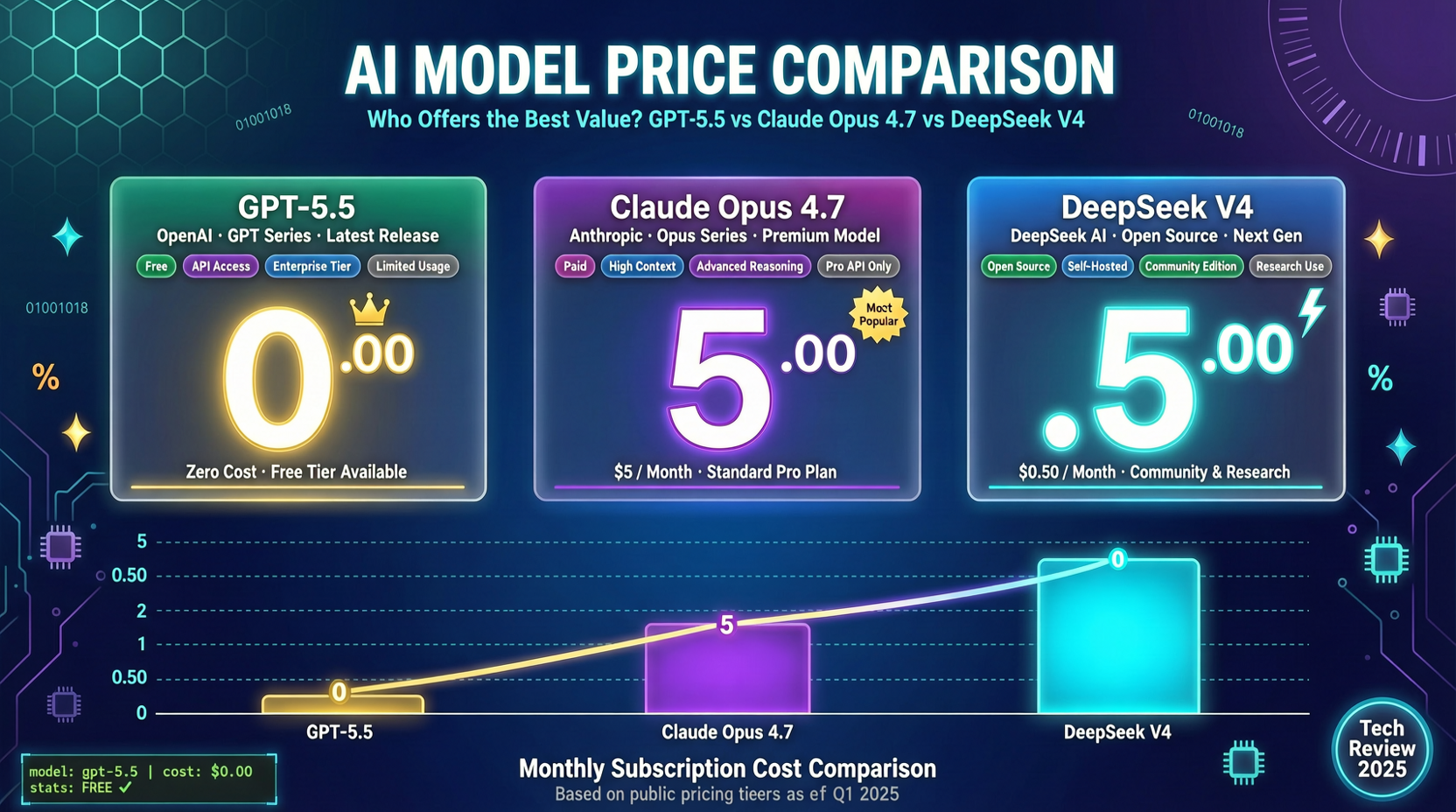
April 2026 brought a counterintuitive shift in model pricing: while the industry widely expected continued price drops, OpenAI’s flagship model is actually getting more expensive.
From GPT-5.0 to GPT-5.5, API pricing followed a steep upward curve:
| Model Version | Input ($/M) | Output ($/M) |
|---|---|---|
| GPT-5.0 | 0.625 | 5.00 |
| GPT-5.1 | 1.25 | 7.20 |
| GPT-5.2 | 2.50 | 12.00 |
| GPT-5.3 | 3.50 | 18.00 |
| GPT-5.4 | 3.50 | 18.00 |
| GPT-5.5 | 5.00 | 30.00 |
GPT-5.5’s input price is 8x the 5.0 price, output is 6x. Combined with increased token consumption, actual cost differences are even larger.
Current Frontier Model Price Landscape
| Model | Input ($/M) | Output ($/M) | Position |
|---|---|---|---|
| GPT-5.5 | 5.00 | 30.00 | Most expensive |
| Claude Opus 4.7 | 5.00 | 25.00 | Flagship competitor |
| Gemini 3.1 Pro | 3.50 | 15.00 | Mid-range frontier |
| DeepSeek V4 Pro | 2.20 | 3.48 | Low price, high specs |
| DeepSeek V4 Flash | <1.00 | <2.00 | Speed-first |
Three price bands are forming:
- Premium ($20-30/M): GPT-5.5, Claude Opus 4.7. Competing on benchmark rankings.
- Mid-range ($10-15/M): Gemini 3.1 Pro. Competing on value.
- Budget (<$5/M): DeepSeek V4, Kimi K2.6. Competing on “good enough.”
Action Items
- API cost audit: Compare your current model usage against DeepSeek V4. Cost could drop 80%+.
- Hybrid strategy: Route frequent simple tasks to V4-Flash, complex reasoning to GPT-5.5.
- Watch pricing windows: Community predicts OpenAI may adjust Codex quotas in June.