The other boot has dropped for China's AI regulation.
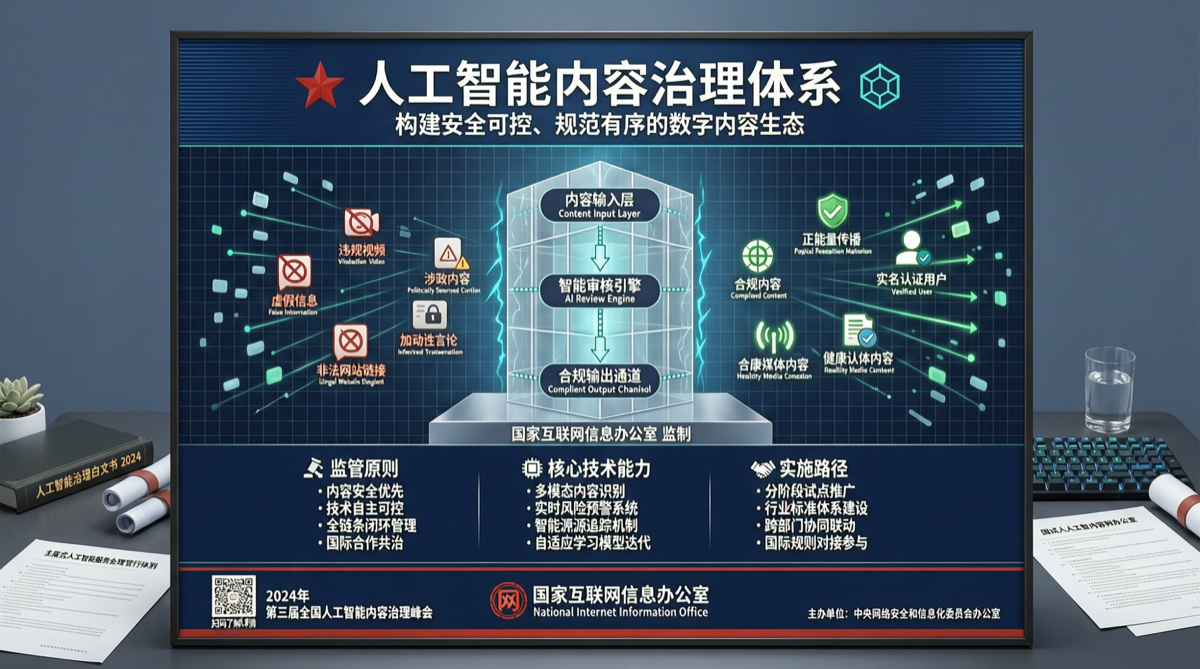
On April 30, the Cyberspace Administration of China (CAC) issued a notice deploying a four-month "Qinglang · Rectify AI Application Irregularities" special action across the country. This is not a general industry initiative — it's a phased, targeted enforcement campaign.
Phase one targets the AI technology source: failure to fulfill large model registration obligations, inadequate safety review capabilities, training corpus security issues, data poisoning, and inadequate labeling of generated synthetic content.
Phase two focuses on AI information content irregularities: using AI to generate "digital slop," creating and publishing false information, spreading violent and vulgar content, impersonating others, and infringing on minors' rights.
Not the First Time, But Different This Time
The National Radio and Television Administration already ran a "AI Magic Modification" video special governance campaign last year, targeting abuse of AI tools to tamper with classic film and animation. Xiaohongshu also announced in February that it would restrict distribution of AI-generated content that was not proactively labeled.
But this round is higher in scope and coverage. The two phases hit both the technology layer and the content layer, and explicitly mention "training corpus security" and "data poisoning" — terms that directly target data governance at the model training stage, areas that previous regulatory documents had rarely touched in detail.
Translation: it's not just about what you generate, it's about what data you trained on.
What This Means for Domestic AI Companies
Registration obligations are already being enforced, but "inadequate safety review capabilities" gives regulators much wider discretion. What counts as "inadequate"? There are no clear quantitative standards, meaning every large model service provider may be required to prove what level they've achieved.
For startups, compliance costs are rising fast. Training corpus security reviews, synthetic content labeling systems, anti-data-poisoning technical measures — these are not things a small team can casually set up.
For the top players, this is actually a tailwind. Baidu, Alibaba, ByteDance, Moonshot — companies that have already built compliance systems now have compliance itself as a competitive moat. Smaller players either invest resources to follow or get shut out.
International Perspective
China's AI regulation pace and intensity are among the most aggressive globally. The EU's AI Act focuses on risk classification and pre-compliance, while the US currently relies more on industry self-regulation and state-level legislation. China's approach is closer to the "special action" model — concentrated enforcement, clear timelines, full-chain coverage.
The advantage of this model is high execution efficiency. The problem is it may excessively compress innovation space. Particularly vague terms like "digital slop" could create a chilling effect in practice.
Assessment
AI generated content regulation is moving from "discussing whether to regulate" to "how to regulate, who regulates, and to what extent" — this is a global trend. China's pace is the fastest, and enforcement is the strongest.
Direct impact on developers: if your product involves AI generated content, you need to put content labeling, corpus compliance, and safety review at the highest priority now. Don't wait until you get audited.
What to watch next: enforcement case disclosures after the special action ends, and whether any specific company or model gets penalized. This will draw the actual compliance baseline for the entire industry.
Primary sources:
- CAC "Qinglang · Rectify AI Application Irregularities" special action notice (2026-04-30)
- WallstreetCN related reporting
- Xiaohongshu AI content labeling policy (2026-02)