Core Judgment
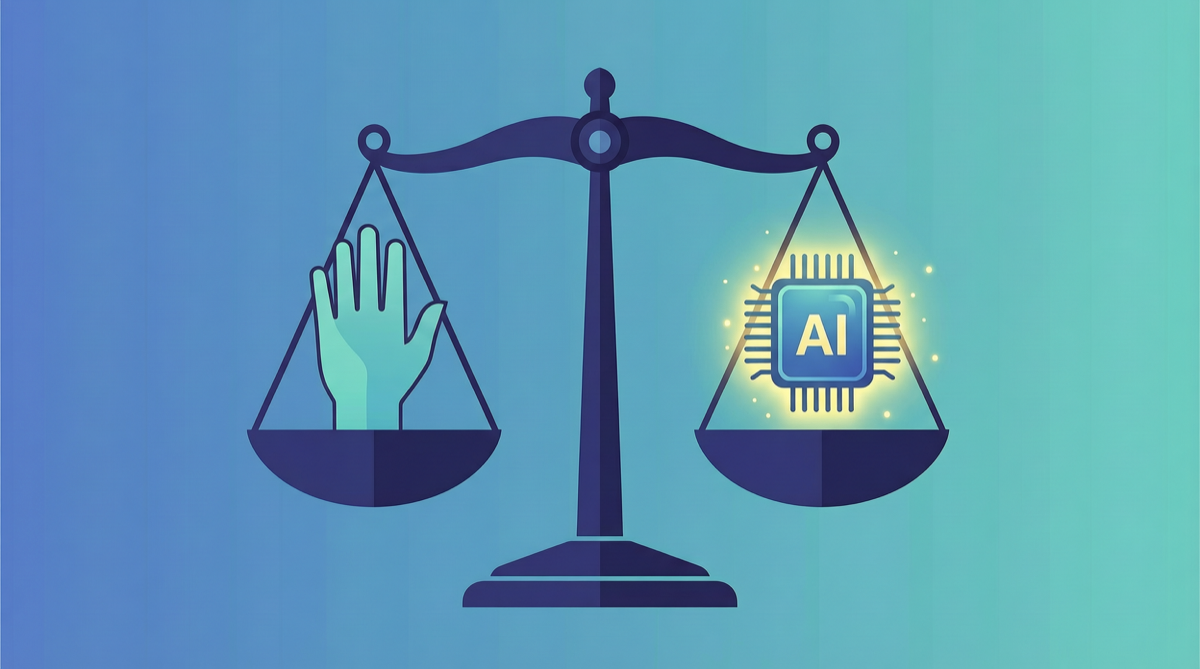
A Chinese court has delivered a landmark ruling: companies cannot terminate employees on the grounds that "AI can perform the job." This is the first time globally that a judicial body has explicitly brought AI displacement under the scope of labor law protection, marking a new phase in labor rights protection for the AI era.
For companies deploying AI automation, this means "replacing humans with AI" is no longer a purely technical decision—it is a labor adjustment that must follow complete legal procedures.
Key Points of the Ruling
| Dimension | Content |
|---|---|
| Core Holding | "AI technical capability cannot serve as legal grounds for terminating a labor contract" |
| Legal Basis | Labor Law Article 40 — Workers deemed incompetent must receive training or reassignment |
| Scope | All unilateral layoffs justified by "technological replacement" |
| Precedential Value | World's first judicial case explicitly linking AI displacement to labor rights |
Case Background
According to reports, the case involved a company that unilaterally terminated an employment contract after introducing an AI system, citing "the position has been replaced by AI." After the employee filed for labor arbitration, the case proceeded to court.
The court's reasoning was clear: AI is a tool, not a legal entity. The "incompetence" provision in the Labor Law refers to the worker's own capability, not the efficiency gains from external tools. A company's adoption of AI constitutes a business strategy adjustment and should follow the full economic layoff procedure—including 30 days' advance notice, severance payment, and priority retention requirements.
Comparison with Other Countries
| Country/Region | AI Employment Protection Status |
|---|---|
| China | ✅ First judicial precedent explicitly banning direct dismissal on AI replacement grounds |
| EU | 🟡 AI Act focuses on transparency; labor law dimension not yet clarified |
| USA | 🔴 No federal-level protection; state policies vary |
| Japan | 🟡 Government issued AI employment guidelines; no legal binding force |
| South Korea | 🟡 Discussing AI displacement compensation plans |
China's precedent leads most developed economies in timing. The EU's AI Act primarily addresses AI system risk assessment and transparency requirements, without touching employment protection. The US employment law system is dominated by "at-will employment," offering relatively weak worker protections.
Impact on Companies
Practices That Need Immediate Adjustment
- No direct layoff notices: Unilateral termination citing AI replacement will be deemed illegal dismissal
- Must follow legal procedures: Apply economic layoff process, including union consultation and labor department filing
- Severance standards unchanged: N or N+1 severance cannot be discounted because "AI is more efficient"
- Training/reassignment first: Courts explicitly require companies to prioritize repositioning and skill upgrades
The Compliant Path for AI Automation Deployment
AI Introduction Assessment → Job Impact Analysis → Employee Communication → Training/Repositioning Plan →
↓ (if layoff is truly necessary)
Economic Layoff Procedure → Union Consultation → Labor Department Filing → Severance Payment
Significance for Workers
Which Positions Are Most Affected?
- Customer Service/Content Moderation: AI dialogue systems can already handle 80%+ of routine tickets
- Junior Programming: AI coding assistants can complete basic code writing and debugging
- Data Analysis: Natural language queries are replacing some SQL work
- Copywriting/Translation: Large model output quality approaches entry-level practitioners
What Workers Can Do
- Preserve evidence: If you receive a dismissal notice citing AI replacement, keep written records
- File for labor arbitration: Illegal dismissal entitles you to 2N compensation or reinstatement
- Skill upgrade window: The precedent gives workers buffer time—proactively learn AI collaboration skills
- Focus on collective bargaining: Union-level AI usage agreements are becoming a new negotiation focal point
Landscape Judgment
The signal this precedent sends runs deeper than its surface:
Short-term: Corporate AI deployment costs rise—you can't simply "swap humans for AI," but must consider hidden costs like training, repositioning, and severance. This will slow the AI replacement pace for some SMEs.
Medium-term: Birth of new "AI collaboration job" standards—companies need to position AI as an "assistive tool" rather than a "replacement solution," redesigning job responsibilities and performance evaluation systems.
Long-term: May drive legislative revision of AI labor law—a single judicial precedent has limited impact, but if similar cases multiply, it will push for formal amendments to the Labor Law, creating statutory protection.
China's precedent could become a "bellwether" for global AI labor rights protection. If other countries follow with similar rulings, the economic model of the global AI industry may need recalculation—the true ROI of AI is not "how many people were replaced," but "how much more each person can produce."