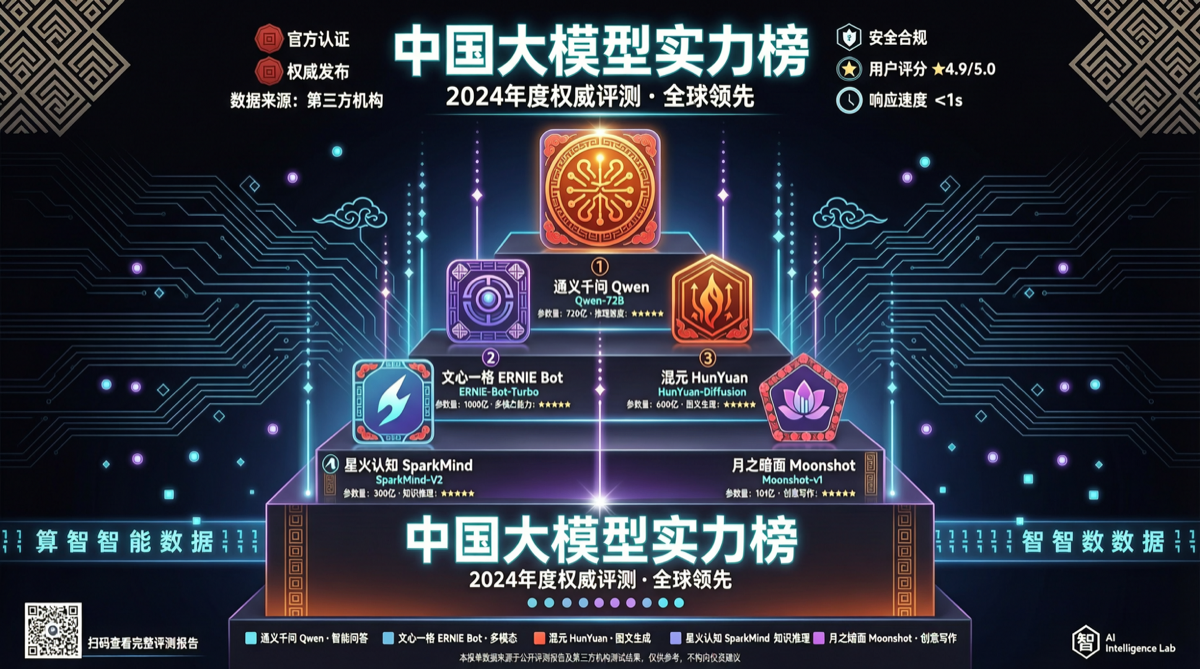
Over the past three months, a vibe coder ran the same workflow across 5 Chinese quantized models. The results are interesting.
Here's the ranking:
| Rank | Model | Strongest Scenario |
|---|---|---|
| 🥇 | Kimi K2.6 | Web design and frontend prototyping |
| 🥈 | GLM-5.1 | Chinese understanding and conversational development |
| 🥉 | Qwen 3.6 max preview | Overall stability and code quality |
| 4 | MiniMax 2.7 | Video generation and multimodal creation |
| 5 | DeepSeek V4 Pro | Cost-effectiveness and large-scale text processing |
Note: this isn't a standard benchmark. It's one person's actual usage experience over three months. Small sample size, but vibe coding as a scenario is inherently subjective — you're not running scores, you're running feel.
Real-world scenarios per model
Kimi K2.6's strength is "you describe a vibe, it gives you a design." Not precisely implementing a spec, but understanding that fuzzy "I want a landing page that feels like this" — and delivering something 80-90% there. For vibe coders, that's the core value.
GLM-5.1 exceeded expectations in Chinese contexts. Writing prompts in Chinese, describing requirements in Chinese, even discussing architecture in Chinese — its comprehension depth runs half a body length ahead of the others. If your primary workflow is in Chinese, this difference is obvious.
Qwen 3.6 max preview has no obvious weak spots. Stable code quality, balanced reasoning, low error rate. It's not first in any single category, but it's the "when you don't know who to pick, pick this" option.
MiniMax 2.7's standout feature isn't in code — it's in multimodal. Video generation capability is in a class of its own among Chinese models — not just "can generate," but "generates something usable." If your vibe coding workflow includes video content, this model deserves its own API key.
DeepSeek V4 Pro's killer feature is price. For the same tasks, its cost might be a fraction of other models. Quality isn't the highest, but between "good enough" and "cheap," V4 Pro found a very practical balance point.
How this differs from the free model comparison
We previously wrote about 6 free Chinese coding models tested, which used standard programming tasks (REST API + unit tests) — more traditional development.
This vibe coding ranking focuses on a different workflow: describe intent → model understands → rapid prototype → iterate. It tests not coding ability, but the model's understanding of fuzzy intent and creative output.
The results across the two dimensions aren't identical. Kimi ranks first in both traditional coding and vibe coding — suggesting its advantage isn't coincidental. But GLM-5.1 and Qwen swap positions between the two tests, showing they have different strengths in different scenarios.
A practical recommendation
If your workflow involves both code and creative content, the best strategy isn't "pick one model and stick with it" — it's switching by scenario:
- Frontend prototyping and UI design → Kimi K2.6
- Chinese-language requirements analysis and architecture discussion → GLM-5.1
- Backend code and API development → Qwen 3.6 or GLM-5.1
- Video and image generation → MiniMax 2.7
- Large-batch document processing → DeepSeek V4 Pro
Not the optimal solution (who doesn't want one model to handle everything?), but it's the realistic solution at this stage.
Primary sources: