Core Conclusion
The most realistic moment for the AI industry has arrived—not a new model release, not a benchmark refresh, not another Agent demo.
Someone is selling "AI mess-up insurance."
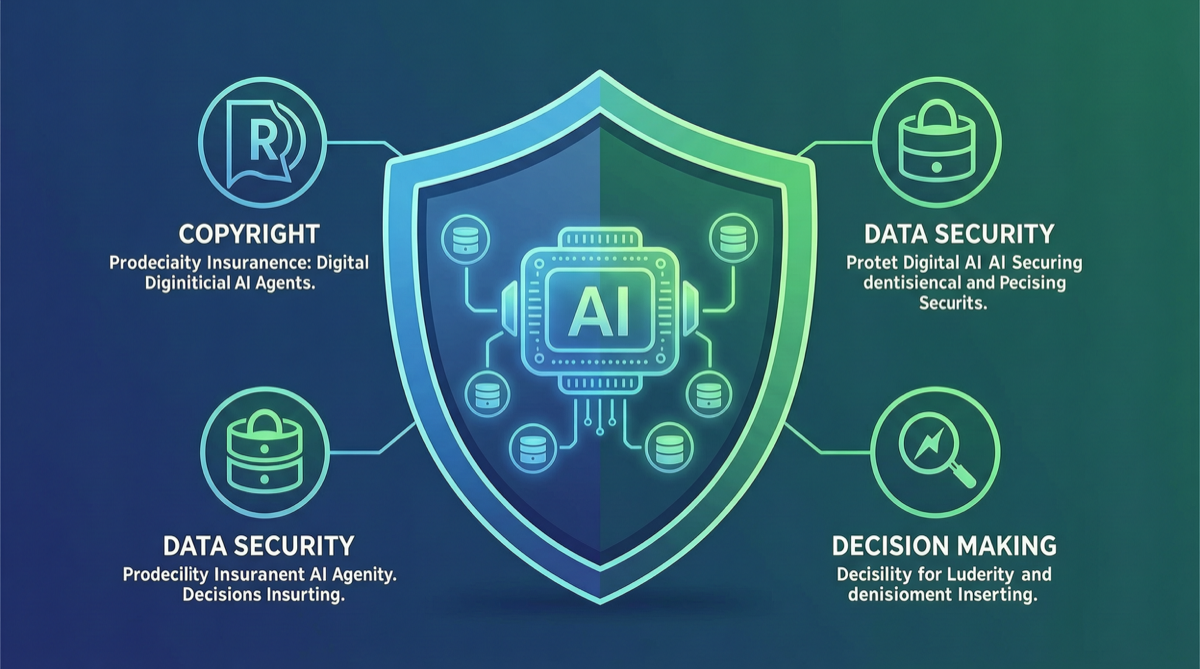
Corgi has launched AI Coverage, specifically covering risks from AI hallucinations, copyright infringement, data breaches, and Agent decision errors. This is a landmark event marking AI risk management's transition from "technical solutions" to "financial solutions."
What Risks Does It Cover?
| Risk Type | Scenario Example | Insurance Significance |
|---|---|---|
| AI Hallucination | AI generates incorrect legal advice leading to lawsuit loss | Compensates for economic losses from model unreliability |
| Copyright Infringement | AI-generated images/copy infringe on others' copyrights | Covers potential legal disputes and compensation costs |
| Data Breach | AI accidentally exposes sensitive information while processing user data | Fills gaps in traditional cybersecurity insurance |
| Agent Decision Error | Autonomous AI Agent executes wrong transactions/operations | Provides liability backstop for AI autonomous behavior |
Why This Product Now?
Timeline: The Evolution of AI Risk
| Phase | Characteristics | Risk Response Method |
|---|---|---|
| 2023-2024 | AI primarily a content generation tool | Disclaimers + human review |
| 2025 | AI enters workflow-assisted decision making | Technical safeguards (guardrails/red team testing) |
| 2026 | AI Agents autonomously execute critical operations | Financial insurance backstop |
Three Catalysts
1. Dramatic Increase in AI Agent Autonomy In 2026, AI Agents no longer just "suggest"—they directly "execute"—automatically sending customer emails, executing trades, modifying production environment code. Higher autonomy means blurrier responsibility boundaries.
2. Increased Regulatory Pressure Chinese courts in 2026 have already had multiple "employees cannot be replaced by AI" rulings, the EU AI Act has entered enforcement phase, and corporate compliance responsibility pressure for AI is rising sharply.
3. Hard Requirements in Enterprise IT Procurement Large enterprises purchasing AI services are starting to require suppliers to provide liability insurance—just like cloud services require cybersecurity insurance.
Industry Impact
For AI Companies
- Positive: With insurance backstop, enterprise clients' psychological threshold for purchasing AI services is lowered
- Challenge: Insurance costs will ultimately be reflected in AI service pricing, driving up costs
For Enterprise Users
- Direct benefit: Compliance risks of AI deployment are transferred to insurance companies
- Indirect benefit: Insurance companies will establish AI safety standards, driving industry normalization
For the Insurance Industry
- New market: After cybersecurity insurance, traditional insurance companies have found a new growth curve
- New challenge: Quantification and pricing of AI risk lacks historical data—initial pricing may be conservative
Landscape Judgment
The emergence of AI insurance signals that AI has transitioned from "innovative technology" to "infrastructure."
Just as cloud computing requires SLA guarantees and cybersecurity requires insurance, AI applications now need liability backstop. This is a sign of industry maturity, not a signal of panic.
Action Recommendations
| Role | Recommendation |
|---|---|
| Enterprise IT Decision Makers | Include insurance coverage in evaluation criteria when purchasing AI services |
| AI Entrepreneurs | Factor insurance costs into pricing models—this is an enterprise client requirement |
| Individual Developers | Open-source projects are temporarily unaffected, but commercial products need attention |
| Investors | AI insurance is a new investment direction—follow Corgi and potential competitors |
AI mess-ups have someone to pay for them—this is not a joke, it is one of the most pragmatic advances in the AI industry in 2026.