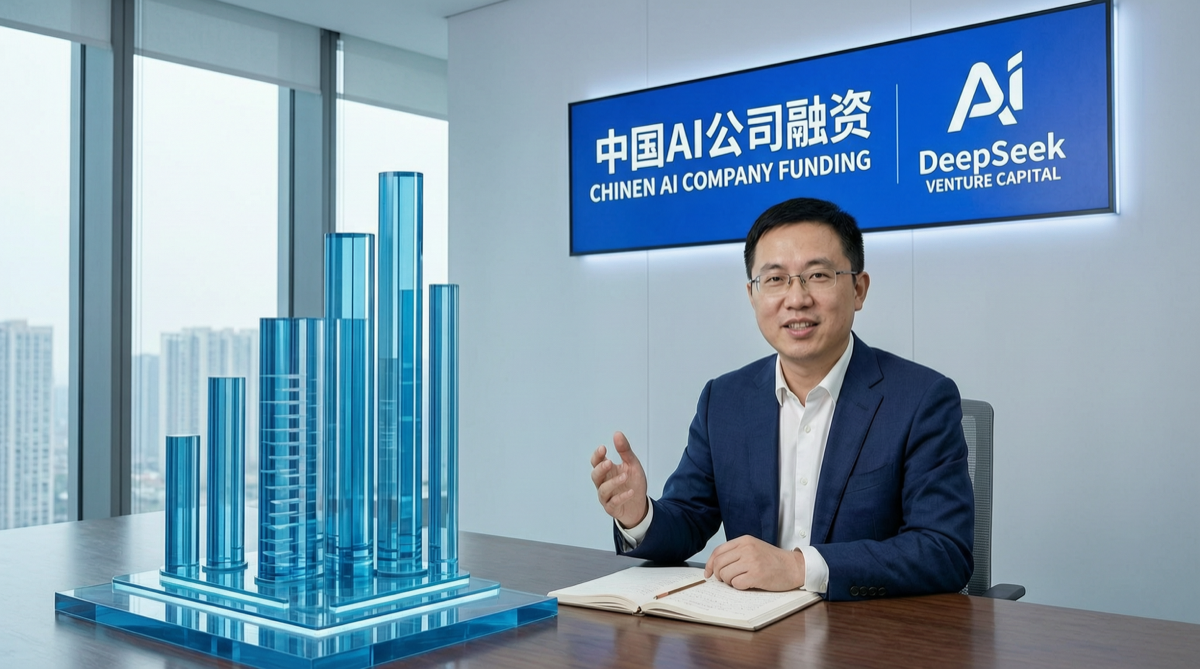
The most explosive news in China's AI circle recently is not that DeepSeek's valuation reached $50 billion—that number has been repeatedly reported by Reuters and Bloomberg.
What's truly surprising is the funding structure: founder Liang Wenfeng is putting in $3 billion himself, accounting for 40% of this round, while his ownership in the company remains as high as 90%.
90%. In a $50 billion AI company.
This number sounds like fantasy in Silicon Valley. Sam Altman of OpenAI holds less than 10%, and Dario Amodei of Anthropic holds less than single digits at a $183 billion valuation. But Liang Wenfeng of DeepSeek, at a $50 billion valuation, still holds 90% equity.
How This Is Possible
Three reasons叠加 together created this situation.
First, DeepSeek has never taken external funding. In its three years of existence, it has operated entirely on its own funds. This means no dilution from early investors, no equity dilution from multiple funding rounds. The founder has held absolute control from the beginning.
Second, after V4 open-sourcing, DeepSeek gained bargaining power. Global developers are using it, API call volume and community influence are real. It doesn't need funding to prove itself—the market has already proven it.
Third, Liang Wenfeng's source of personal funds. His previous venture, High-Flyer Quant, made significant money in the quantitative trading field. $3 billion in personal contribution is an astronomical number for ordinary people, but for a successful quantitative fund founder, it's not impossible.
What This Structure Means
What does 90% ownership mean?
Absolute control. No need to look at investor脸色, no need to compromise in board meetings, no need to adjust strategy to satisfy capital market expectations. DeepSeek's open-source route, chip adaptation strategy (including Huawei Ascend), API pricing—these decisions are all Liang Wenfeng's call.
But it also means concentrated risk. If the model direction judgment is wrong, or if the funding chain has problems, there are no external investors to share the risk. 90% ownership is both a moat and a single point of failure.
Impact on the Industry
This funding structure is nearly unique among Chinese AI companies.
Most Chinese AI companies follow the "multiple funding rounds + major tech strategic investment" route—taking money while accepting ecosystem binding. DeepSeek rejected this path, choosing "self-fund the majority + maintain independence."
This is not replicable by all companies. DeepSeek has High-Flyer Quant's financial foundation, V4 open-source market position, and a 270-person team with high retention rate. These conditions are缺一不可.
But it releases a signal: Chinese AI companies are beginning to have the option of "doing fine without taking money."
Primary sources:
Note: Founder self-funding amount and ownership percentage data come from community disclosures and have not been officially confirmed by DeepSeek.