Key Takeaways
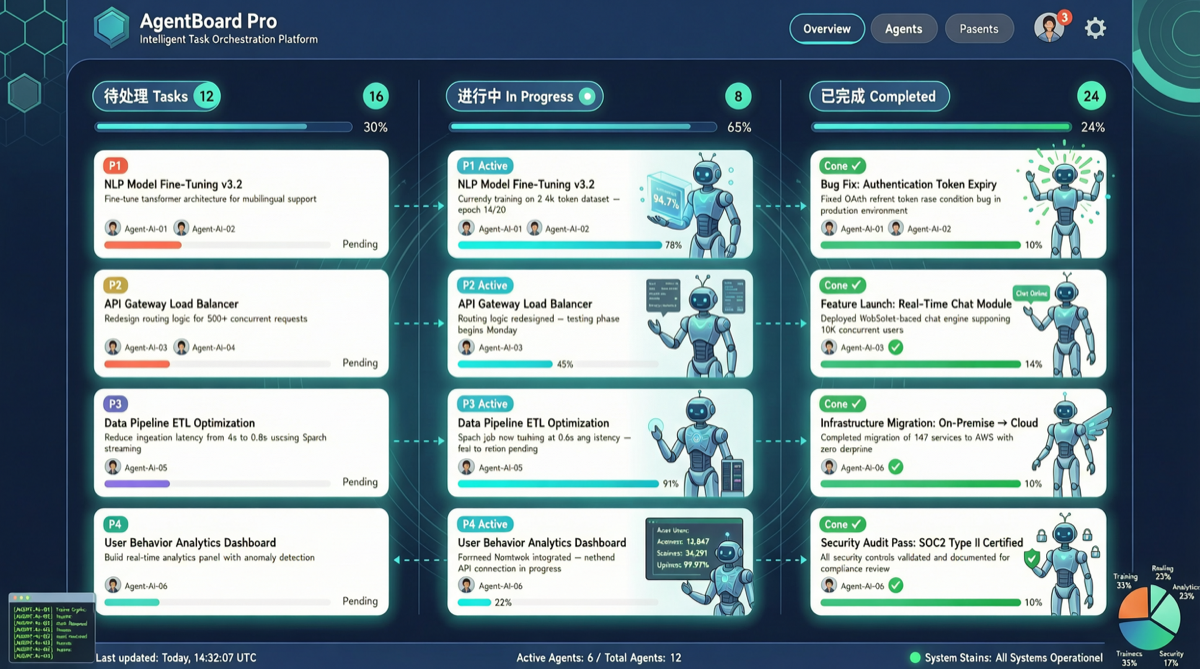
Hermes Agent has introduced a Kanban-based multi-Agent collaboration mode. Agents can automatically claim tasks from the board, work in parallel, and hand off when encountering blocks. Users can monitor all Agent progress and unblock from a unified interface — no more juggling between multiple terminals. This feature evolves Hermes Agent from a “single-Agent tool” into a “multi-Agent orchestration platform.”
What Happened
A post clearly demonstrated the core concept of this feature:
“Hermes Agent now has multi-agent via the Kanban, new in v0.12.0+. Agents claim tasks from a board, work in parallel, and hand off when blocked. You watch progress and unblock from one easy view instead of juggling terminals.”
This post received 1,597 likes, 121 retweets, and 999 bookmarks, making it one of the highest-engagement announcements in the Agent framework space recently.
How the Kanban Mode Works
| Phase | Traditional Approach | Hermes Kanban Mode |
|---|---|---|
| Task Assignment | Manually assign tasks to each Agent | Agents automatically claim available tasks from the board |
| Parallel Execution | Requires manually launching multiple terminals | Multiple Agents run simultaneously with automatic scheduling |
| Blocking Handling | Users must manually troubleshoot | Agents automatically flag blocks and wait for user unblocking |
| Progress Monitoring | Check logs terminal by terminal | Unified Kanban board visualizes all Agent states |
| Result Handoff | Manually pass intermediate results | Agents automatically hand off dependent tasks |
Why It Matters
1. Democratizing Multi-Agent Orchestration
Before this, multi-Agent systems primarily existed in two categories:
- Academic/research frameworks: Like CrewAI, AutoGen — powerful but steep learning curve
- Commercial platforms: Like Dify, MuleRun — out-of-the-box but paid
Hermes Agent’s Kanban mode takes a middle path: open-source + visual + low barrier. Users don’t need to write complex orchestration code — just define tasks on the board and Agents will automatically claim and execute them.
2. The “You Watch the Board, Agents Do the Work” Paradigm
The core value of the Kanban mode lies in changing how humans interact with Agent systems:
- Before: You’re a “dispatcher” — manually assigning tasks, monitoring progress, handling exceptions
- Now: You’re a “supervisor” — just define tasks on the board and handle blocks that Agents can’t resolve themselves
This is similar to the shift from “manual driving” to “assisted driving” — you’re still at the wheel, but the system handles most daily operations.
3. Synergy with v0.12.0 Dashboard Profiles
The Kanban feature complements the Dashboard Profiles introduced in v0.12.0:
| Feature | Problem Solved |
|---|---|
| Dashboard Profiles | Visual management of multi-Agent configuration (configuration layer) |
| ACP Server | Standard protocol adapter (communication layer) |
| Curator Skill Maintenance | Automatic optimization of Agent capabilities (capability layer) |
| Kanban Multi-Agent | Visualization of task execution and collaboration (execution layer) |
Together, these four layers form a complete multi-Agent platform within Hermes Agent.
Comparison with Other Solutions
| Solution | Multi-Agent Support | Visualization | Open-Source | Learning Curve |
|---|---|---|---|---|
| Hermes Agent (Kanban) | ✅ Auto-claim | ✅ Kanban board | ✅ | Low |
| CrewAI | ✅ Role assignment | ❌ CLI only | ✅ | Medium |
| AutoGen | ✅ Group chat | ❌ Code-based | ✅ | High |
| LangGraph | ✅ Graph orchestration | ⚠️ LangSmith | ✅ | High |
| Dify | ✅ Workflow | ✅ Web UI | ❌ | Low |
Action Recommendations
- Existing Hermes Agent users: Upgrade to the latest version and try defining 3-5 parallel tasks on the Kanban board to experience automatic claiming and handoff
- Multi-Agent beginners: Kanban mode is likely the lowest-barrier entry point for multi-Agent systems — much simpler than writing CrewAI configurations
- Production users: Test Kanban stability on non-critical tasks first, especially the reliability of blocking detection and automatic handoff