Core Conclusion
The AI industry in 2026 is undergoing a silent but profound architectural transformation: from “pick the best model” to “pick the right model for each task”.
The driving factor is simple — model costs have plummeted. The API call costs for mainstream models like GPT-5.5, Claude Sonnet 4.6, Qwen 3.6, DeepSeek V4, and Gemini 3 Flash have dropped 40-80% compared to the same period in 2025.
Cost Reduction Data
| Model | 2025 Input Price ($/M tokens) | 2026 Input Price ($/M tokens) | Reduction |
|---|---|---|---|
| GPT-5.5 | $15.00 | $7.50 | 50% |
| Claude Sonnet 4.6 | $8.00 | $3.00 | 62.5% |
| Qwen 3.6 Max | $5.00 | $1.50 | 70% |
| DeepSeek V4 Pro | $3.00 | $0.60 | 80% |
| Gemini 3 Flash | $2.50 | $0.35 | 86% |
Cost is no longer the only constraint in model selection. This means you can call multiple models simultaneously without losing control of the bill.
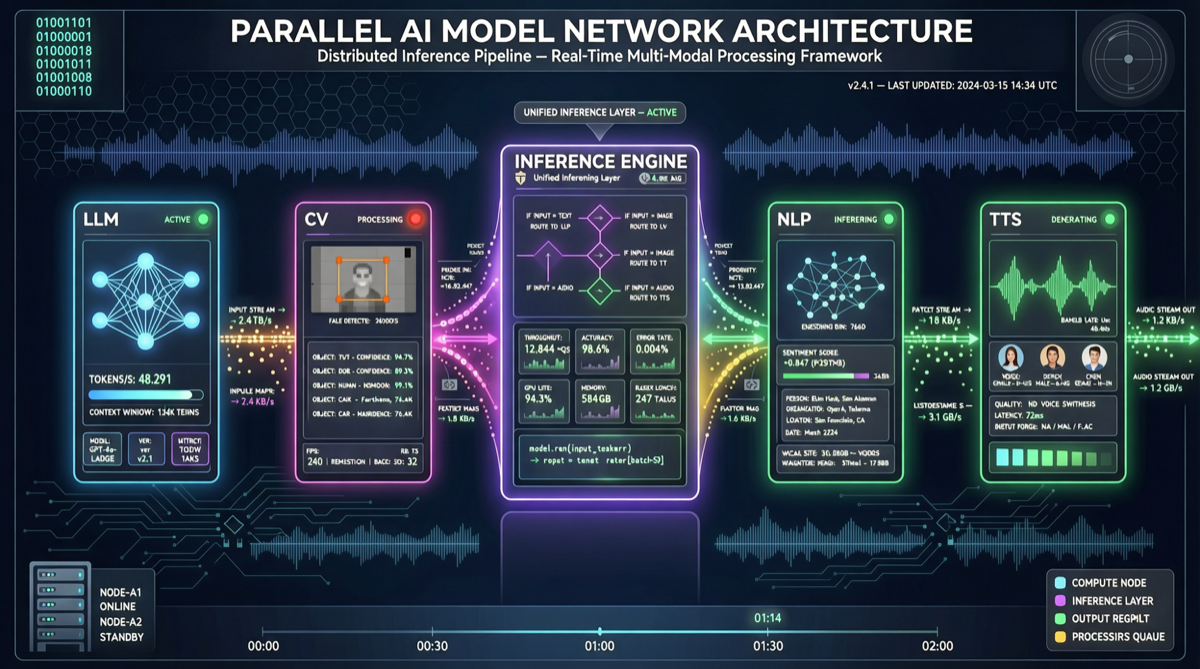
Multi-Model Parallel Architecture: The 2026 Standard Practice
User Request
    │
    ▼
┌─────────────┐
│  Task       │  ← Lightweight model (Gemini Flash / Qwen 3.6B)
│  Classifier │     Cost: $0.0003/call
│  (Router)   │
└──────┬──────┘
       │
  ┌────┼────┬──────────┐
  ▼    ▼    ▼          ▼
Code Creative Data     Daily
       Analysis        Chat
  │    │    │          │
  ▼    ▼    ▼          ▼
GPT-5.5 Claude Qwen 3.6 Gemini
5.5   Opus   35B MoE  Flash
4.7   $15.00 $1.50    $0.35
$7.50 /M     /M        /M
/M
Key Insight: The Router itself only needs an ultra-lightweight model (negligible cost) — it classifies the task type and routes the request to the most cost-effective model.
Cost Comparison: Single Model vs Multi-Model Routing
Based on 10,000 daily calls:
| Approach | Model Configuration | Daily Cost | Monthly Cost |
|---|---|---|---|
| Pure Opus | All Opus 4.7 | $150 | $4,500 |
| Pure Sonnet | All Sonnet 4.6 | $30 | $900 |
| Multi-Model Routing | 80% Flash + 15% Sonnet + 5% Opus | $12 | $360 |
The multi-model routing approach saves 92% compared to pure Opus, while maintaining overall quality with less than 5% degradation since complex tasks are still handled by Opus.
Tool Stack
| Tool | Purpose | Cost |
|---|---|---|
| LiteLLM Proxy | Unified API interface + routing | Open source, free |
| LangGraph | Multi-agent orchestration | Open source, free |
| MCP Server | Standardized tool calling | Open source, free |
| PromptLayer | Call tracking + cost analysis | Free tier available |
Getting Started Steps
- Connect LiteLLM Proxy: unify multiple model APIs into a single endpoint
- Define routing rules: assign models by task type (coding/creative/analysis/chat)
- Set up fallbacks: automatically switch to backup models when the primary fails
- Monitor cost distribution: use PromptLayer to track call ratios and expenses per model
Business Judgment: If your team is still “using one model for everything”, start migrating to a multi-model architecture now. After Q2 2026, single-model architecture will no longer be cost-competitive.