DeepSeek V4 Dropped a Stone in the Pond
In May 2026, the release of DeepSeek V4 did not just explode in the open-source community — it is reshaping the cost structure of the entire Chinese AI industry.
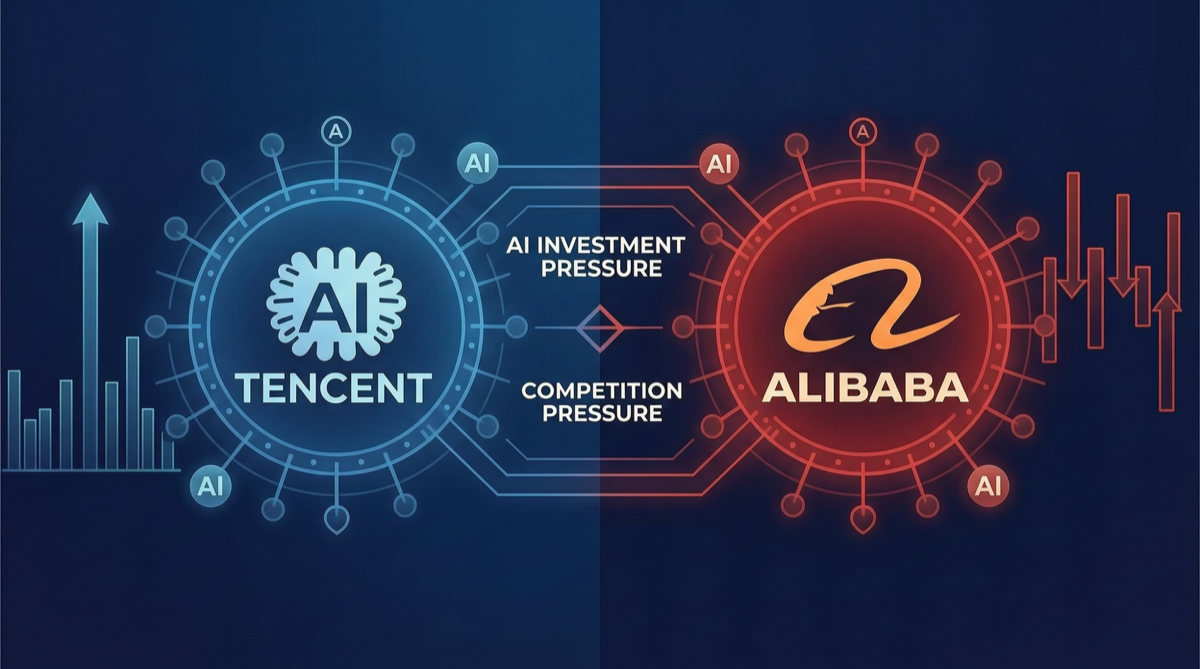
Reuters reported today on a signal worth watching: Tencent and Alibaba's upcoming earnings will be affected by the叠加 impact of two factors — constantly rising AI investment costs, and intensified competition after the DeepSeek V4 release.
Translation: DeepSeek brought down the cost of AI models, but for other companies to keep up, they actually need to spend more.
The Cost Paradox
This logic sounds somewhat counterintuitive. Did not DeepSeek V4 lower costs? Why are Tencent and Alibaba spending more?
Because "lowering industry costs" and "maintaining competitiveness" are two different things.
DeepSeek V4 proved that you can build frontier models with less compute and smarter architecture. But for Tencent and Alibaba, who have already invested heavily in building their own compute infrastructure, this is not a "we can spend less now" signal. It is a "we must re-invest" signal.
- Existing compute architectures may need restructuring
- Models already halfway through training may need strategy adjustments
- Talent competition is intensifying — the DeepSeek team has proven they can deliver, and every company is fighting for the same type of talent
Simply put: the industry benchmark has been raised, and to catch up you need to spend again.
Not the First Time
In late 2025 when DeepSeek V4 was released, we wrote an analysis of 3 million domestic AI chip shipments. At the time, we noted that ByteDance, Alibaba, and Tencent were "voting with real money for domestic chips."
Half a year later, this trend has not slowed — it has accelerated.
Alibaba Cloud and Tencent Cloud are both increasing AI infrastructure investment. Tencent Hunyuan and Alibaba Tongyi are pushing forward on parallel tracks, each backed by billions in compute spending.
Now DeepSeek V4 has proven that open-source models can also reach frontier levels, which gives Tencent and Alibaba two choices: increase investment to stay ahead, or accept being chased by open-source alternatives.
Both choices cost money, just in different ways.
Capital Market Attitude
Jefferies analysts gave Kunlunxin a valuation range of $16-23 billion. During the same period, capital markets are repricing China AI infrastructure assets.
But behind this pricing lies an implicit assumption: investment will translate into output. AI investment is not a savings account — the money you put in needs to become user growth, revenue growth, or a moat.
Tencent and Alibaba's next earnings report is the first stress test.
A Broader Trend
Zooming out — this is not just China. AI investment is accelerating globally.
Anthropic just took over SpaceX's Colossus 1 data center with 220,000 GPUs. OpenAI is pushing the GPT-5.5 series. Google is increasing Gemini investment.
Every company is betting: whoever reaches the AGI door first wins.
But before the bet is settled, everyone's wallet is getting thinner.
What to Watch
Focus areas for the coming weeks:
- Tencent and Alibaba AI-related spending data after earnings release
- Whether both companies will adjust AI strategy direction — continue heavy-asset self-build, or partially shift to open-source approaches
- Whether DeepSeek V4's open-source effect will push more companies to adopt a "do not train, only fine-tune" lightweight route
The outcome of this cost war is far from decided. But the first bill has arrived.
Main source: Reuters