C
ChaoBro

Meta Secretly Develops OpenClaw Rival: Personal AI Assistant for Billions Powered by Muse Spark

Meta Secretly Develops OpenClaw Rival: Personal AI Assistant for Billions Powered by Muse Spark

Bottom Line

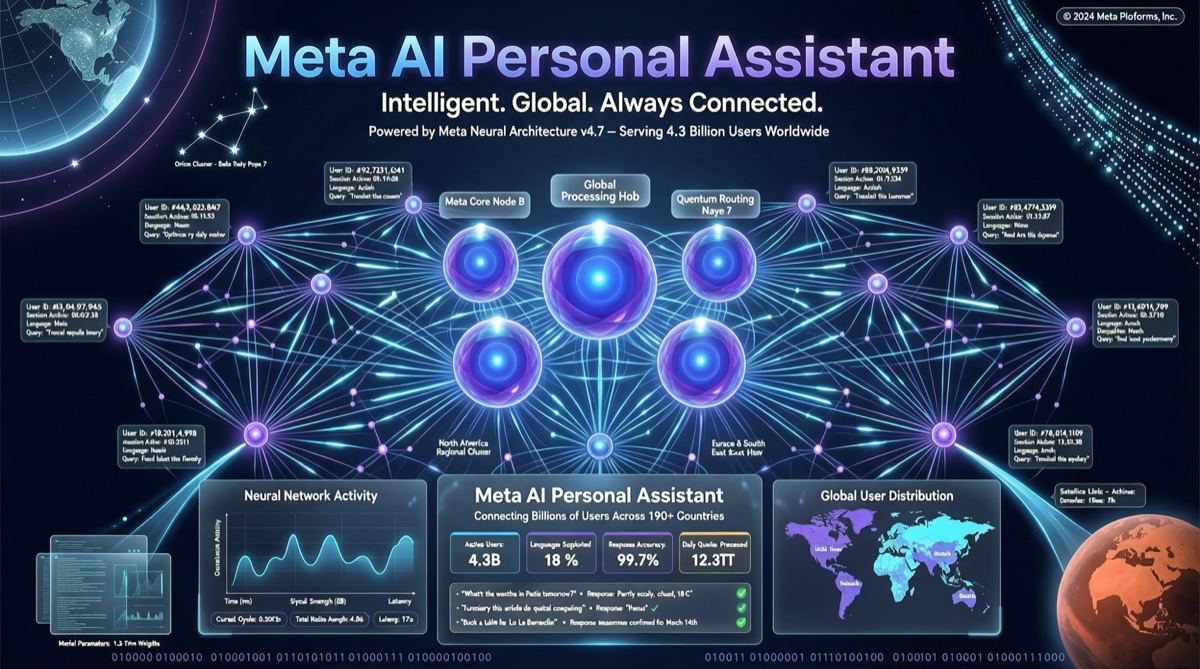
Meta is secretly developing a personal AI assistant product that competes with OpenClaw, powered by its proprietary closed-source model Muse Spark, targeting billions of active users across Facebook, WhatsApp, and Instagram.

This is a strategic signal worth watching: after OpenClaw’s founder chose OpenAI, Meta decided to build it themselves.

What Happened

According to an exclusive Reuters report, Meta’s Superintelligence Labs is building an “OpenClaw equivalent” to perform everyday tasks for billions of users. The assistant will be deeply integrated into Meta’s product matrix, potentially reaching users through WhatsApp and Messenger.

Key details:

DimensionInformation
Underlying ModelMuse Spark (Meta’s first self-developed flagship closed-source model)
Product PositioningPersonal AI assistant, competing with OpenClaw
Target ScaleBillions of users across Meta’s ecosystem
Core CapabilitiesDaily task automation, message processing, schedule management
Development StageEarly development, internal testing

Strategic Analysis

1. Muse Spark: From “Technical Showcase” to “Product Engine”

Muse Spark was previously seen more as Meta’s technical statement in the closed-source model space — proving its ability to build frontier models. Now it has a clear commercial landing scenario: a personal assistant for billions of users.

This creates an interesting contrast with OpenClaw’s path:

  • OpenClaw: Product first (terminal AI assistant), then model integration
  • Meta Muse Assistant: Model first (Muse Spark), then product construction

2. Peter Steinberger’s Choice and Meta’s Response

OpenClaw founder Peter Steinberger previously negotiated with Meta but ultimately chose to join OpenAI. This means Meta suffered a setback in recruiting top-tier AI product talent.

But Meta’s response is clear: if you cannot recruit the best product leader, build it with your own team and model. Given Meta’s deep accumulation in consumer products (WhatsApp 2B+ users, Messenger 1B+ users), this path is not without competitiveness.

3. Tension with LLaMA Open-Source Strategy

Meta has long been the flagbearer of open-source AI (LLaMA series). The launch of Muse Spark as a closed-source flagship model already marked a strategic shift. Now using Muse Spark for a personal assistant product further confirms the “open-source foundational research + closed-source commercial products” dual-track strategy.

Industry Impact

OpenClaw Faces Escalating Competition

OpenClaw’s first-mover advantage lies in product maturity and community ecosystem. But Meta’s entry means:

  • User acquisition cost: Meta can push directly to existing users, with near-zero acquisition cost
  • Data flywheel: Interaction data from billions of users will accelerate Muse Spark iteration
  • Ecosystem integration: Deep integration with WhatsApp/Instagram/Messenger is hard for independent products to replicate

Personal Assistant Track Enters “Giant Mode”

Previously, the personal AI assistant track was dominated by independent startups (OpenClaw, Hermes Agent, etc.). Meta’s entry marks internet giants officially treating personal AI assistants as strategic products.

Actionable Recommendations

RoleRecommendation
AI EntrepreneursBuild user stickiness and differentiation capabilities before Meta enters — this is the key window
DevelopersWatch whether Meta opens an assistant API/plugin ecosystem — this could be a new distribution channel
Enterprise UsersEvaluate Muse Spark assistant integration with existing workflows, especially WhatsApp Business scenarios
InvestorsWatch for Meta to announce specific timelines and user growth targets at product launches

Risk Factors

  • Meta’s product execution capability in the AI Agent space remains unproven
  • Privacy and data security are core challenges for a billion-user-scale assistant
  • Muse Spark’s actual capabilities may differ from claims