15 Months: From €9 Million to €1 Billion
PriorLabs’ story is one of the most dramatic capital stories in AI in 2026.
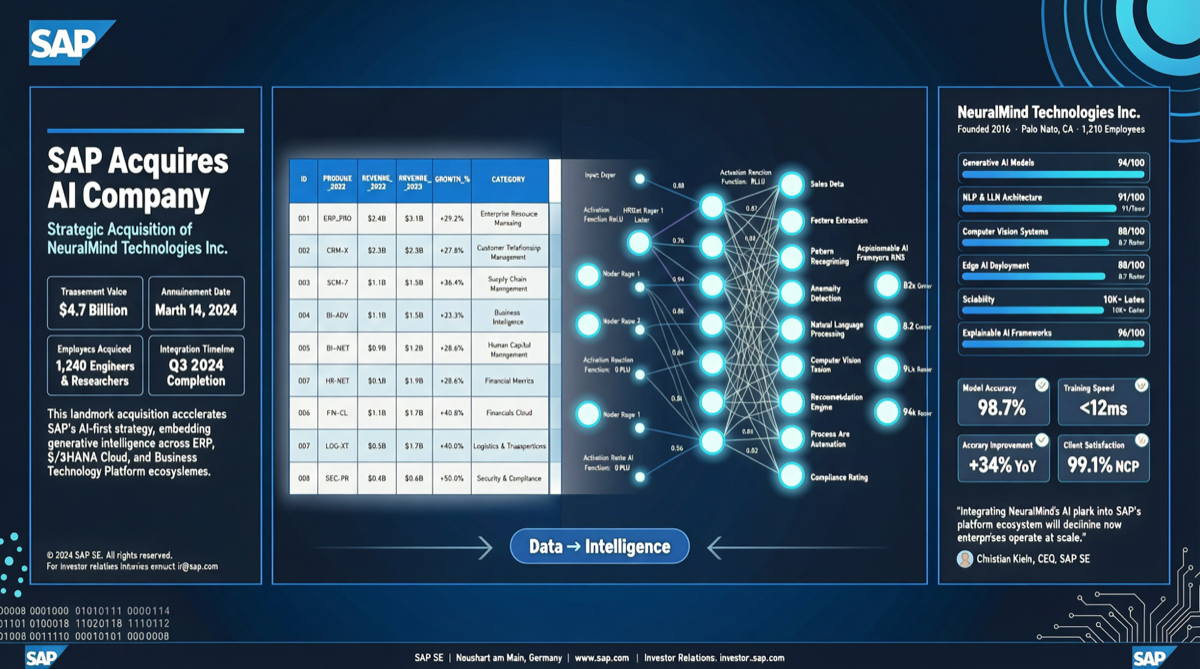
In early 2025, this German AI startup started with just a €9 million seed round. Fifteen months later, SAP announced its acquisition of PriorLabs with a €1 billion investment commitment — a valuation increase of over 100x.
The core asset driving this massive acquisition is the open-source project TabPFN (Prior Labs Tabular Foundation Model), currently trending on GitHub.
What Pain Point Does TabPFN Solve
If you’ve done machine learning, you’ve probably experienced this torture:
- Get a dataset with a few hundred rows
- Try XGBoost, Random Forest, LightGBM
- Spend days tuning hyperparameters and engineering features
- Result: severe overfitting on small datasets
TabPFN’s approach is: treat tabular data as a “language” and process it with a foundation model.
It’s not a replacement for traditional ML models — it’s a paradigm shift:
| Dimension | Traditional ML Pipeline | TabPFN |
|---|---|---|
| Training | Train from scratch for each task | Pre-trained model, zero-shot inference |
| Small data performance | Prone to overfitting | Naturally adapted, stable performance |
| Tuning cost | High (grid search / Bayesian optimization) | Near zero |
| Feature engineering | Must be done manually | Automatic encoding |
| Inference speed | Depends on model complexity | Extremely fast |
Why SAP Is Willing to Spend €1 Billion
SAP’s core business is enterprise software — ERP, CRM, supply chain management — and underneath all these systems, almost everything is tabular data.
TabPFN’s strategic value for SAP:
- Built-in intelligent analytics: Enterprise users get smart data insights without configuring ML pipelines.
- Lowering AI barrier: Business users can get analysis results directly with natural language + tabular data.
- Competitive moat: While other AI vendors are still competing on text and images, SAP is capturing the “tabular data AI” vertical.
- Open-source ecosystem: TabPFN’s open-source nature means SAP can attract a developer ecosystem, building a moat.
The Next Frontier for Foundation Models: Not Text, Not Images — Tables
2023-2024: Foundation model battles were in text (GPT-4, Claude) and images (Midjourney, DALL-E). 2025: video and audio became the new battleground.
But tabular data has been an overlooked blue ocean:
- Over 80% of global enterprise data is still stored in tabular form.
- The AI processing market for tabular data is projected to exceed $50 billion by 2027.
- Traditional ML tools have an extremely high barrier — less than 5% of enterprise data teams can use them effectively.
TabPFN’s open-source project has already earned 6,486 stars on GitHub, with 218 stars today, ranking third on the Trending list.
Market Outlook
This acquisition sends several signals:
- The value of enterprise AI is being redefined: Not chatbots, but intelligent processing of core business data.
- Foundation models are “specializing”: From general large models to vertical domain foundation models (code, tables, biology, finance).
- Open-source + commercialization path is validated: TabPFN is open-source, but SAP sees the commercial value of integrating it into enterprise product lines.
Action Recommendations
- Data science practitioners: Try TabPFN immediately — its zero-shot performance on small datasets may replace half of your hyperparameter tuning work.
- Enterprise IT decision-makers: Watch how SAP integrates TabPFN into existing product lines — this could change the cost structure of enterprise data analysis.
- AI entrepreneurs: TabPFN proves that the “vertical domain foundation model” path works. Code, legal, medical, and other fields have similar opportunities.
Foundation model competition is entering deep waters. The next billion-dollar acquisition might be the open-source project you’re already using.