Intelligence Summary
The ViMax project has gained attention on social media, claiming that one open-source tool can replace the combination of Runway ($35/month), ChatGPT Plus ($20/month), Midjourney ($30/month), and HeyGen ($29/month). Users simply input a creative description, and the system automatically completes the full pipeline of script writing, image generation, voice synthesis, and video editing.
Workflow Breakdown
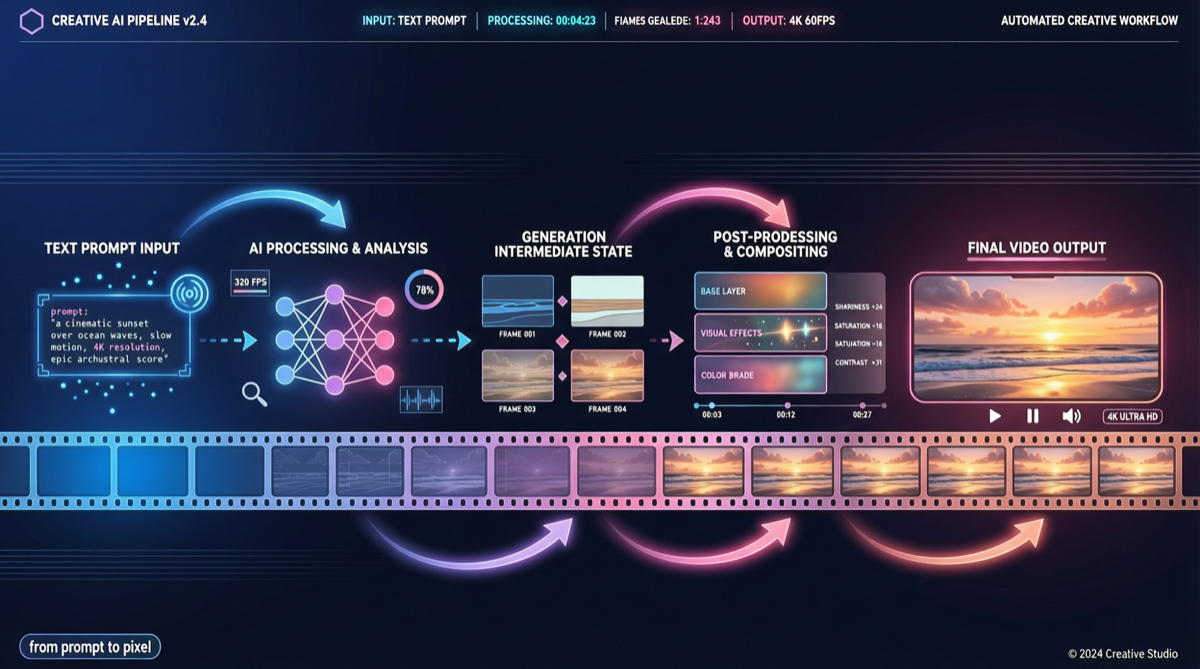
ViMax’s core is an end-to-end video generation pipeline:
Input: One creative description (Prompt)
  ↓
Step 1: AI Script Writing → Automatically generates video script and storyboard
  ↓
Step 2: Image Generation → Generates visual materials for each scene
  ↓
Step 3: Voice Synthesis → Multi-language TTS voiceover
  ↓
Step 4: Video Composition → Automatic editing, transitions, subtitles
  ↓
Output: Complete MP4 video file
Cost Comparison Analysis
| Solution | Monthly Cost | Feature Coverage | Workflow Complexity |
|---|---|---|---|
| ViMax (Open Source) | $0 (self-provided compute) | Full pipeline | Single prompt |
| Runway + ChatGPT + MJ + HeyGen | $114/month | Full pipeline | Switching between 4 tools |
| Runway standalone | $35/month | Video generation | Requires self-provided script and voiceover |
| HeyGen standalone | $29/month | Digital human video | Single function |
The $114/month comparison is a marketing number — few users actually subscribe to all four services. But ViMax’s real value lies not in saving money, but in workflow integration: no longer needing to repeatedly export and import between multiple tools, completing all steps in one pipeline.
Landscape Assessment
ViMax represents the trend of convergence in AI content creation toolchains.
In 2024-2025, the AI content tool market was fragmented: text went to ChatGPT, images to Midjourney, video to Runway, and digital humans to HeyGen. In 2026, the open-source community is integrating these toolchains into end-to-end one-stop solutions.
There are two routes for this integration:
- Commercial route: Companies integrate capabilities through acquisitions and partnerships (e.g., Adobe integrating AI after acquiring Figma)
- Open-source route: The community strings together multiple open-source models into complete pipelines using glue code
ViMax follows the second route. Its core challenge is not the quality of individual steps (each step has mature open-source solutions), but rather end-to-end coordination and optimization: how to make the outputs of script generation, image generation, and voice synthesis seamlessly connect.
Action Recommendations
Suitable use scenarios:
- Short video creators wanting to reduce production costs
- Rapid generation of educational videos in training
- Batch generation of advertising materials in marketing
- Experimental creation by individual content creators
Limitations to note:
- Open-source video model image quality and stability still lag behind commercial solutions
- End-to-end pipeline means any step failure affects final output
- Local deployment requires strong GPU resources (video generation is especially compute-intensive)
- Copyright risks: whether generated image and voice materials have commercial use licenses requires independent judgment