Это русская версия материала. Для полноты языковых маршрутов текст основан на существующей основной версии.
Intelligence Brief
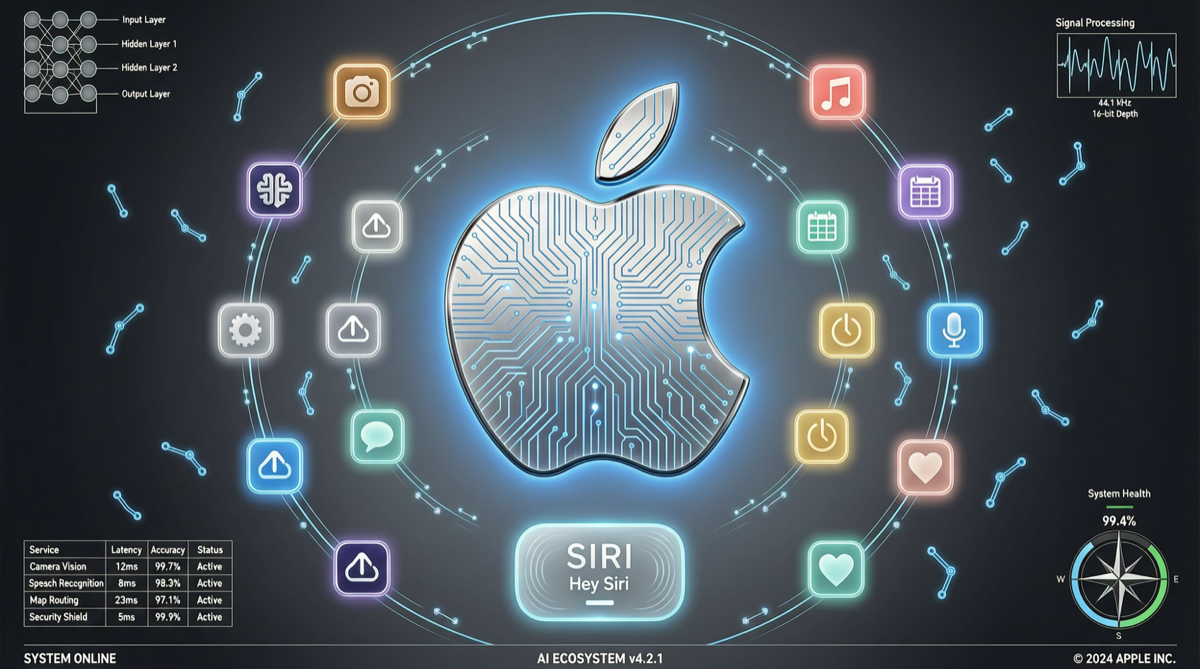
Apple is making a significant adjustment to its AI strategy. According to Bloomberg, Apple plans a comprehensive overhaul of Siri, allowing users to choose from a range of external AI services to power AI features across their devices and software. This marks a shift from Apple's "in-house model first" strategy toward an "AI platform model."
What Happened
Apple's AI strategy has evolved through three phases:
| Phase | Time | Strategy | Representative Product |
|---|---|---|---|
| Phase 1 | Before 2024 | Siri's own engine, limited capabilities | Siri (legacy version) |
| Phase 2 | 2024–2025 | Apple Intelligence in-house model | iOS 18.1+ Apple Intelligence |
| Phase 3 | From 2026 | Opening to external AI services | Siri + third-party AI platforms |
Key points:
- Users will be able to choose which AI service powers specific Siri features
- This extends beyond just OpenAI — models from Google, Anthropic, xAI, and others could all be integrated
- Apple is fortifying its AI infrastructure from silicon to software, preparing for platformization
Why This Is a Major Shift
1. Acknowledging the Limitations of In-House Models After Apple Intelligence launched in 2024–2025, its actual capabilities still showed a clear gap compared to leading models like Claude and GPT. Opening up to external access is essentially an acknowledgment that "the best AI doesn't necessarily have to be built in-house."
2. Platform Over Product Apple's true strength isn't in training the largest models, but in building the best user experience platforms. By opening up AI service choices, Apple can shift the competitive focus from "whose model is stronger" to "whose ecosystem is more convenient" — Apple's traditional area of advantage.
3. Hardware + AI Service Flywheel Effect Apple is optimizing for AI at every level, from silicon (A-series/M-series chips) to operating systems (iOS/macOS). Once third-party AI services are integrated, Apple devices will become "the optimal terminals for AI services," creating a positive cycle between hardware sales and AI service selection.
Impact on Developers
Short-term (within 6 months):
- Apple is expected to announce specific APIs and integration plans at WWDC 2026 (typically in June)
- iOS apps will need to adapt to the new AI service selection interface
- Third-party AI service providers will gain direct reach to billions of device users
Medium-term (1–2 years):
- AI services will become a core selling point for iPhones
- Users may choose or switch iPhones based on their preferred AI service
- "AI experience differentiation" will become a new dimension of competition among phone manufacturers
Horizontal Comparison: Smartphone Manufacturer AI Strategies
| Manufacturer | AI Strategy | Openness | User Choice |
|---|---|---|---|
| Apple | Open platform model (new) | High | Users choose their AI service |
| Samsung | Galaxy AI + multi-model access | Medium | Mostly pre-installed |
| Gemini natively deeply integrated | Low | Default Gemini | |
| Huawei | Pangu large model deeply integrated | Low | Default Pangu |
| Xiaomi | Xiao Ai + multi-model hybrid | Medium | Partially selectable |
Apple's strategy is the most open among smartphone manufacturers. This aligns with macOS's long-standing "open ecosystem" philosophy, but it's a first for the mobile side.
Risks and Uncertainties
Privacy and Data Security Apple has always used privacy as a core selling point. With the introduction of third-party AI services, how will the boundaries of user data processing be defined? Will Apple require all integrated services to meet its privacy standards? This is a question that must be addressed at WWDC.
Revenue Sharing Model Apple's App Store has a 30% revenue sharing tradition. Will calls to external AI services incur a similar "AI tax"? This will directly impact service providers' willingness to integrate.
Experience Consistency Different AI services vary enormously in output quality and style. How will Apple ensure a consistent user experience when Siri switches between different AI services?
Action Recommendations
For general users: Wait for the official WWDC 2026 announcement before making evaluations — don't rush to replace devices. AI service choice will be an important differentiating feature of the next generation of iPhones.
For developers: Prepare in advance to adapt to Apple's new AI integration APIs. If your app heavily relies on AI, pay attention to the "AI service marketplace" mechanism Apple may introduce.
For AI service providers: This is a window of opportunity to enter the Apple ecosystem. Google, Anthropic, xAI, and others should actively seek partnerships with Apple. For Chinese AI service providers (such as Qwen, Kimi), it will be important to monitor whether Apple's compliance strategy in the Chinese market will affect their eligibility for integration.