Core Conclusion
A tweet gaining 400K+ views, 1,800+ likes, and 1,270+ bookmarks in 48 hours reveals a severely underestimated AI supply chain risk:
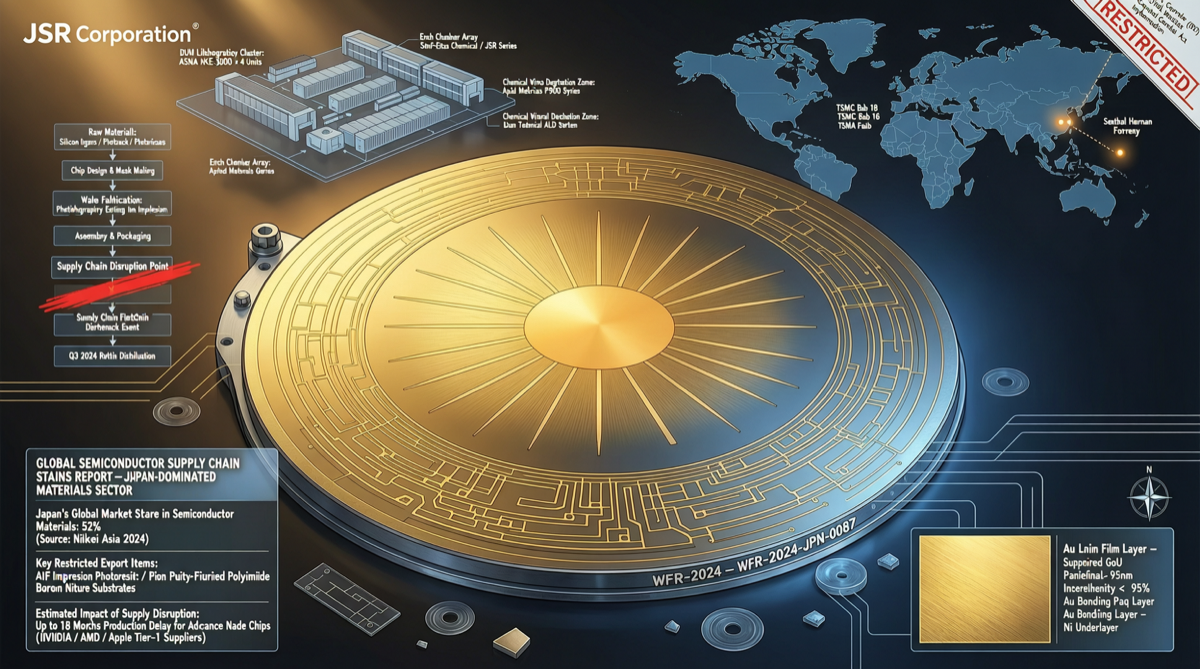
All AI chips globally (GPUs, TPUs, ASICs) require one thin-film material, and 98% of global supply is exclusively controlled by one Japanese chemical company. No mass-production-ready alternatives exist. The company is fully booked through 2027 and raising prices.
This is not a “possibly substitutable” bottleneck — it is currently the hardest single point of failure in the AI hardware supply chain.
How Hard Is This Bottleneck
| Dimension | Status |
|---|---|
| Number of suppliers | 1 (Japanese chemical company) |
| Global market share | 98% |
| Mass-production alternatives | 0 |
| Capacity backlog | Full through 2027 |
| Price trend | Rising |
This means:
- NVIDIA’s Rubin/Hopper GPUs need it
- Google’s TPUs need it
- AMD’s MI series needs it
- All AI ASIC custom chips need it
- China’s self-developed AI chips also need it
No chip company can bypass this material.
Potential Impact
On Chip Manufacturers
- Capacity constrained: Material supply bottleneck directly limits chip capacity ceiling
- Cost rising: Supplier price increases pass through to chip costs
- Delivery delays: Backlog through 2027 means expansion plans are bottlenecked by materials
On AI Infrastructure
- Data center construction pace: Material → chip → server transmission chain may cause delivery delays
- Computing power pricing: Chip cost increases ultimately reflect in cloud service pricing
- Geopolitical risk: Single-country, single-supplier landscape is particularly fragile in tense international relations
On China’s AI Industry
China’s AI chip industry (Huawei Ascend, Cambricon, Biren, etc.) also depends on this material. In the context of US-China tech competition, this bottleneck may:
- Intensify China’s difficulty in obtaining advanced AI chips
- Drive R&D of domestic alternative materials (but requires time for validation)
- Become another chokehold in China’s AI chip independence
Historical Comparison: Semiconductor Material Supply Cut Precedents
| Event | Time | Impact |
|---|---|---|
| Japan restricts photoresist exports to Korea | 2019 | Korean semiconductor industry impacted |
| ASML lithography machine export restrictions | 2023-2024 | China’s advanced processes limited |
| HBM supply shortage | 2024-2025 | AI chip capacity constrained |
The thin-film material monopoly is trickier because: there isn’t even one alternative supplier. Photoresist at least has alternative capacity in Korea and Taiwan, but this thin-film material has only this one company.
Action Recommendations
For chip purchasers:
- Assess whether current chip procurement plans are affected by material supply
- Confirm delivery timelines with suppliers, reserve buffer
- Consider locking in capacity early
For AI infrastructure investors:
- Include material supply risk factors in computing power investment models
- Watch for investment opportunities in the material supply chain
- Diversify chip suppliers to reduce single material risk
For researchers:
- Monitor innovation in semiconductor materials
- Evaluate alternative technology paths for thin-film materials
- Track China’s R&D progress in this material area