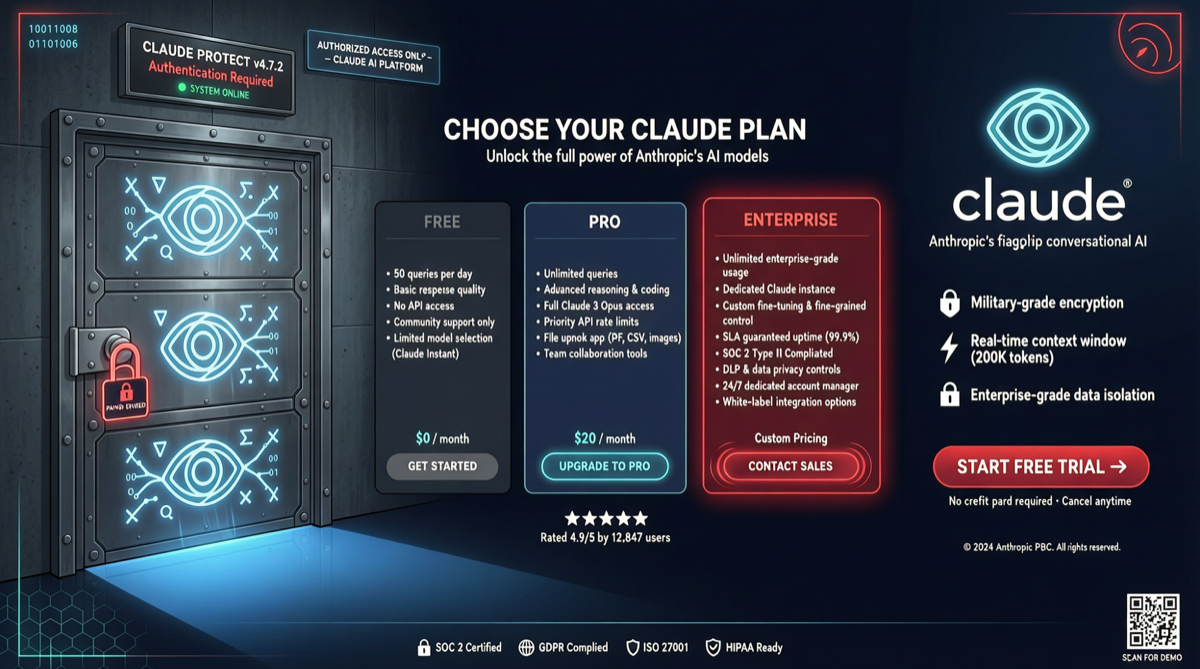
Anthropic recently updated a clause in an unremarkable support document, drawing significant attention from the developer community. The clause is simple: Pro plan users can only use Opus-level models in Claude Code after enabling and connecting their own API billing account.
No announcement. No email notification. Just a small note buried in a support document.
What Changed
Previously, Claude Pro users ($20/month) could use all models including Opus in Claude Code without limits. The new clause means: Opus models are no longer included in the Pro subscription. Pro users who want to code with Opus need to pay additional API fees.
Given Opus 4.7’s API pricing of $5/million input tokens and $25/million output tokens, this represents a significant cost for heavy coding users.
Why It’s a “Double Paywall”
The first paywall is the Claude Pro subscription itself ($20/month). The second is the Opus model API billing. Users pay $20 monthly, but for the highest-tier models, they must pay again.
This pricing strategy is uncommon in the software industry—equivalent to buying a Netflix subscription but paying per-stream for 4K content.
Timing: The Subsidy Contraction Chain Reaction
Anthropic’s move coincides almost exactly with GitHub Copilot’s multiplier adjustment. In late April, GitHub announced that starting June 1, Copilot model calls will switch from per-request to per-token billing, with Opus 4.6’s multiplier jumping from 3x to 27x.
Together, the trend is clear: from 2025 to early 2026, model companies heavily subsidized AI coding tools to capture developer market share. Now the market is largely set—Claude Code has established leadership in coding agents—and subsidies are being withdrawn.
Community Response: Rise of Open Source Alternatives
After Anthropic removed Opus from the Pro plan, the developer community responded quickly. Open source terminal agent projects like OpenClaude gained significant growth—supporting any model, no subscription limits, running full coding agent workflows in the terminal.
When the value of a closed-source subscription begins to shrink, “bring your own model” open source solutions naturally attract more attention.
Market Outlook
Anthropic’s pricing adjustment reflects the AI industry’s transition from “burn cash for acquisition” to “commercialization recovery.” For developers, this means reassessing tool choices: if your coding workflow heavily depends on Opus-level models, costs will rise significantly; for occasional use, Sonnet-level remains cost-effective.
For the industry, this is a necessary step toward mature AI coding tool pricing. But how to complete this transition without damaging developer community trust remains Anthropic’s challenge.
Sources
- Anthropic Support - Usage-Based Billing
- X platform pricing analysis from multiple users
- Reddit ClaudeAI community discussion