Core Conclusion
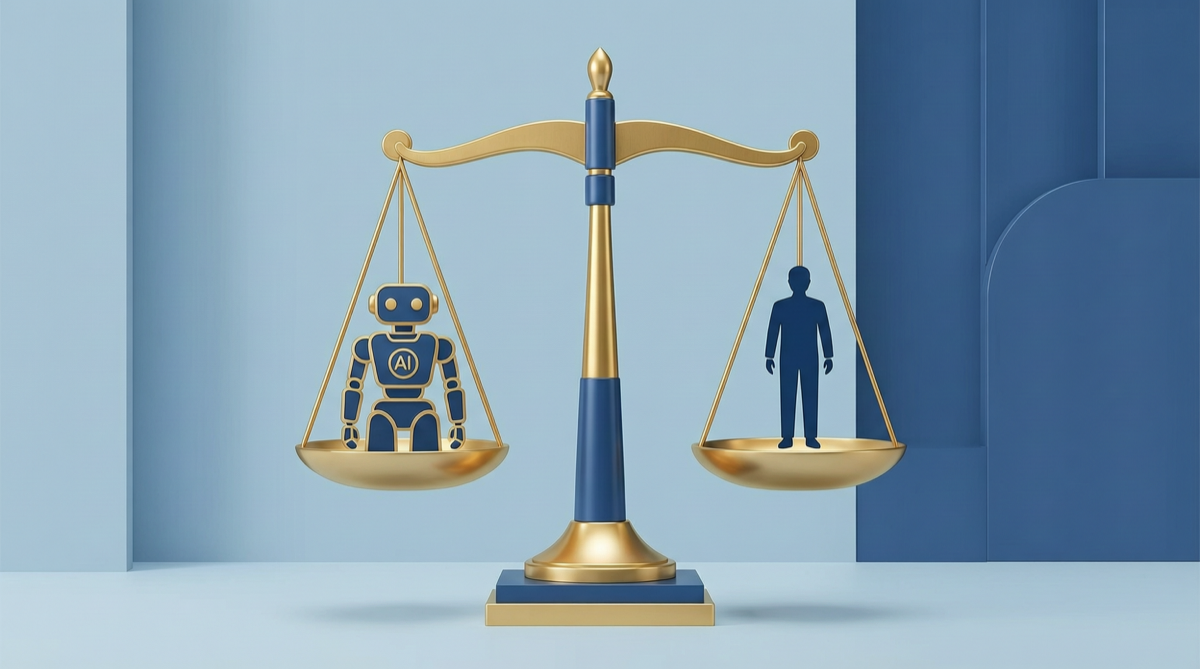
Chinese courts have clearly ruled: companies cannot use “AI adoption” as grounds to terminate employment contracts under Article 40, Section 3 of the Labor Contract Law (major objective changes). This means replacing human workers with AI purely for cost reduction does not hold up legally.
This ruling gained over 310K views, 17K likes, and 6.8K retweets within 48 hours, attracting global attention. Western media initially spread it with headlines like “China bans AI replacing workers,” but the actual legal logic is more nuanced.
Legal Logic of the Ruling
Key Characterization: AI is “Business Decision” Not “Objective Change”
The Hangzhou Intermediate People’s Court clearly determined in its recent ruling:
| Legal Concept | Court Finding |
|---|---|
| Introducing AI/automation | Corporate autonomous business decision |
| Whether it constitutes “major objective change” | ❌ Does not |
| Can it be used for unilateral contract termination | ❌ Cannot |
The core of this determination lies in distinguishing two situations:
- Major objective changes: policy adjustments, market upheavals, natural disasters and other uncontrollable factors
- Corporate business decisions: introducing new technology, adjusting business lines, optimizing processes and other autonomous actions
The court’s position is clear: AI is a company’s active choice, not a passively encountered force majeure. Since the company chose AI, it should bear the human resource management responsibility that comes with it.
Beijing Precedent: Similar Cases Already Exist
Beijing had already established this principle in similar cases. The Hangzhou ruling further reinforces this judicial trend, forming cross-regional precedent consensus.
This Is Not a “Total Ban on AI Replacement”
A widely circulated misreading needs clarification: the court did not ban companies from using AI.
The key points of the actual ruling are:
- ✅ Companies are free to introduce AI technology
- ✅ Companies can use AI to optimize business processes
- ❌ But cannot use “AI replacement” as grounds to terminate contracts through the “major objective change” legal channel
- ❌ If layoffs are truly needed, proper procedures like negotiated termination and economic compensation should be used
In other words, companies can use AI, but must be responsible to employees.
Comparative Perspective: Global AI Labor Protection Landscape
| Region | AI Labor Protection Progress | Characteristics |
|---|---|---|
| 🇨🇳 China | Judicial precedent leads | Courts actively interpret existing labor law, rapid implementation |
| 🇪🇺 EU | AI Act legislative framework | Systematic legislation, but slower implementation pace |
| 🇺🇸 US | State-level scattered legislation | No unified federal AI labor protection regulation |
| 🇬🇧 UK | Guidance stage | Government issues guidelines, no binding enforcement |
China’s uniqueness lies in: without waiting for new legislation, courts have established de facto rules by applying existing labor law to AI scenarios. This path is faster and more flexible.
Impact on Enterprises
Direct Impact
- HR compliance costs rise: Need to assess human resource impact before introducing AI, cannot simply lay off workers
- AI ROI calculation changes: Cost reduction cannot only look at technology costs, must include human resettlement costs
- Negotiated termination becomes mainstream: Negotiate compensation plans with employees rather than unilateral termination
Compliance Recommendations
- Conduct employment impact assessment before introducing AI, develop employee transfer/training plans
- Avoid mentioning AI replacement in layoff notices, this may be seen by courts as direct evidence of illegal termination
- Establish AI-human collaboration models rather than replacement models, reducing legal risk
- Monitor precedent trends across regions, currently only Hangzhou and Beijing have clear precedents, other regional courts may follow
Deeper Signals
This ruling conveys three important signals:
Signal One: China’s AI governance is “application-layer governance” not “technology-layer governance” Not restricting AI technology development, but regulating how AI is applied. This differs from the Western approach of “restricting technology first, then considering applications.”
Signal Two: The judicial system responds faster to AI challenges than the legislative system Before AI labor protection legislation is enacted, courts have already established de facto rules through precedents.
Signal Three: The “AI dystopia” narrative needs revision The West has long portrayed China as an “AI dystopia that doesn’t care about workers,” but this ruling shows the opposite. China is ahead in AI labor protection.
Action Recommendations
For corporate decision-makers:
- Immediately review human resource impact assessments in existing AI introduction plans
- Adjust AI ROI models to include human resettlement costs
- Establish AI-human collaboration job designs rather than simple replacement plans
For AI developers:
- Consider “assist rather than replace” positioning in product design
- Focus on “human-machine collaboration” features rather than “full automation” features in AI tools
- This could become a product differentiation direction
For workers:
- Understand your legal rights in AI replacement scenarios
- If a company demands contract termination on AI grounds, you can claim illegal termination compensation