What Happened
As AI Agents gain autonomous web browsing capabilities, an overlooked security risk is gaining attention in the developer community: most Agents perform zero security checks before opening arbitrary URLs.
This issue is amplified as Agent capabilities rapidly expand—when Agents can autonomously search for information, visit websites, and fill out forms, a single malicious link can lead to:
- Phishing attacks: Agents are induced to visit forged login pages, leaking API keys or credentials
- Malware: Agents download and execute malicious code disguised as legitimate files
- Token draining: Agents are induced to authorize malicious contracts in DeFi scenarios, leading to asset loss
- Data leakage: Agents submit sensitive data to attacker-controlled endpoints
Safe Web Confidence Protocol
The community has begun building solutions. A lightweight pre-browsing protection approach called Safe Web Confidence Protocol demonstrates the core approach:
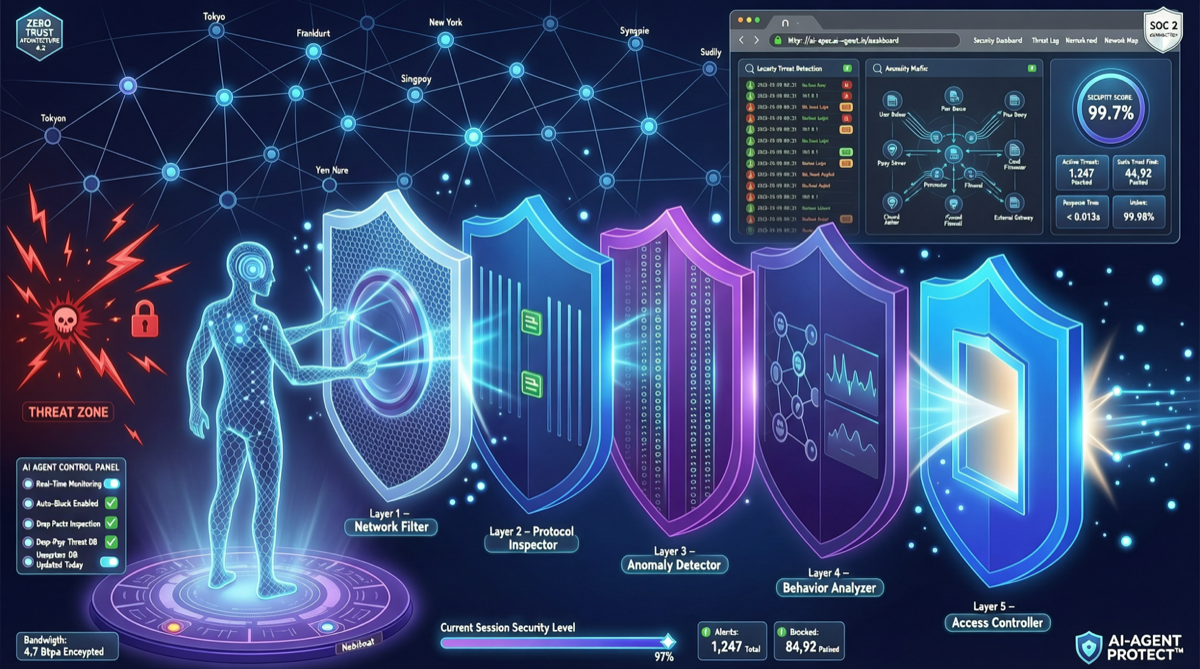
Before an Agent loads any page, it goes through multi-layer verification:
| Check Layer | Verification Content | Intercepted Attack Type |
|---|---|---|
| URL Reputation | Domain age, SSL certificate, historical reputation score | Known malicious sites |
| Content Pre-Scan | Page metadata, script features, redirect chain analysis | Phishing page disguise |
| Behavioral Constraints | Agent access permissions and allowed operation scope for that domain | Unauthorized operations |
| Sandbox Execution | Pre-render page in isolated environment, detect runtime behavior | Zero-day attacks |
This “verify first, access later” model is similar to zero-trust architecture in enterprise networks—no URL is assumed safe, each visit receives independent verification.
Why This Issue Is Urgent Now
AI Agent browser access capabilities are rapidly expanding in 2026:
- Browserbase provides managed browser infrastructure, Agents can control real browsers via API
- Playwright / Puppeteer integration allows Agents to automate web operations
- MCP Server web browsing tools enable Claude, Cursor, and other tools to directly manipulate browsers
But security mechanisms haven’t kept pace with capability expansion. Most Agent frameworks (LangChain, CrewAI, even newer orchestration platforms) have no built-in URL security check layer in their browser tool integration.
Comparison: Browser Security Across Agent Frameworks
| Framework/Tool | Browser Access | Built-in Security Checks | Risk Level |
|---|---|---|---|
| Browserbase | Managed browser instances | Basic URL filtering | Medium |
| LangChain Web Tools | Playwright/Selenium integration | None | High |
| Claude MCP Browsing | Via MCP Server | Depends on MCP implementation | Medium-High |
| Custom Agents | Direct HTTP requests | Entirely up to developer | Extreme |
| Safe Web Protocol | Pre-browsing verification layer | Multi-layer security checks | Low |
Landscape Assessment
AI Agent security issues are transitioning from “theoretical concern” to “actual threat”:
-
The more autonomous the Agent, the larger the attack surface. When Agents can autonomously decide which URLs to visit, the traditional “developer controls input” security model no longer applies.
-
Zero-trust principles apply to Agent security. Just as enterprise networks don’t trust any internal request, Agents should not trust any URL—even from “trusted” sources.
-
Security layers should be part of Agent infrastructure by design, not an afterthought. Building security checks into Agent framework design from the start is more reliable than adding them later.
Actionable Recommendations
- Agent developers: Add pre-browsing verification layers before your Agent browser tools. At minimum, implement URL reputation checks (using Google Safe Browsing API or similar threat intelligence services) and content pre-scanning.
- Team security leads: Incorporate Agent browser access into enterprise security policies. Define domain whitelists that Agents are allowed to access, data submission limits, and session isolation strategies.
- Agent framework maintainers: Consider making security checks a built-in component of browser tools, not an optional plugin. Developers should not need to implement security verification themselves—it should be default behavior.
- AI application users: If you use AI Agents with browser access capabilities (such as Claude’s web search, Cursor’s web analysis), understand their security boundaries. Avoid letting Agents access pages containing sensitive information.