Conclusion
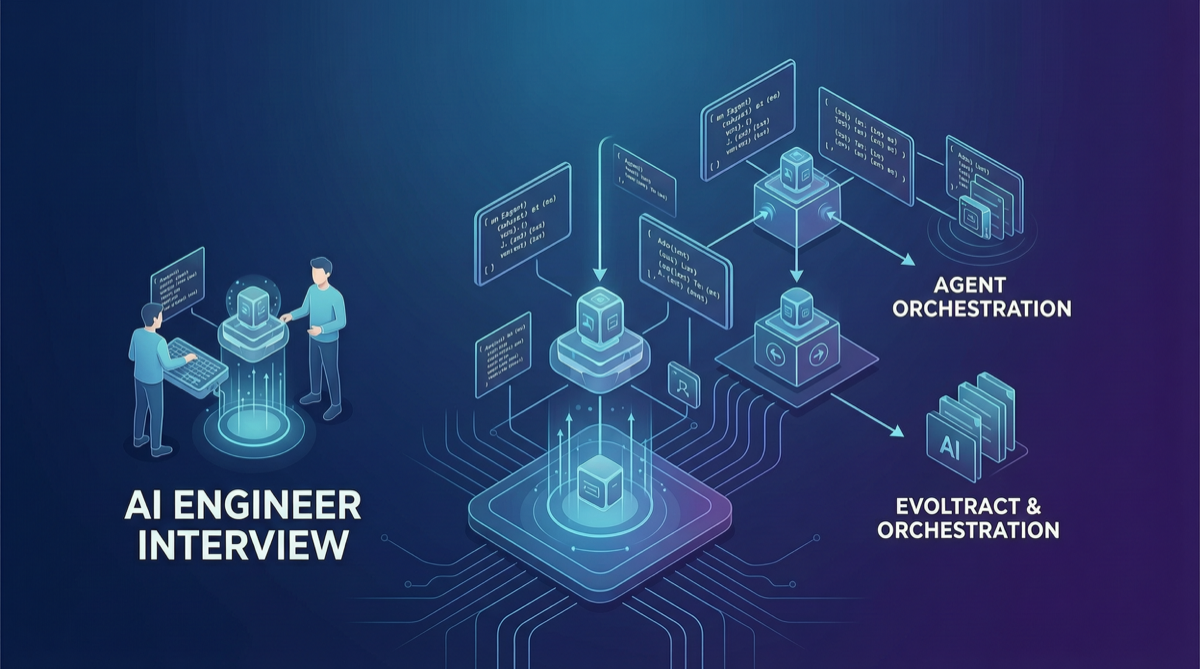
The 2026 AI engineer interview no longer tests just LeetCode and system design. We are shifting from “building chatbots” to “building autonomous operators.” The core evaluation criteria have moved from algorithms and coding to agent architecture design, tool integration, and task orchestration.
Six Core Interview Topics
1. Agent Architecture Design
Typical question: How do you design an agent that can autonomously complete multi-step tasks?
What is evaluated:
- Tool selection strategy (when and which tool to call)
- Context management (information compression and retrieval in long conversations)
- Error handling (recovery mechanisms after tool call failures)
Practical advice: Familiarize yourself with OpenClaw’s Skills Framework, and understand how agents define their capabilities and boundaries through skills.
2. Tool Integration & MCP
Typical question: How do you integrate an external API into an agent?
What is evaluated:
- Experience with MCP (Model Context Protocol)
- Standardized tool definitions (parameters, return values, error codes)
- Safety boundaries (which operations require user confirmation)
Practical advice: Build an MCP Server that connects to an API you know well (GitHub, Notion, databases, etc.).
3. Context Management
Typical question: What do you do when an agent’s conversation exceeds the context window?
What is evaluated:
- Context compression strategies (summarization, retrieval, hierarchical)
- Memory system design (short-term vs. long-term memory)
- Cost optimization (reducing unnecessary token consumption)
Practical advice: Understand the context inference logic behind OpenClaw’s follow-up commitments mechanism.
4. Multi-Agent Collaboration
Typical question: How do you make multiple agents collaborate to complete a complex task?
What is evaluated:
- Inter-agent communication protocols
- Task decomposition and allocation strategies
- Conflict resolution and result merging
Practical advice: Study the architecture ideas behind Kimi K2.6 Agent Swarm’s 300-agent collaboration system.
5. Security & Permissions
Typical question: How do you prevent agents from executing dangerous operations?
What is evaluated:
- Permission tiers (read/write/execute controls)
- Sandbox environments
- Approval workflows (human-in-the-loop)
Practical advice: Understand the restrictive profiles and owner checks mechanisms mentioned in OpenClaw’s latest update.
6. Observability & Debugging
Typical question: The agent’s output doesn’t meet expectations — how do you troubleshoot?
What is evaluated:
- Logging and tracing
- Agent behavior analysis
- Iterative improvement (prompt tuning, tool improvement)
Interview Preparation Checklist
| Preparation Item | Recommended Resources | Time Investment |
|---|---|---|
| Familiarize with at least one agent framework | OpenClaw / Hermes Agent | 1-2 weeks |
| Implement an MCP Server | MCP official docs | 2-3 days |
| Build an end-to-end agent application | Pick a real-world scenario | 1-2 weeks |
| Understand multi-agent patterns | TradingAgents / CrewAI | 3-5 days |
| Learn agent security practices | OWASP LLM Top 10 | 1-2 days |
Trend Assessment
Interview content being phased out:
- Pure algorithm problems (LeetCode hard)
- Traditional CRUD API design
- Language-specific trivia questions
Interview content becoming standard:
- Agent system design
- Hands-on tool integration
- Prompt engineering and optimization
- Agent behavior debugging
The underlying logic of this shift is: in the AI era, core competitiveness is no longer “how fast you write code,” but “how well you orchestrate agents.” The changing interview criteria simply reflect the changing demands of the industry.