Core Takeaway
The competitive focus of the AI industry in 2026 is shifting from “whose model is stronger” to “whose Agent can reliably get work done.”
This isn’t just a slogan — it’s a real architectural migration. OpenAI made it clear in a blog post titled “Harness Engineering”: “Humans steer. Agents execute.” When hundreds of thousands of Agents are executing complex tasks concurrently, model capability itself is no longer the bottleneck. What truly determines success is the entire execution system wrapped around the model.
What’s Happening
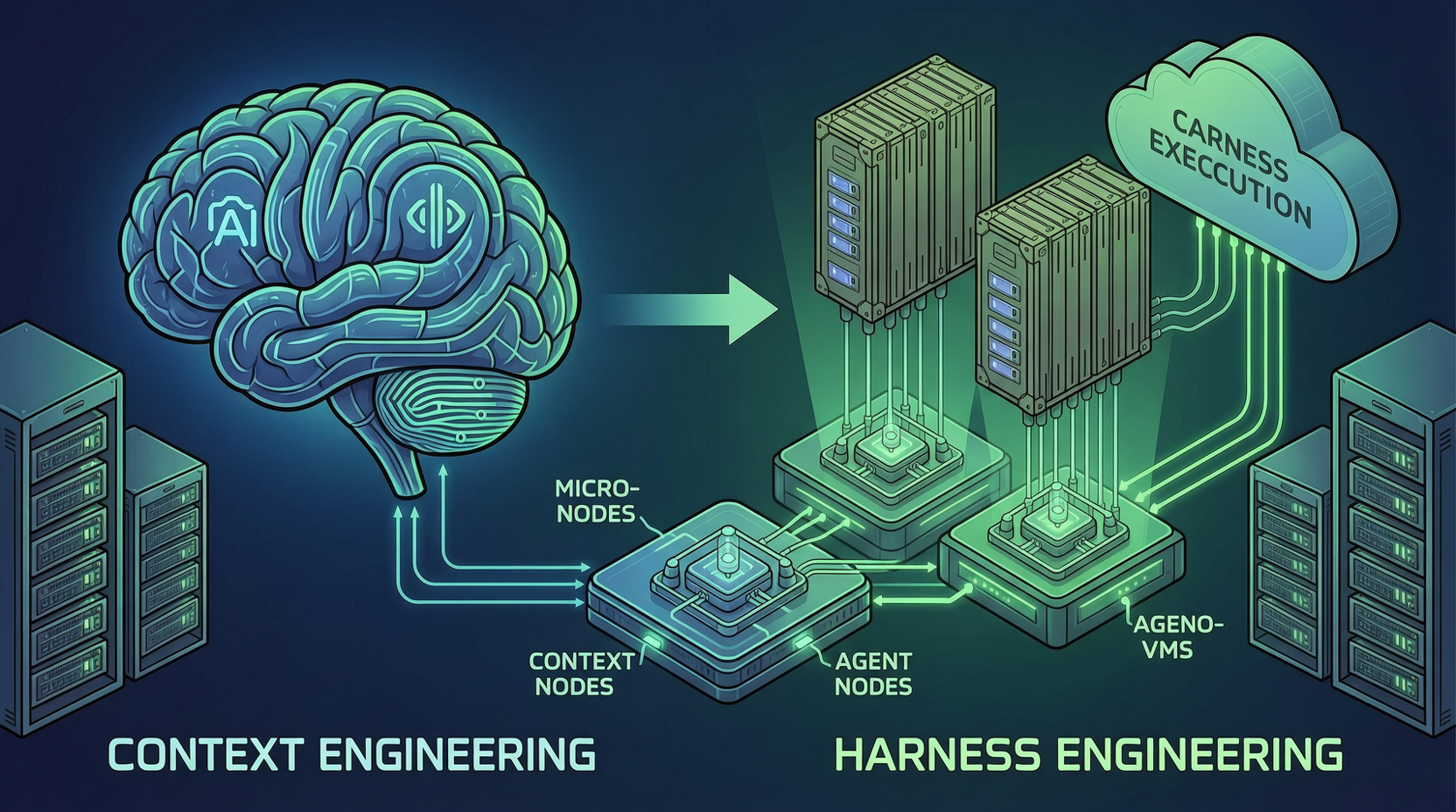
Jiqizhixin (机器之心) recently published an in-depth article using MiniMax as a case study to break down this architectural evolution called Harness Engineering. The article identifies three stages of AI Agent development:
- 2022-2024: Prompt Engineering era — figuring out how to talk to AI
- 2025: Context Engineering era — focusing on how to provide better context inputs to models
- 2026: Harness Engineering era — controlling the entire execution flow and letting Agents complete tasks autonomously
MiniMax is one of the most perceptive domestic players in this shift. They launched the cloud AI assistant MaxClaw based on the OpenClaw architecture, and then released MaxHermes based on Hermes Agent, completely eliminating the engineering barriers of local deployment and API key configuration. MaxClaw has already reached the top tier in terms of user scale among similar services.
Technical Details: Four Gaps for Enterprise-Grade Agents
The core value of the article lies in its systematic breakdown of four critical gaps that single-machine Agent frameworks (like locally-run OpenClaw and Hermes Agent) expose in enterprise scenarios:
Gap 1: Security Boundaries
Local frameworks run directly on the host OS, natively possessing high-risk permissions like shell execution and file read/write. Once a model encounters prompt injection, it can lead to unauthorized operations. As of March 2026, OpenClaw has disclosed 82 CVE vulnerabilities.
MiniMax’s solution: MicroVM sandbox isolation — each Agent instance runs in an independent lightweight virtual machine. An attacker must break through the virtualization layer to escape. Combined with default-deny traffic policies and end-to-end encryption, this creates a security closed loop.
Gap 2: State Persistence
Agents are evolving from short interactions to multi-stage, cross-session long-running tasks. Local frameworks tend to lose context during instance restarts or network interruptions.
MiniMax built a layered persistent storage architecture: built-in ESSD cloud disks for config and short-term memory, NAS shared space for Skills asset distribution, and PolarDB + Tair for structured business data and caching.
Gap 3: Large-Scale Cluster Operations
Single-machine autonomous deployment is completely inadequate when facing hundreds of thousands of concurrent Agents. MiniMax built a control-plane/execution-plane separation architecture based on Alibaba Cloud ACK (Kubernetes) + ACS (Agent Sandbox) — ACK handles message distribution, task orchestration, and observability, while ACS dynamically schedules and hosts sandbox instances.
Gap 4: Cost Control
Autonomous Agents need to run continuously to maintain heartbeats and responsiveness, consuming resources even during idle periods. ACS Agent Sandbox supports elastic provisioning of up to 15,000 sandboxes per minute, with automatic release after task completion and cold start times compressed to 20-40 milliseconds.
Industry Landscape
This trend isn’t just MiniMax:
- OpenAI published the “Harness Engineering” engineering blog, explicitly stating that models and harnesses are now inseparable
- Manus just launched Cloud Computer, bundling AI Agents with cloud servers as a one-stop service
- Alibaba, ByteDance, and Tencent are all building their own AI infrastructure around Harness Engineering
- Gartner predicts: By 2028, approximately 95% of new AI deployments will run on Kubernetes environments
- IDC predicts: By 2027, Agent usage among Global 2000 enterprises will increase 10x, with Token and API call workloads surging 1000x
Martin Fowler defined Harness Engineering in an April 2026 article as “a trust-building model around coding agents.” The reality in 2026: the era of competing on models is over, the era of competing on Harness has begun.
Action Items
For developers and enterprises, this shift means several things:
- Don’t just stare at model benchmarks — the same model wrapped in different Harnesses can have capabilities that differ by an order of magnitude
- Pay attention to cloud-native Agent infrastructure — container services like ACK/ACS are becoming the “operating system” of the AI era
- Security isolation is the top priority — sandboxes, MicroVMs, and permission hardening are prerequisites for enterprise deployment
- State management determines how far Agents can go — the leap from short conversations to long-running tasks requires persistent architecture support