Core Takeaway
Short dramas are shifting from “capital-intensive” to “technology-intensive,” and ultimately to “individual-intensive.”
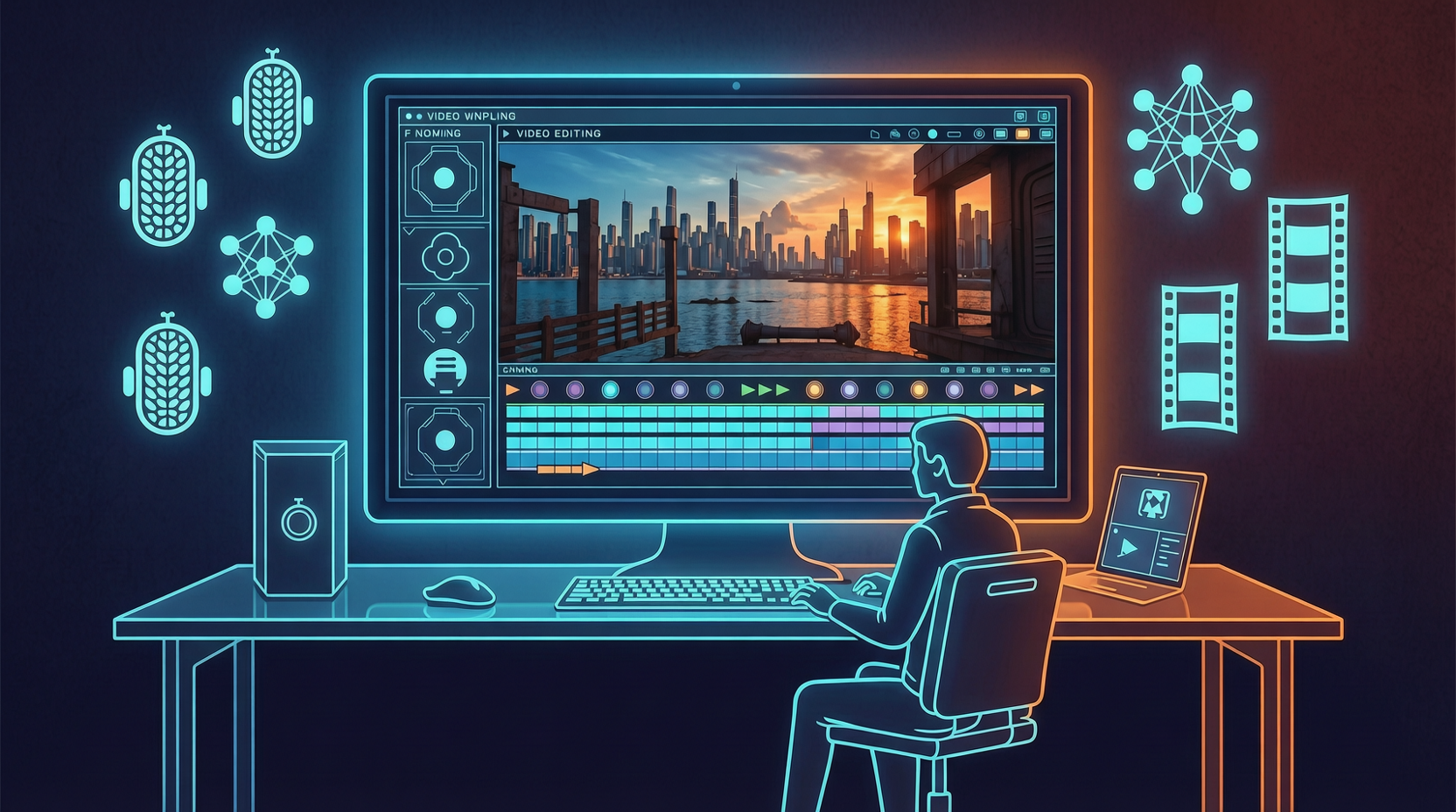
The open-sourcing of AI short drama production tools means the moat for content creation is moving from “funding and teams” to “creativity and workflows.” When a single ordinary computer can handle the entire pipeline — scriptwriting, storyboarding, character generation, voiceover, and editing — the supply side of the short drama market is poised for exponential growth.
What’s Happening
A recent WeChat article has drawn attention: an open-source short drama production platform called deep-comedy-pro has surfaced, claiming to provide complete source code that allows short drama creation after installation on a regular PC.
The platform completely restructures short drama production into three steps:
- AI Script Creation: Input keywords or an outline, and a large language model directly generates a storyboard script, including scene descriptions, character dialogue, and key conflict points
- Scene/Character Design: AI image generation models automatically create character visuals (appearance, actions, expressions) and scene images based on the script, supporting dynamic previews
- AI Workbench One-Click Video: Automatically completes storyboard compositing, AI voiceover (with lip-sync), effects addition, and BGM matching, outputting a 3-5 minute short drama video in 10-15 minutes
It’s not just this one project. The open-source community has seen a proliferation of similar tools:
- drama-workshop: A fully automated “script → assets → video” pipeline, moving away from traditional gacha-style generation
- ComfyUI Local Deployment: A pure open-source model supporting the full automation pipeline from story writing to video synthesis, running locally for privacy protection
- SkyReels-V1 (Kunlun Tech): China’s first video generation model for AI short drama creation, supporting 33 character micro-expressions and 400+ natural action combinations
Technical Details: Workflow Breakdown
The core logic of these tools is transforming the traditional film industry’s “serial manual process” into an “AI-driven parallel automation pipeline”:
Script Generation Layer
Based on large language models, optimized with prompts incorporating popular short drama tags (time-travel, sweet romance, plot twists, satisfying moments). Users simply input keywords like “ancient time-travel, milk tea shop, prince” and the AI outputs a complete script with storyboards, lines, and conflict points. Some tools even support direct novel import, automatically breaking it down into storyboard scripts.
Visual Asset Layer
Calls Stable Diffusion-class models to generate characters and scenes. The key technical challenge is consistency control — ensuring the same character looks uniform across different shots. Open-source solutions typically use IP-Adapter, Reference-Only, or LoRA fine-tuning to lock character features. Dynamic preview functionality leverages AnimateDiff or similar technologies for micro-expressions and actions.
Video Synthesis Layer
Storyboard images are fed into video generation models (such as Seedance, CogVideo, Kling, etc.), combined with TTS voice synthesis (supporting voice cloning and emotion control), with automatic lip-sync alignment. Finally, FFmpeg or similar tools handle editing, effects, and BGM mixing.
Local Deployment Advantages
Compared to cloud services, the core advantages of open-source local solutions are zero token costs and privacy protection. Users can run the complete pipeline on their own computers, deploy via Docker with one click, and store all models and assets locally. For creators mass-producing series, this dramatically reduces marginal costs.
Industry Landscape
The short drama market’s growth data already speaks to its吸引力:
- Short drama users exceed 400 million, with an annual growth rate over 50%
- Top short dramas routinely break 100 million RMB in recharges
- Traditional production costs typically range from tens of thousands to hundreds of thousands of RMB, taking weeks
AI tools are changing this equation:
- Cost: From tens of thousands of RMB to nearly zero (electricity + hardware depreciation)
- Timeline: From weeks compressed to hours
- Barrier: From professional teams down to individual creators
This also creates new competitive dimensions:
- Model Quality: Video generation consistency and naturalness are still rapidly iterating
- Workflow Maturity: Whoever makes the process smoother and more automated will capture users
- Monetization Paths: Platform ad revenue sharing (Douyin mid-video plan), brand custom short dramas, IP derivative development
Action Items
For ordinary people looking to enter the short drama赛道:
- Run through the workflow first: Download an open-source tool (like drama-workshop or a ComfyUI solution) and run the complete pipeline from script to video on your local GPU
- Test market feedback: Upload finished products to Douyin/Kuaishou, observe completion rates and engagement data, and rapidly iterate topic directions
- Focus on consistency technology: Character consistency is the core pain point of AI short dramas; mastering tools like IP-Adapter and ControlNet can significantly improve work quality
- Explore B2B opportunities: Creating brand short dramas for SMBs (e.g., restaurant marketing, product placement) may be a faster monetization path than pure C-side traffic
- Pay attention to copyright compliance: Copyright ownership of AI-generated content is still evolving; confirm model licenses and asset sources before commercial use
The “industrial era” of short dramas has just begun, and open-source tools are bringing the factory to everyone’s desk.